Merzouga or Zagora
Should I visit Merzouga or Zagora?
Choose Zagora if you have exactly 2 days and want real dunes without a long trip. Choose Merzouga if you can spare 3 days minimum — the dunes at Erg Chebbi are dramatically bigger, at up to 150 metres against Zagora's more modest hills.
This is the single most common decision travellers weighing a Sahara trip from Marrakech have to make, and most tour listings don’t explain the trade-off clearly. Both destinations get you real sand dunes and a proper overnight camel trek — the difference comes down to distance, dune size, and how many days you can spare.
| Merzouga | 8-10 hours away, dunes up to ~150m, 3 days minimum, from ~1,500-2,500 MAD (140-230 €) |
| Zagora | ~7 hours away, smaller dunes at Tinfou and Nakhla, 2 days minimum, from ~1,000-1,800 MAD (93-165 €) |
| Best for | Merzouga: the biggest, most dramatic dunes; Zagora: a real desert night on a tight schedule |
| Getting there | Both by organised tour via the Tizi n’Tichka pass and Ouarzazate |
| Best time | October-April for both; nights fall below 5°C December-February |
Distance and drive time
Merzouga sits 8-10 hours from Marrakech by road, crossing the Tizi n’Tichka pass and running through Ouarzazate, the Dades Valley and Todra Gorge. Zagora is closer, roughly 7 hours, following a similar first stretch over the pass before branching south through Agdz and the Draa Valley rather than continuing east. That two-to-three-hour gap sounds small on paper but has an outsized effect on itinerary length, since it’s the difference between a workable 2-day round trip and one that needs a third day.
A 2-day desert tour from Marrakech to Zagora is the classic short-schedule option: full day out with stops, one night in a desert camp, full day back. The equivalent trip to Merzouga simply doesn’t fit into 2 days without cutting the desert portion down to almost nothing.
Dune size — the real difference
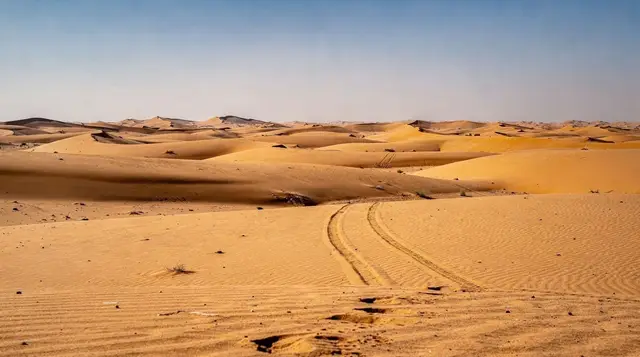
This is where the two destinations genuinely diverge. Erg Chebbi, the dune field at Merzouga, reaches roughly 150 metres in places — the classic, photogenic Sahara landscape with rolling ridgelines that shift constantly with the wind. Zagora’s dunes, mainly around Tinfou and Nakhla, are real sand but considerably smaller and more modest, closer to large dunes than a full erg landscape.
Neither destination is “fake” desert the way Agafay is — both have genuine sand dunes — but if the specific image you have in mind is towering Saharan dunes stretching to the horizon, that’s Merzouga, not Zagora. A 3-day Marrakech to Merzouga desert tour is worth the extra day specifically for this reason.
Camp quality and comfort
Both destinations offer the same spread of camp tiers, from simple shared-tent bivouacs to private luxury tents with solar power and en-suite bathrooms. A 2-day Zagora desert tour with a luxury camp shows that comfort upgrades are available even on the shorter Zagora route, so choosing Zagora for time reasons doesn’t mean sacrificing comfort.
On the Merzouga side, a 3-day Merzouga desert tour with a luxury tent and camel ride offers a comparable step up. See Sahara desert camps explained for the full breakdown of what separates a basic bivouac from a luxury camp at either destination.
Kasbahs and scenery along the way
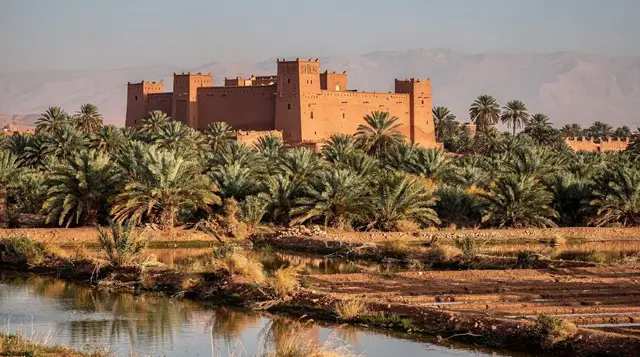
Zagora’s route runs through the Draa Valley, a long stretch of palm groves and earthen kasbah villages that’s arguably as scenic as the desert destination itself. A 3-day version of the Zagora route extends the standard 2-day format by a day specifically to slow down through this stretch, useful if you have a spare day but still want Zagora’s shorter overall distance rather than pushing on to Merzouga.
Merzouga’s route passes Ait Ben Haddou and Todra Gorge instead — different scenery, similarly worthwhile, and covered in full in the Marrakech to Merzouga overland guide.
Price, in more detail
The price gap between the two isn’t just about distance — it reflects one fewer night of camp costs, one less day of driver time, and generally less fuel per group. A shared 2-day Zagora tour typically runs 1,000-1,800 MAD (93-165 €) per person, while the equivalent 3-day Merzouga trip runs 1,500-2,500 MAD (140-230 €). That gap narrows somewhat at the luxury end, where camp quality rather than distance becomes the bigger cost driver — a luxury tent on either route can cost several times a standard shared bivouac regardless of destination.
Private tours widen the gap further in both directions: a private Zagora trip still costs less than a private Merzouga trip, simply because there’s one less day of exclusive vehicle and driver time to pay for. If budget is the deciding factor rather than dune size specifically, Zagora remains the cheaper option at every comfort tier.
What a night in the desert actually involves
Whichever destination you pick, the rhythm of the evening is similar. You arrive at the edge of the dunes late in the day, swap the vehicle for a camel, and ride out slowly towards the camp as the light changes. Dinner is usually served in a communal tent, often with drumming around a fire afterwards, and the real reward comes later when you walk away from the lights and look up. If you have never ridden before, the camel ride guide explains what to expect from the saddle and how to stay comfortable.
The main difference is what surrounds you. At Merzouga the camp sits against a wall of tall sand, so climbing a ridge for sunrise feels like a proper expedition. At Zagora the landscape is gentler and more open, which suits people who want atmosphere rather than a long dune climb. Both give you the silence and the stars, and neither requires any fitness beyond walking on soft sand.
Who each destination suits
Zagora tends to suit first-time visitors with a short stay, families with younger children, and anyone who would rather spend more of their trip in the city than in a vehicle. If that is you, the first-time Marrakech guide helps you decide how to fit a night away around your Marrakech days, and the 3 versus 5 days comparison shows how a desert overnight changes the rest of the plan.
Merzouga suits travellers who already know that the dunes are the point of the trip: photographers, couples marking a special occasion, and people building a longer circuit through the south. If you are thinking along those lines, the Marrakech to the Sahara in 3 days itinerary lays out how the days fit together, and the 7-day southern circuit stretches the same idea into a full loop.
Stops worth enjoying on the way
Part of the value of either trip is the scenery between the city and the sand. The first long stretch crosses the mountains, and many tours pause at viewpoints on the Tizi n’Tichka pass before descending towards the south. Ait Ben Haddou is the best-known earthen village on the way, and Ouarzazate is the usual gateway town where drivers regroup. For a closer look at the first, see the Ait Ben Haddou guide.
On the Zagora side the Draa Valley provides the long palm-lined approach, while the Merzouga route brings in Todra Gorge and the Dades Valley. Each of these gives you a different texture of southern Morocco, and a good driver will leave time for a photo stop or a short walk rather than racing straight to the camp. If you want to understand the destination itself before committing, the Merzouga page and the Zagora page describe each base in more detail.
Questions to ask before you book
Because both options are sold through many operators, the details matter more than the headline name. Before paying, ask which camp you will sleep in, whether the tent is shared or private, what is included at dinner and breakfast, and how many hours of the trip are spent in the vehicle. Ask whether the camel ride is included in the price and how long it lasts, and whether there is a stop for lunch on each driving day.
It is also worth asking how many people share the minibus. A small group makes a long drive far more comfortable, and it usually gives the guide more freedom to stop where the group is interested. If you are comparing a guided departure with arranging things yourself, the guided tour versus independent travel guide walks through the trade-offs, and the driving in Morocco guide explains why most visitors leave the long mountain roads to a professional driver.
Practical notes for either trip
Pack light and keep a small day bag for the camel ride, since larger luggage is often left in the vehicle during the trek. Bring layers, because the desert swings from warm afternoons to cold nights, and a scarf is useful for sun, wind and blowing sand. A head torch or phone light helps in camp after dark. For a fuller checklist, see the desert tour packing guide.
Seasonality matters too. Spring and autumn are the comfortable windows, while midsummer can be punishing in the south. The best time to visit Marrakech covers the broader picture, and the Sahara blog piece on what nobody tells you is a candid read before you commit. If you want a more atmospheric account of waking up among the dunes, the desert dawns story captures it well.
Can you do both on the same trip?
Some longer itineraries do combine elements of both routes, since the roads overlap for the first several hours out of Marrakech before diverging toward Zagora or continuing on toward Ouarzazate and Merzouga. A handful of 4-5 day tours loop through the Draa Valley toward Zagora before cutting east to Merzouga, effectively covering both destinations’ scenery in one longer trip. This suits travellers with enough time who want to see the kasbah-lined Draa Valley and the biggest dunes at Erg Chebbi without picking one over the other, though it’s a meaningfully longer commitment than either standalone option.
For most travellers without five days to spare, though, picking one destination based on your actual time budget — rather than trying to see both in a rush — makes for a better trip than a compressed combination itinerary.
What the drive itself is like on each route
Both routes share the first stretch out of Marrakech, climbing over the Tizi n’Tichka pass before splitting. The road to Zagora branches south through Agdz and follows the Draa river valley, a comparatively gentle, flat drive through palm groves and kasbah villages after the initial mountain crossing. The road to Merzouga continues east instead, adding the Dades and Todra stretches, which involve more winding valley roads and a longer overall driving day even though the terrain itself isn’t more difficult than the Zagora route.
Neither road is remotely as demanding as the final approach to Erg Chigaga, which requires a 4x4 for the last stretch — both Merzouga and Zagora are reachable in an ordinary tour minibus the entire way, which is part of why they’re the two most commonly booked Sahara destinations from Marrakech.
A simple way to decide
If you’re still unsure after weighing distance and dune size, a rough rule of thumb helps: count the total nights of your Marrakech trip. On a trip of 4-5 nights or fewer, Zagora is almost always the more realistic choice, since giving up 3 full days to Merzouga leaves little time for anything else.
On a trip of a week or longer, Merzouga becomes realistic without dominating the itinerary, and its bigger dunes are worth the extra distance if a proper Sahara-scale landscape is part of why you’re visiting Morocco in the first place. When in doubt, err toward the shorter Zagora option — a good, real desert night beats an over-ambitious itinerary that leaves you exhausted rather than genuinely enjoying either the desert or the rest of Marrakech.
If you’re still deciding, what to pack for a Sahara tour applies equally to either destination, and how to book a Sahara tour without getting burned covers the operator red flags worth knowing regardless of which you choose. If neither fits your schedule at all, the Agafay Desert guide is the honest short-schedule alternative — just remember it’s stone desert, not sand dunes.
Sahara tours on GetYourGuide
Verified deep-linked GetYourGuide tours. Book through these links and we earn a small commission at no cost to you.
Photo: our own image of the location, not the operator’s product photo.