Camel Rides Around Marrakech
Where's the best place to ride a camel near Marrakech?
The Palmeraie is the closest and cheapest, good for a short taster ride. Agafay gives a more scenic, sunset-lit stone-desert setting for roughly the same time commitment. Essaouira offers a beach ride if you're already on a coastal day trip.
“Camel ride near Marrakech” turns up three genuinely different places, and which one suits you depends on how much time you have and what you want the photo to look like. This guide compares the three main options directly, rather than treating them as interchangeable, since the terrain, cost and time commitment differ more than the marketing suggests.
| Where | La Palmeraie (15 min from centre), Agafay Desert (30-40 min), Essaouira beach (2.5-3 hours) |
| Cost | 150-300 MAD (14-28 €) in the Palmeraie; 250-400 MAD (23-37 €) at Agafay; similar range at Essaouira, plus the coastal transfer if not already there |
| Time needed | 45 minutes to an hour of riding in each case |
| Getting there | Palmeraie: short taxi or included hotel pickup; Agafay and Essaouira: organised transfer |
| Best time | Late afternoon for Palmeraie and Agafay sunset light; any time of day at Essaouira |
La Palmeraie: closest and cheapest
The palm grove north of Marrakech is the easiest camel ride to arrange, since it’s a short taxi ride from the medina rather than a booked half-day excursion. A camel ride in the Marrakech Palm Grove is the standard version: roughly an hour weaving between palm trees and villas, usually finishing with mint tea. It’s a reasonable option if you have a spare afternoon and don’t want to commit to a transfer-based half-day trip.
The trade-off is scenery. Large parts of the Palmeraie have been developed with resorts, golf courses and private villas since the 1990s, so the ride passes as much modern building as untouched palm grove. It photographs fine but doesn’t have the open-horizon drama of Agafay. A shorter, cheaper one-hour version aimed at families covers the same ground with a slightly lighter price, and works well as a first camel ride for young children who might not manage a longer or more remote trip.
Agafay: the scenic, sunset option
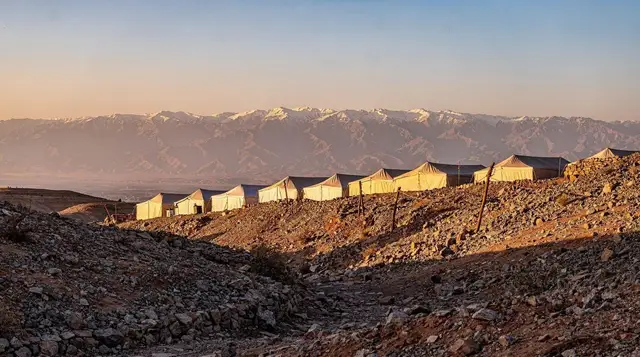
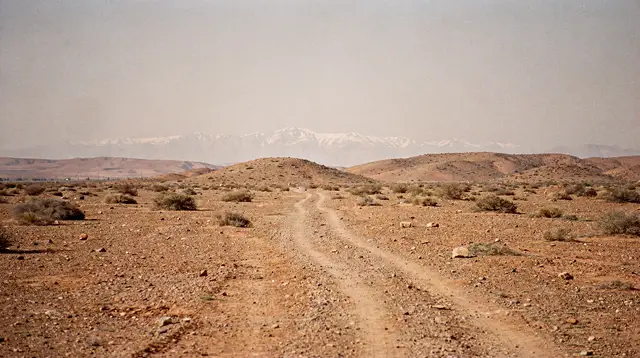
Agafay is stone and dry clay rather than sand, but it’s the most visually striking of the three for a camel ride specifically, because the open plateau and Atlas backdrop give a genuine sense of desert scale that the Palmeraie can’t match. An Agafay Desert sunset camel ride times the ride for golden hour, which is when most of the marketing photos you’ve seen were taken.
The cost is broadly similar to the Palmeraie once you factor in the included transfer, but you’re committing a full evening rather than a spare hour, since most operators bundle the ride with transport from your hotel and often dinner afterwards. A camel safari at the Agafay Desert is a good standalone option if you want the ride without the full dinner package.
Essaouira: camels on the beach
If your trip includes a day at Essaouira, riding a camel along the beach there is a different experience again — flat sand, ocean wind, and none of the desert framing of Agafay or the palm-tree cover of the Palmeraie. A camel ride on the beach at Essaouira runs about an hour and is usually booked as an add-on to an already-planned coastal day trip rather than a reason to travel to the coast on its own.
This option only makes practical sense if you’re already heading to Essaouira for the town itself, the ramparts, or the surf; see the Essaouira day trip guide for how to fit the ride into a full day there.
What each ride actually feels like
The three rides don’t just differ in scenery — the physical experience varies too. Palmeraie routes are flat and shaded in places by the palms themselves, a gentle introduction for anyone who’s never sat on a camel before. Agafay’s terrain is more exposed and slightly uneven underfoot for the camel, crossing dry, rocky ground rather than soft sand or grass, which gives the ride a rougher, more adventurous feel without being genuinely difficult. Essaouira’s beach route is the smoothest of the three physically, since flat sand makes for the most even gait, though sea wind can make the ride feel cooler and breezier than the other two.
None of the three requires any riding experience or particular fitness — camels used for tourist rides are led by a handler on foot, so you’re not required to control the animal yourself. Anyone reasonably comfortable on a horse or simply willing to sit still for an hour will manage all three without difficulty.
Cost comparison across all three
Lined up directly, the Palmeraie is consistently the cheapest at 150-300 MAD (14-28 €) for a standard hour-long ride, reflecting its short distance from the city and lack of a long transfer. Agafay costs somewhat more once the transfer and often a tea stop are factored in, typically 250-400 MAD (23-37 €), though many Agafay camel rides are sold bundled with dinner rather than standalone, which changes the comparison. Essaouira sits in a similar range to Agafay for the ride itself, but only makes sense as an add-on to a coastal day that already has its own transport cost, so it’s rarely the deciding factor in an Essaouira day trip’s overall price.
For travellers comparing pure value, the Palmeraie wins on cost-per-minute of actual riding. Agafay wins on scenery and atmosphere, particularly at sunset. Essaouira wins only if you’re already there and want to add a short, different activity to a day built around the town itself.
Photography considerations
If getting a good photo matters to you as much as the ride itself, the three locations differ noticeably. Agafay’s open plateau and Atlas backdrop, especially at golden hour, gives the most dramatic wide shots — the kind that show up most often in Marrakech tourism marketing. The Palmeraie’s palm-tree cover makes for softer, more dappled light, better suited to closer portrait-style shots than sweeping landscapes. Essaouira’s beach setting offers the most consistently good light throughout the day, since coastal cloud cover diffuses harsh midday sun, but the ocean backdrop reads as “beach” rather than “desert” in photos, worth knowing if a desert-look image is specifically what you’re after.
Most operators are used to tourists taking photos throughout the ride and don’t mind brief stops for a picture, though asking your handler before dismounting is good practice, both for safety and courtesy.
Choosing an ethical operator
Camel welfare standards vary considerably between operators, and it’s worth being deliberate about who you book with rather than picking whatever a street tout offers near Jemaa el-Fna. Look for signs the animals have shaded rest periods and visible access to water, and be wary of any outfit running back-to-back rides all day with no apparent breaks. Established tour operators booked in advance, rather than same-day street arrangements, tend to have better oversight of animal welfare, if only because their online reviews hold them accountable.
Ride length also matters for the animals as much as for you: an hour is a reasonable, standard length, and you should be cautious of any operator pushing much longer rides in full midday heat, particularly in summer.
Combining a camel ride with other activities
Because camel rides are short, most travellers pair them with something else on the same outing. At Agafay, that usually means quad biking or a dinner-and-show evening — see quad biking around Marrakech for the engine-powered alternative on the same terrain, or desert dinner shows: what you actually get if you’re weighing up the evening package. In the Palmeraie, quad and buggy tours run on the same tracks and are easy to combine with a shorter camel ride earlier in the visit.
Fitting a camel ride into your itinerary
The practical question is usually where a ride sits in the rest of your stay. The Palmeraie works best on a day when you’ve already done the heavy sightseeing in the medina and want something unhurried; the neighbourhood itself is covered in the Palmeraie destination page. Agafay suits an evening you’ve deliberately kept free, and the Agafay Desert destination page explains what else is out there if you’d like to stay longer than the ride. Essaouira belongs on a day built around the coast; the Essaouira destination page shows what the town offers besides the beach.
If you’re still deciding how many days to spend in the city, the 3-day Marrakech itinerary and the 5-day itinerary both leave room for one half-day excursion, which is exactly the slot a camel ride fills. Travellers short on time can stay with the 2-day plan and skip the camel altogether without missing much.
What to wear and bring
Dress for sitting astride an animal rather than for a photo shoot. Trousers or long shorts are far more comfortable than a skirt or dress, and closed shoes are easier than sandals when you climb on and off. A scarf or light head covering helps with dust at Agafay and wind at Essaouira, and sunglasses are useful in all three places. Keep your phone in a zipped pocket or a secure strap, since you’ll be holding on with at least one hand while the camel stands up and lies down, which is the moment most people find least comfortable.
For a fuller packing list that applies to any desert outing, see the desert tour packing guide, and for general clothing advice in the city, the what to wear in Marrakech guide covers local expectations about covering up.
How a ride usually unfolds
Whichever location you choose, the pattern is similar. A handler brings the camels to a kneeling position, you climb on, and the camel rises back-legs first, which tips you forward before it levels out. Hold the front handle through that movement and lean slightly back as it stands. Once walking, the gait is slow and rolling, and the handler leads the animal on foot. At the end the camel kneels again and you dismount in the same way, so keep holding on until it has settled fully.
Rides are normally done in a short line of camels, and groups are kept together by the handlers. If you’re travelling as a couple or family, ask whether your party can stay in sequence so you can talk and take photos of one another. Many operators finish with mint tea, and the tradition behind it is explained in the Moroccan mint tea guide if you’d like context for the glass you’re handed.
Tipping and small courtesies
Handlers usually receive a small tip at the end, and it’s worth having a little cash ready rather than hunting for change as you dismount. Our tipping in Morocco guide sets out general expectations. Beyond money, a few courtesies go a long way: greet your handler, ask before photographing them or their animal up close, and don’t feed the camels anything you’ve brought unless the handler says it’s fine.
Booking tips
Reading the description of each option carefully saves disappointment. Check whether the price covers hotel pickup, whether tea or dinner is included, and whether the ride is shared or private. Compare operators on how clearly they explain what happens if the weather turns, and favour listings with recent, detailed reviews over vague ones. If you’d rather leave the planning to someone else, the guided tour versus independent travel guide helps you decide when a booked package is worth it, and the best day trips from Marrakech puts the camel excursions next to the other options in one place.
For readers who are weighing the desert directly against a longer trip, the Agafay versus Sahara comparison is a useful companion, and the blog piece on what nobody tells you about the Sahara gives an honest picture of what a longer camel journey feels like.
If Agafay is the direction you’re leaning, the full Agafay Desert guide covers tour formats and pricing beyond the camel ride alone. For a faster, dustier version of the same terrain, quad biking around Marrakech is the natural next read, and travelling families can check Marrakech with kids for age-appropriate activity picks.
Desert and camel trips on GetYourGuide
Verified deep-linked GetYourGuide tours. Book through these links and we earn a small commission at no cost to you.
Photo: our own image of the location, not the operator’s product photo.