Agafay Desert Guide
What's the best way to visit the Agafay Desert?
For most first-timers, a half-day sunset trip with a camel ride and dinner covers the appeal in one evening. Book a pool-day pass if you want daytime heat relief, or an overnight camp if you want the stars without a multi-day drive south.
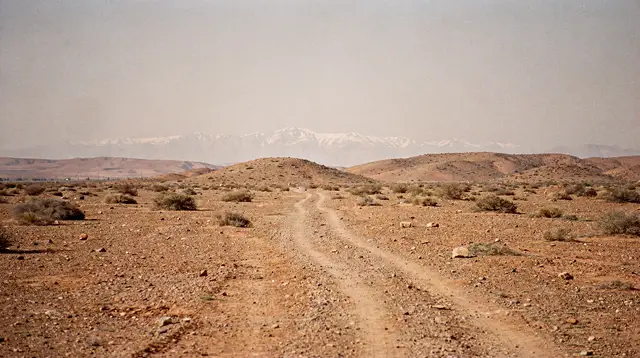
Agafay shows up on almost every “Marrakech desert” search, and for good reason: it’s the only stretch of desert landscape close enough to visit without giving up a chunk of your trip. Before booking anything, it helps to know one fact plainly — Agafay is stone and dry clay, not sand dunes. What follows is a guide to the practical side: which format of tour actually suits you, what each one costs, and how to avoid the common booking mistakes.
| Where | 30-40 minutes southwest of Marrakech |
| Cost | 250-900 MAD (23-83 €) for a half-day; 1,200 MAD+ (110 €+) per person for an overnight camp |
| Time needed | 3-4 hours for a sunset trip, or one night for a camp stay |
| Getting there | By booked tour with transfer, or private driver with a confirmed camp address |
| Best time | Evenings year-round; daytime visits are more comfortable October-April |
Choosing a format before you choose an operator
The single most useful thing you can do before comparing prices is decide what kind of afternoon or evening you actually want, because Agafay operators sell roughly four different products under very similar marketing language. Sorting these out first saves you from paying for activities you don’t want, or missing the one you do.
A sunset camel-and-dinner package is the default and the most heavily marketed: transfer from your hotel, an hour or so on a camel across the plateau, then dinner in a decorated tent with live music or a fire show. A camel ride, dinner and show in the Agafay Desert is a solid, representative version of this format and works well if you want the classic evening without shopping around endlessly.
A pool-day pass swaps the camel and the dark-sky dinner for daytime lounging: several camps now sell access to their pool alongside lunch, useful in the shoulder seasons when an afternoon swim is more appealing than a dusty ride. Agafay Desert day pool access with lunch is built exactly for this, and it’s the option families with young children tend to prefer.
Quad biking replaces the camel with an engine, covering more ground across the dry riverbeds and low hills in a faster, dustier version of the same terrain — Agafay Desert quad biking is sold both standalone and bundled with a sunset dinner. And an overnight camp stay is the closest thing to a Sahara-style night that doesn’t require two days of driving; once the day-trip groups leave, the camp empties out and the sky takes over.
If you are still weighing whether to spend the time at all, the Agafay versus Sahara comparison lays out what each landscape gives you, and the camel ride guide explains what to expect from the animals themselves. Anyone drawn to the engine-driven version should read the quad biking guide before choosing an operator, since the experience varies a lot with the route and the group.
Who each format suits
Couples tend to choose the sunset package or an overnight stay, because the quiet after the day groups leave is the part they remember. Families with small children lean toward the pool-day pass, which keeps the schedule gentle and avoids a late return. Friends travelling together often prefer quad biking, which turns the plateau into something more active. Travellers who feel nervous around animals can skip the camel entirely and still enjoy the dinner, the music and the sky.
Thinking about who is in your group, rather than about the cheapest listing, is the fastest route to a good choice. A format that suits the least enthusiastic person in the party usually works for everyone else too. If you are travelling with children, the family activities guide and the Marrakech with kids guide help you decide how much to stack around the desert evening.
What a typical evening actually looks like
Most operators collect guests from central Marrakech hotels between 4 and 5pm, which gets you to the plateau in time for the light to start turning gold. The camel or quad portion runs first, timed for sunset, followed by mint tea and then dinner — usually a set Moroccan menu of salads, a tagine, and fruit, served in a large communal tent unless you’ve booked a private option. Music and a fire show typically follow dinner, and groups head back to Marrakech between 9 and 10pm.
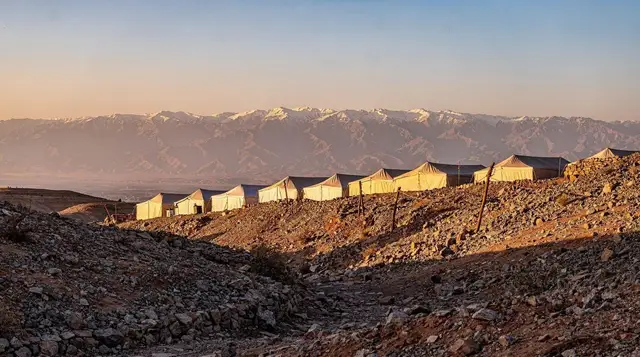
Overnight stays follow the same early evening but stretch further: after the dinner crowd disperses, camps host a fire pit, stargazing, and breakfast the next morning before the return transfer. Bring a warm layer even in summer, since desert temperatures drop fast once the sun is down, and the plateau has no wind cover.
Group tours versus private tours
Shared group tours are the budget default and perfectly workable: you’ll share the camel line and the dinner tent with other visitors, but the setting and food are usually good regardless of group size. Private tours cost noticeably more — often double — but let you set your own timing, skip waiting for other guests, and sometimes upgrade to a smaller, quieter camp. Couples marking an anniversary or families who want flexibility around a toddler’s schedule tend to find the extra cost worthwhile; solo travellers and budget-conscious groups usually don’t need it.
Luxury tent stays sit at the top of the range, with private bathrooms, proper beds instead of floor mattresses, and solar-powered lighting. A one-night Agafay camp stay with a camel ride is a mid-range version of this that balances comfort with a reasonable price, typically including dinner, a fire pit, and breakfast before the transfer back.
A daytime visit is a different mood from the evening one. For many travellers, a day trip with lunch and pool time suits travellers who would rather see the plateau in full light, when the colours of the stone and the shape of the Atlas on the horizon are easiest to appreciate, and who like to keep the night free for the medina.
Fitting Agafay into your Marrakech days
Agafay works best as a single evening slotted between two busier days, not as a full day that leaves you exhausted. After a morning in the medina, an afternoon rest at your riad and then a sunset pickup is a comfortable rhythm. The Marrakech in 3 days itinerary and the five-day itinerary both leave room for an evening like this, and the Marrakech 3 versus 5 days guide helps you judge how much time you can spare.
If you are planning a longer trip towards the dunes, the Sahara itinerary from Marrakech covers the multi-day version, and the Sahara desert camp guide explains what a camp there involves. Those who want the mountains alongside the plateau can look at the Atlas Mountains day trip guide, and the best day trips from Marrakech page shows where Agafay sits among the alternatives.
Practical habits for a smoother evening
Dress in layers and closed shoes, since the ground is stony and dusty. Keep a scarf handy for the wind and the dust kicked up by quads and camels. Carry your phone charged, a small amount of cash for tips and drinks, and agree on the pickup details the day before. The desert tour packing guide goes through the full list, and the tipping in Morocco guide explains what is customary for drivers, camel handlers and camp staff.
Photography is much of the appeal here. Keep your camera ready as the light changes at sunset, and read the photography guide for ideas on framing the landscape. For a more reflective account of the region at first light, desert dawns is worth a read, and what nobody tells you about the Sahara is a useful reality check on desert expectations in general.
Pairing Agafay with other activities
Because the plateau is compact and close to the city, several operators bundle Agafay with a second activity on the same day. Hot air balloon flights launch from a nearby stretch most mornings, so a balloon-then-Agafay combination across two separate bookings works well if you’re only in Marrakech for a short window — see the hot air ballooning guide for how the timing fits together. Others pair Agafay with a stop in the Atlas foothills or a visit to a Berber village en route, which stretches a half-day trip into a fuller one without adding an overnight.
What actually drives the price
Four things move an Agafay quote more than anything else: group size, camp tier, meal inclusions, and whether transfer is bundled in. A large shared tour with a basic set dinner sits at the bottom of the range; the same evening in a smaller group with a more elaborate menu can cost noticeably more even though the itinerary looks identical on paper. Read the description for phrases like “small group” or “shared” rather than assuming price alone tells you the format.
Meals are the other variable worth checking before comparing two listings side by side. Some packages include only the evening dinner; others add lunch, an afternoon snack, or breakfast for overnight stays. A quote that looks cheaper at first glance sometimes turns out to include less food, which changes the real value once you account for what you’d otherwise pay for dinner back in Marrakech.
Transfer is almost always included for Agafay specifically, unlike some Sahara tours where transport is quoted separately, but it’s still worth confirming the pickup covers your exact hotel or riad rather than a central meeting point. Riads tucked deep in the medina sometimes require a short walk to a pickup spot a driver can actually reach.
Best time of year to go
Agafay works as an evening activity in every month of the year, since the appeal — sunset light, an open sky, a clear night — doesn’t depend much on daytime temperature. Where the season matters more is comfort before and after dark: October to April gives the most pleasant daytime conditions for anyone adding a pool afternoon or a longer camel ride before sunset, while June to August brings exposed, shade-free heat that makes anything beyond the evening slot unpleasant.
Winter (December to February) flips this around slightly — daytime temperatures on the plateau stay mild and comfortable, but nights get properly cold, cold enough that an overnight stay needs a genuine warm layer rather than just a jumper. None of this changes whether Agafay is worth doing; it only changes how much daytime activity you should stack around the sunset core.
Another small decision is how you get back to your accommodation. Most packages include the return transfer, so there is no need to organise a taxi late at night, but if your plans change, the Marrakech taxi guide explains how to handle rides in the city. The safety guide is also worth a glance if it is your first evening out beyond the medina.
Agafay rewards travellers who plan around what they actually want from the evening rather than booking the first “Marrakech desert” result that appears. If you’re deciding between a single evening and a full night under canvas, day trip or overnight breaks down that choice in detail. For the folklore-dinner side of things specifically, desert dinner shows: what you actually get is worth reading before you book one. And if Agafay is only one stop in a longer look at the region, the Agafay Desert destination guide covers the geography and terrain in more depth.
Desert and camel trips on GetYourGuide
Verified deep-linked GetYourGuide tours. Book through these links and we earn a small commission at no cost to you.
Photo: our own image of the location, not the operator’s product photo.