Marrakech to the Sahara in 3 Days
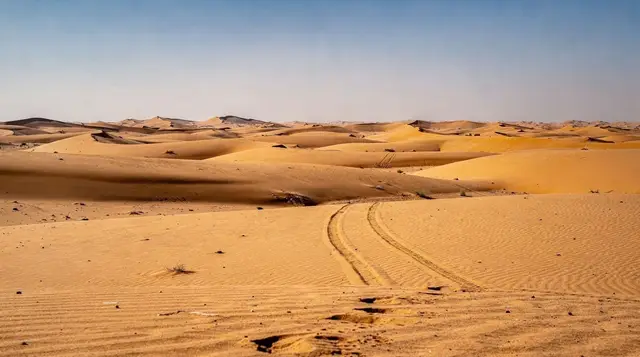
Say this plainly before booking anything: “the desert in 3 days” from Marrakech means Zagora, not Merzouga. Zagora is around seven hours from Marrakech by road each way, and its dunes at Erg Chigaga’s smaller neighbouring formations are real sand, but they’re modest compared to Merzouga’s Erg Chebbi. Merzouga itself is eight to ten hours away — physically reachable in three days only if you accept a single night there and two exhausting full days of driving either side, which most operators don’t actually sell as a 3-day package for good reason.
This itinerary is the honest version: two long driving days bookending one night under real stars in a desert camp near Zagora, with Ait Ben Haddou and Ouarzazate as genuine highlights along the way rather than rushed photo stops. If Merzouga’s bigger dunes matter enough to you to justify the extra time, look at a 4 or 5-day tour instead — see Merzouga or Zagora for the full comparison.
| Best for | Real sand dunes and one desert night without a five-day commitment |
| Getting around | Shared or private tour vehicle for the entire route |
| Total budget guide | Around 1,800-3,500 MAD (165-320 €) per person, tours vary by group size and camp level |
| Car needed | Yes, in the sense that this only works by vehicle — self-driving is possible but most travellers join a tour |
Day 1 — Marrakech to Zagora via Ait Ben Haddou
Morning: Departure is early, usually 7-8am, for the roughly four-hour drive over the Tizi n’Tichka pass — the High Atlas road that climbs past 2,200 metres with genuinely dramatic switchbacks. A day trip combining Ait Ben Haddou and the Atlas Studios is often built into the first day of longer desert tours, with a stop at the fortified kasbah for an hour or so.
Afternoon: After Ait Ben Haddou, most tours continue through Ouarzazate for a lunch stop, then push on toward Zagora — another three hours or so south through the Draa Valley, one of Morocco’s great palm-lined river valleys. The landscape changes noticeably here: less mountain, more open plain, with kasbahs and palmeraies strung along the road.
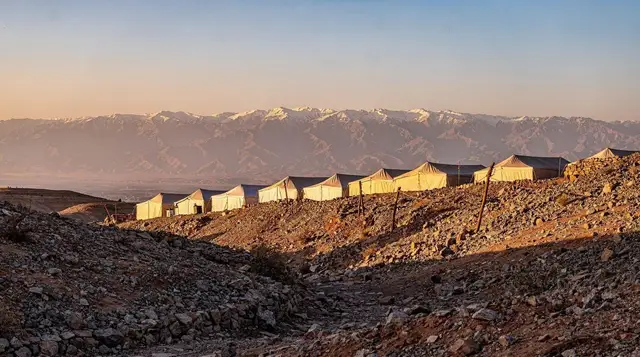
Evening: Arrival in the Zagora area by early evening, followed by a short transfer or camel ride out to a desert camp for dinner and the night. A 3-day Zagora desert and kasbahs tour is a solid, well-reviewed option that follows this exact structure. If you’re tired, cut this: if the full day of driving plus a camel transfer feels like too much, ask your operator about a 4x4 transfer to camp instead of the camel — it’s a fair trade for comfort and loses nothing essential.
Day 2 — A night in the desert
Morning: This is the payoff day. Watching the sun rise over the dunes, even the smaller formations near Zagora rather than Merzouga’s larger Erg Chebbi, is a genuinely different experience from anything in Marrakech — silence, open sky, and sand that’s real sand, not the stone-and-clay hammada of Agafay closer to the city.
Afternoon: The return drive begins, retracing the route back toward Ouarzazate. This is a long stretch with fewer stops than Day 1, since the main sightseeing is already done.
Evening: Most 3-day tours overnight again partway back, either in Ouarzazate or occasionally back near Zagora, rather than attempting the full return to Marrakech in one push. Confirm this with your operator before booking — it affects how tiring the trip actually is.
Day 3 — Back to Marrakech
Morning: A final push back over the Tizi n’Tichka pass, often with a stop in Ait Ben Haddou again if you didn’t linger there on Day 1, or at a roadside kasbah viewpoint instead.
Afternoon: Arrival back in Marrakech, typically mid-to-late afternoon depending on the pace and stops. If you’re tired, cut this: ask whether your specific tour offers a direct, non-stop return — some do, trading sightseeing for an earlier arrival, which matters if you have a flight that evening.
Choosing a tour operator
Group tours are considerably cheaper and run daily in high season; private tours cost more but let you set the pace, particularly useful if you want longer at Ait Ben Haddou than the standard schedule allows. Whichever you choose, confirm three things before paying: which camp you’re sleeping at (names get reused and substituted), whether dinner and breakfast are included, and whether the return route is direct or overnights partway back. See how to book a Sahara tour without getting burned for the specific questions worth asking.
Packing for two nights of driving and one desert night
Days are warm even in winter, but desert nights get cold — a proper jacket matters from November to March, and even in summer the temperature drops sharply after dark. A headscarf or buff keeps dust off during any camel or 4x4 transfer, and cash in dirhams covers extras at the camp, since card machines rarely work this far from the city.
Group size and who this suits
Shared group tours to Zagora typically run in minibuses of six to sixteen people, which keeps costs down but means a fixed schedule and shared stops — reasonable for most travellers, less so if you specifically want to linger somewhere the group doesn’t. Private tours solve that at a real cost premium, usually double or more per person for a small group, but let you extend time at Ait Ben Haddou or take a different pace through the Draa Valley. Either way, this trip involves a genuine amount of time in a vehicle — roughly fourteen hours of driving spread across three days — so it suits travellers who find road trips engaging rather than tedious more than those who’d rather minimise transit time.
What the desert camp night actually involves
Camps near Zagora range from basic shared tents with simple bedding to considerably more comfortable setups with proper beds and en-suite facilities, and the price difference between them is often smaller than the comfort difference, so it’s worth asking specifically what’s included rather than assuming.
A typical evening includes dinner around a communal fire, sometimes with drumming or music from the camp staff, followed by genuinely dark skies once the fire dies down — this is one of the only places within reach of Marrakech with close to zero light pollution, and it’s worth stepping away from the fire for a few minutes just to look up. Toilets and washing facilities at Zagora-area camps are usually basic but functional; don’t expect hotel-standard bathrooms even at the better camps.
If three days feels like too little
Some travellers reach the end of this trip wishing they’d budgeted more time, and that reaction is common enough to plan for in advance. The single biggest limitation of the three-day version isn’t the dunes themselves — Zagora’s are genuinely real sand — but the pace, with two of the three days spent mostly driving.
A four or five-day version of the same route typically adds either a second desert night or an extension to Merzouga’s larger dunes, considerably reducing the ratio of driving to actual desert time. If you’re on the fence while booking, err toward the longer option if your schedule allows it; extending a desert trip after arriving in Morocco is usually harder to arrange on short notice than booking the right length from the start.
Combining this with city time
Because this itinerary is a self-contained three-day loop, it slots naturally into a longer Marrakech trip without much adjustment — arrive, spend a day or two in the medina, then start this route, and use a final day back in the city to recover before departure. A minimum of five days total (two city, three desert) is a reasonable way to combine both without feeling rushed on either end; see Marrakech in 5 days for a structure that could be adapted this way, swapping its lighter Agafay evening for this fuller Zagora route.
Reading the landscape on the way
The route is as much the point as the camp. You leave a busy city, climb into the High Atlas, then drop into a long, quiet stretch of kasbahs, palm groves and open plain. If you want context before you go, the High Atlas explains the mountain side of the journey, and Ouarzazate and the Draa Valley cover the lunch stop and the long approach to Zagora. For the final stretch, the page on Zagora describes the town you will pass through on the way to camp.
Ait Ben Haddou deserves a little preparation. The Ait Ben Haddou guide explains what you are looking at, which makes a short stop feel far less like a photo queue. Travellers who already know they want more time there can read the Ait Ben Haddou destination page and then ask their operator how long the group really stays.
Practical preparation before you leave
Because most of this trip happens inside a vehicle, small comforts matter more than ambitious plans. Keep water, snacks and a charged phone within reach rather than in the luggage compartment, and bring something to read or listen to for the long stretches. Travel sickness can be a real issue on the mountain switchbacks, so sit towards the front if you are prone to it and tell the driver early.
The desert tour packing guide goes through what to carry in a small overnight bag, since you will usually leave the rest at your riad in Marrakech. Sort that out in advance with your host: staying in a riad covers how luggage storage normally works, so you are not repacking at the last minute on departure morning.
Is this the right desert for you?
The honest answer depends on what you want from the trip. If your priority is genuine sand, a night away from the city and a strong sense of arriving somewhere remote, this route delivers. If your priority is the tallest dunes, it will disappoint, and Agafay or the Sahara is worth reading to see how the options differ in character. For a closer look at what camp life involves, the Sahara desert camp guide goes further than a short itinerary can.
Travellers who like the idea of a desert night but not the long drive may prefer to stay nearer the city; the Agafay day trip versus overnight guide helps with that choice. And for a longer sweep of the south, the southern circuit in seven days stretches the same ideas across a slower schedule.
If Merzouga’s bigger dunes are worth the extra days to you, Marrakech to Merzouga overland covers that longer route in detail. For the honest comparison before you decide, read Merzouga or Zagora. And if three days feels like too much time away from the city, the Agafay Desert is the closer, shorter alternative — just not real dunes.
tours.3 days
Verified deep-linked GetYourGuide tours. Book through these links and we earn a small commission at no cost to you.
Photo: our own image of the location, not the operator’s product photo.