Marrakech to Merzouga Overland
What's the route from Marrakech to Merzouga and how long does it take?
The classic overland route crosses the Tizi n'Tichka pass, then runs through Ouarzazate, Boumalne du Dades and Todra Gorge before reaching Merzouga — 8-10 hours of driving, which is why almost every tour splits it across 2-3 days rather than doing it in one push.
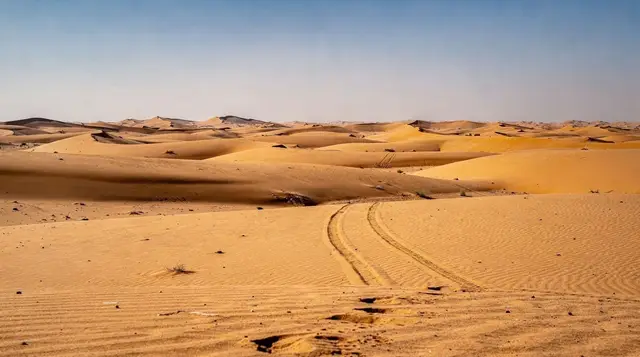
Merzouga and the Erg Chebbi dunes are the closest true Sahara sand to Marrakech, and getting there is most of the experience, not just the means to an end. The overland route crosses one of Morocco’s most dramatic mountain passes and passes through kasbah country, gorges and palm valleys along the way. Here’s how the route actually breaks down and why almost nobody covers it in a single day.
| Where | Marrakech to Merzouga, via Ouarzazate and the Dades/Todra valleys |
| Cost | 3-day shared tours from roughly 1,500-2,500 MAD (140-230 €) per person; private tours cost more |
| Time needed | 8-10 hours of driving total, split across 2-3 days |
| Getting there | Organised tour with driver, or self-drive over the Tizi n’Tichka pass |
| Best time | March-May and September-November for daytime comfort; nights fall below 5°C December-February |
The route, stage by stage
The road out of Marrakech climbs almost immediately into the High Atlas, reaching the Tizi n’Tichka pass at just over 2,200 metres within the first two hours. It’s a paved, well-maintained road with steady hairpin bends and genuinely spectacular views back over the valley — one of the best stretches of driving in Morocco, whether you’re behind the wheel or watching from the window of a shared minibus.
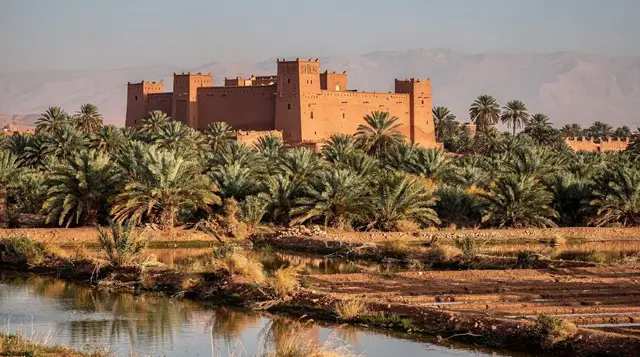
From the pass, the road descends toward Ouarzazate, Morocco’s film-industry town and a natural first-night stop for tours that split the drive over two days. Many itineraries detour here to Ait Ben Haddou, the fortified earthen kasbah that’s appeared in dozens of film productions and remains one of the most photographed stops on the whole route.
Continuing east, the road runs through the Dades Valley and its winding gorge road, then Todra Gorge, where limestone cliffs narrow to a few dozen metres apart above the riverbed — a popular short walking or climbing stop that most tours build in as a stretch-your-legs break. From Todra, it’s another two to three hours across increasingly flat, arid terrain to Merzouga and the dunes of Erg Chebbi.
Why 8-10 hours means 3 days, not 1
Adding up the driving time — roughly two hours to the pass, another two to Ouarzazate, three more through Dades and Todra, and a final two to three to Merzouga — puts the honest total at 8-10 hours behind the wheel, before accounting for stops, photo breaks, or lunch. Attempting that in a single day means arriving in Merzouga after dark, having skipped Ait Ben Haddou, Dades and Todra entirely, which defeats much of the point of going overland in the first place.
A 3-day desert tour from Marrakech to Merzouga is the honest minimum and the format most operators build their standard itinerary around: day one to Ouarzazate or Dades with stops along the way, day two into the dunes for a camel trek and overnight camp, day three back to Marrakech, usually via a more direct return route.
The flight shortcut
Marrakech has direct flights to Errachidia, roughly an hour’s drive from Merzouga, and this route genuinely changes the maths for travellers who can’t spare three full days. Flying out and driving back overland (or vice versa) lets you see the route once while still getting a night in the dunes without two full days each way. A 4-day desert tour to the Merzouga dunes is a good option if you’d rather take the overland route in both directions but want an extra buffer day for stops.
Where tours stop for the night
A 3-day tour needs one overnight stop on the way out, and operators generally choose between Ouarzazate and a spot further along in the Dades Valley. Ouarzazate is the more common choice, since it sits close to Ait Ben Haddou and offers a wider range of accommodation, from simple guesthouses to comfortable mid-range hotels. Stopping instead in the Dades Valley pushes the first day’s driving further, leaving a shorter final stretch to Merzouga on day two, which some travellers prefer if they’d rather not do the Todra and desert stretch back to back.
The return leg on a standard 3-day tour is usually more direct, retracing the outbound route but with fewer or shorter stops, since most of the sightseeing has already happened on the way out. Tours running 4 days or longer typically add either a second overnight on the return, or extra time built into the Dades and Todra stops rather than rushing through them once.
What the stops along the way actually offer
Ait Ben Haddou, the fortified kasbah just past Ouarzazate, is worth the short detour on its own merits — a UNESCO-listed earthen structure that’s featured in numerous film and television productions, walkable in under an hour but worth lingering in for the views from the top. Todra Gorge offers a different kind of stop: sheer limestone walls narrowing to a few dozen metres apart, popular with rock climbers and an easy, flat walk for anyone who just wants to see the scale of it from the canyon floor. Both are natural rest breaks that make the long drive genuinely worthwhile rather than something to endure.
The Dades Valley itself, between Ouarzazate and Todra, adds a scenic stretch of winding gorge road and kasbah villages that most tours drive through rather than stop in at length — worth knowing if you specifically want more time there, since it may require asking your operator to build in an extra stop.
Group tour, private tour, or self-drive
Shared group tours are the standard, budget-friendly way to cover this route and include a fixed itinerary, a driver-guide, and a camel trek and camp on arrival. A 3-day Marrakech to Merzouga desert tour covers the essentials at a reasonable price, sharing the vehicle and camp with a small group.
Private tours cost more but let you set your own pace, stop longer at Ait Ben Haddou or Todra, and choose your camp tier independently. A 3-day luxury private Merzouga desert tour is worth the premium for couples or families who don’t want to share a vehicle with strangers for two full days of driving. Self-driving is possible and the roads are good, but most visitors — even confident drivers — opt for a driver-guide given the length of the route and the value of local knowledge about weather and road conditions past Ouarzazate.
What the drive itself is like
The Tizi n’Tichka stretch is the most demanding piece of driving on the route: a two-lane paved road climbing steadily through switchbacks, shared with trucks, buses and the occasional herd of goats crossing unannounced. It’s slow going by necessity — average speeds well below what the distance might suggest — but the views compensate, with the valley opening up dramatically below as the road gains altitude. Past the pass, the road eases considerably, running through wider, flatter terrain toward Ouarzazate.
East of Ouarzazate, the road follows valley floors rather than climbing further, making the Dades and Todra stretch a noticeably easier drive despite covering more distance. The final approach to Merzouga crosses increasingly flat, sparse terrain, with the first sight of Erg Chebbi’s dunes rising unmistakably from the horizon a good sign you’re close, usually 30-45 minutes before actually arriving at a camp.
Road conditions and seasonal factors
The route is paved and well-maintained for its entire length, including the Tizi n’Tichka pass, which handles regular bus and truck traffic year-round. The main seasonal complication is winter snow on the higher stretches of the pass, which can cause brief closures or slow-downs after significant snowfall — rare but not unheard of between December and February. Outside winter, the road itself rarely causes delays; traffic through Ouarzazate and the occasional slow-moving truck are the more common minor holdups.
Planning the trip around the route
Because the route is long, the best preparation happens before you leave Marrakech. Decide first how many days you can really give it, then work backwards: the more days you have, the more the stops become pleasures rather than interruptions. If you are still choosing between desert destinations, Agafay or the Sahara is worth reading first, since the two offer very different experiences for very different amounts of travel time. The Agafay desert guide explains what the nearer option feels like, and the Merzouga destination page covers the dunes themselves.
It also helps to think about who is travelling. Families with younger children tend to find the long road days the hardest part, and the Marrakech with kids guide has broader advice on pacing. Couples and solo travellers can usually absorb a longer day in the vehicle more easily, and the shared format of a group tour is often a good way to meet other people. Whatever your situation, build some slack into the days on either side of the desert trip, so that a late return to Marrakech does not collide with a flight or a hotel check-in.
Choosing and booking your tour
Not all tours covering this route are the same, even when they share a name. Some prioritise time at the stops, others prioritise reaching camp early enough for a relaxed evening, and the camp itself can range from simple to quite comfortable. Before paying, check what is included, where the first night is spent, and whether the return is direct. The Sahara tour booking guide walks through those questions in detail, and guided tour or independent travel helps you decide whether handing the logistics to someone else suits you.
If you are weighing the comfort of different camps, the Sahara desert camp guide describes what the various tiers tend to offer. Reading it before you book makes it easier to see what a higher price actually buys, and what a budget option leaves out.
Combining the route with the rest of your stay
The overland drive fits naturally into a longer Morocco trip, and many travellers treat it as the centrepiece. The Marrakech Sahara 3 days itinerary gives a compact version, while the southern circuit itinerary stretches the same ground over a full week with more time at each stop. If you would rather build a broader trip, the five-day Marrakech itinerary shows how to balance the city with time away from it.
Along the way, several places deserve their own attention if your tour allows it. The Ait Ben Haddou guide explains the kasbah in more depth, the Ouarzazate page sets out what the town offers, and the Todra Gorge page and Dades Valley page describe the landscapes you pass through in the middle of the route. Reading these in advance makes the stops more meaningful, because you arrive knowing what to look for rather than simply following the group.
Timing and the seasons
The experience of the route changes noticeably with the time of year. Spring and autumn are the most comfortable for both the drive and the dunes, while winter brings cold nights and the possibility of snow on the pass. Summer heat can make the middle of the day in the desert uncomfortable, so it is worth reading Marrakech in summer and the best time to visit Marrakech guide before fixing your dates. For a feel of the cold season, Marrakech in winter is a useful companion, and if you travel during the fasting month, Ramadan in Marrakech explains how daily rhythms shift.
Making the most of the days on the road
A few small habits make the long days easier. Keep water and snacks within reach, since the gaps between stops can be long. Wear layers, because the temperature changes as the road climbs and falls. Charge your phone and camera at night, and keep your valuables with you rather than in the luggage hold. Ask your driver-guide questions: the people who do this route regularly know which viewpoints are worth a pause and which villages are worth a longer look.
It is also worth being realistic about energy. Two long days in a vehicle can be tiring even when the scenery is beautiful, so resist the urge to schedule anything demanding on the evening you return to Marrakech. For the days afterwards, the Marrakech hammam guide suggests a gentle way to recover, and for a slower evening in the city the Jemaa el-Fna guide is a natural place to start. If you want to read about the emotional side of the desert, the blog post desert dawns captures it well, and what nobody tells you about the Sahara offers an honest counterpoint to the brochure version.
If Merzouga’s distance has you weighing a shorter alternative, Merzouga or Zagora compares both directly. For what to expect once you arrive, Sahara desert camps explained and what to pack for a Sahara tour cover the practical side, and the Marrakech to the Sahara in 3 days itinerary lays out a full day-by-day plan along this exact route.
Sahara tours on GetYourGuide
Verified deep-linked GetYourGuide tours. Book through these links and we earn a small commission at no cost to you.
Photo: our own image of the location, not the operator’s product photo.