Marrakech in Winter
Is Marrakech warm or cold in winter?
Both, at different times of day. Daytime highs of 18-19°C under clear skies feel genuinely mild, but nights drop to 6-8°C, and unheated riad rooms can feel colder indoors than the daytime weather suggests.
Winter in Marrakech is a season of two temperatures. By day, December through February brings some of the most pleasant weather of the year — 18-19°C in January, clear skies, and comfortable walking conditions with none of summer’s need to hide from the sun. By night, the same season drops to 6-8°C, cold enough to catch first-timers off guard, especially inside riads that weren’t built with central heating in mind.
| Daytime highs | 18-19°C (January) to 22°C (November/early December) |
| Overnight lows | 6-8°C |
| Rainfall | Winter is the wettest season, still modest overall |
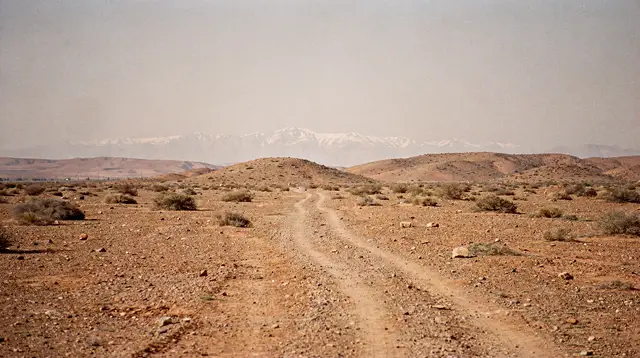
| Atlas peaks | Snow-capped roughly December-March |
| Best hours outdoors | Any time — winter is comfortable all day |
Why the daytime weather is genuinely good
Unlike summer, winter days in Marrakech don’t require any real planning around heat. Highs of 18-19°C under mostly clear skies are comfortable for hours of medina walking, rooftop lunches, and full days spent outdoors without needing shade breaks. This is also the best season for palaces and gardens that get uncomfortably hot in summer — the Bahia Palace with skip-the-line entry and the nearby Saadian Tombs are both far more pleasant to explore slowly in January than in August, when the same rooms and courtyards trap heat with little airflow.
Rain does fall more in winter than any other season, since nearly all of Marrakech’s modest 250-300mm of annual rainfall is concentrated between November and March. In practice this usually means occasional short showers rather than washed-out days, and most winter visits see far more sun than rain.
Even on a rainy day, the medina holds up reasonably well: covered sections of the souks offer real shelter, and most palaces, museums and hammams operate as normal regardless of weather. It’s worth keeping a light rain layer in your bag through winter more as insurance than an expectation, since a genuinely wet full day is uncommon even in the wettest months. Umbrellas are sold cheaply throughout the medina if you get caught out without one, so it’s not worth over-packing for the possibility.
Shaping a winter day in the medina
The simplest winter rhythm follows the sun. Mornings are cool, so they suit a slow start with mint tea and a late breakfast, and the middle of the day is the time to be properly out and about. The medina is at its most comfortable then, and the medina walking route is a good way to spend a long, unhurried stretch without once looking for shade. Come late afternoon, as the light softens and the air cools, it makes sense to move toward somewhere warm: a cafe, a hammam, or a restaurant with a heated or enclosed dining room.
Jemaa el-Fna is a good example of how the season changes a place rather than diminishing it. In winter the square is far more comfortable to linger in during the day, and the evening food stalls feel more atmospheric with the cooler air and the smoke from the grills. Wear a jacket and you can enjoy it fully; the Jemaa el-Fna guide explains how the square shifts from daytime to night, and the food stall guide helps with eating there.
Winter is also the sensible season for the longer, more demanding sights. The Majorelle Garden and the Menara Gardens are far easier to enjoy when you aren’t being driven back toward the shade, and the El Badi Palace has plenty of open courtyard that rewards a cool, bright day. Pair these with the museums, which make good fallback options if a shower arrives, and you can build a flexible plan that never depends on perfect weather. The museums guide lists indoor options worth keeping in reserve.
Why the nights catch people out
Once the sun drops, the temperature follows fast. Evening lows of 6-8°C are genuinely cold, and the issue isn’t just the outdoor temperature — it’s that a lot of riads, built around open courtyards with thick stone walls designed to stay cool in summer, don’t heat well in winter. A room that felt perfectly fine at 2pm can be uncomfortably cold by 9pm, particularly on upper floors or in rooms facing the courtyard directly.
What to pack for the temperature swing
Layering is the entire strategy. A t-shirt or light top works fine for midday, but you’ll want a warm jumper and a proper jacket for morning and evening, plus something to sleep in that isn’t summer-weight. Closed shoes serve better than sandals once the sun goes down, and if you’re booking a riad, ask directly whether heating is available in the room and how it works — some rely on small electric heaters that need requesting in advance rather than running by default.
A hammam is one of the better winter comforts on offer, and it solves the cold-evening problem directly: a souk tour combined with a Berber hammam and massage works well as a warming, low-effort afternoon when the temperature has you wanting to stay indoors. The Marrakech hammam guide covers what to expect if it’s your first visit.
Staying warm and comfortable in the evening
Evenings are when planning pays off. Rather than fighting the cold, build the evening around places that are warm by design. A long dinner in a restaurant with a proper indoor room, a slow hour in a hammam or spa, or an early night with a hot drink on a riad’s heated lounge all feel better in winter than they do in the height of summer. The spa guide and the public versus private hammam comparison help you choose between a local bath and a more private, quieter option.
If you are still deciding where to sleep, the riad versus hotel comparison is worth reading with winter in mind, because the trade-off changes in the cold: a larger hotel often has reliable heating built in, while a riad offers more character but needs a direct question about warmth. The guide to staying in a riad covers what to ask before you confirm a booking. Many travellers also find that a room off the courtyard on a lower floor, or one with a working heater, makes the difference between a cosy stay and a chilly one. Extra blankets are usually available if you ask at reception, and it costs nothing to request them on arrival rather than at midnight.
For the clothing side, the guide to what to wear in Marrakech explains how to dress for both modesty and comfort, which in winter works in your favour: long sleeves and trousers are practical anyway, and a scarf serves as warmth by night and sun cover by day.
The Atlas Mountains in winter
Winter is when the High Atlas earns its postcard reputation: peaks visible from Marrakech rooftops carry snow from roughly December through March, and the mountains themselves take on a different character entirely. An Atlas Mountains and Imlil Valley day trip with waterfalls in winter means colder air at altitude — often several degrees below the city — and occasional icy trail sections, so proper footwear matters more than in any other season.
Oukaimeden, the small ski resort in the High Atlas, runs limited, weather-dependent skiing roughly January through March, though conditions vary year to year and it’s a modest operation rather than a full alpine resort. It’s a genuine novelty rather than a planned ski holiday destination, worth combining with a broader Atlas Mountains day trip rather than booking around on its own.
Even without skiing on the agenda, the snow-capped backdrop itself is one of winter’s better free perks. Rooftop restaurants and terraces across the medina and Gueliz offer clear views of the peaks on a good day, and it’s worth timing a rooftop lunch or coffee for a clear winter morning specifically, since haze and dust in summer often obscure the same view entirely. This clarity is also why photographers rate winter highly for landscape shots looking south from the city toward the range.
The villages and valleys of the range deserve their own mention. Imlil is the usual gateway for winter walks, and the Imlil guide describes what the village offers as a base. Anyone tempted by serious altitude should read the Toubkal trek guide with real caution, since a winter climb is a different undertaking from a summer one and is not something to improvise. For a gentler outing, the Ourika Valley is a classic day out from the city, and the Ourika Valley guide explains what to see along the way. If you would rather see the mountains without committing to a full day outdoors, the two-day Atlas itinerary gives a measured way to do it.
A sensible winter habit is to check the sky before committing to a mountain day. On a clear morning the Atlas looks close enough to touch from the city, and that is usually the signal to go. If cloud sits low over the range, a day in town is the better call, and nothing is lost by swapping the two.
The New Year fortnight is its own case
One winter window behaves differently from the rest: the roughly two weeks spanning Christmas and New Year. Prices on riads and flights spike noticeably above the rest of the season, and popular restaurants and rooftop venues fill up well in advance for New Year’s Eve specifically. If your winter trip falls in this window, book accommodation and any celebratory dinner earlier than you would for a normal January visit, since the usual winter value advantage largely disappears for these two weeks. Outside them, January and February remain among the most reasonably priced months to visit.
Planning your winter days
Winter suits a loose, flexible itinerary better than a rigid one. A short stay fits comfortably into the two-day itinerary or the three-day itinerary, and if you are unsure how long to allow, the guide to three versus five days helps you decide. Because the weather is so rarely a problem for daytime sightseeing, you can keep the plan open and let the day decide, saving the more weather-sensitive excursions for the clearest mornings.
Winter is also a fine moment to think about budget. With fewer visitors outside the New Year window, the Marrakech budget guide is a useful companion for spotting where you can spend less, and the blog piece on the Atlas in winter gives a more personal account of the season in the mountains. If you are weighing whether the trip is right for you at all, is Marrakech worth it offers a frank view.
Who winter suits best
Winter suits travellers who prioritise comfortable daytime sightseeing over warm evenings, and who don’t mind packing an extra layer for the sake of avoiding summer’s heat entirely. It’s a strong season for first-time visitors focused on the medina, the palaces and the souks, since none of that requires fighting the weather the way a July visit does. It suits less well anyone planning to spend long evenings outdoors, or anyone booking a riad without checking its heating situation first — the daytime comfort can create a false sense that the whole day, and night, will feel similarly mild.
Winter is genuinely one of the two best seasons for daytime sightseeing in Marrakech, on par with autumn for comfortable temperatures and ahead of it for clear skies and thin crowds outside the New Year fortnight. The one thing it demands that spring and autumn don’t is real preparation for the cold after dark — pack properly, check your riad’s heating, and the season delivers some of the best value and least crowded sightseeing of the year.
Winter in the desert
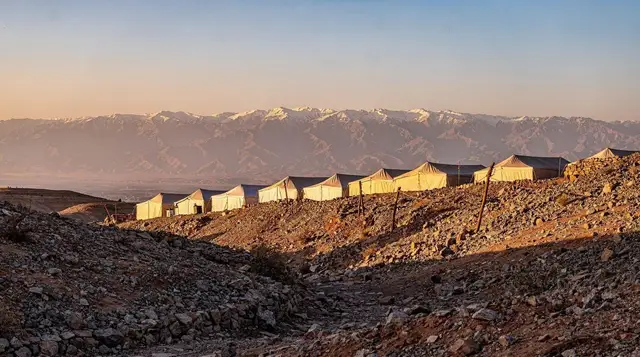
A winter desert overnight can be one of the most memorable additions to a Marrakech trip — clear, cold air makes for exceptional stargazing — but it demands real preparation. Desert nights from December through February regularly drop below 5°C, colder than the city itself, and camps rely on blankets and fires rather than central heating. A one-night Agafay Desert camp stay with a camel ride is the closer, shorter version of this experience if a multi-day Sahara trip doesn’t fit a winter schedule; see Agafay or the real Sahara for how the two compare in more depth.
Winter rewards travellers who prepare for both halves of the day rather than just the pleasant one. For how it compares to the rest of the year, the best time to visit Marrakech lines up all four seasons directly, and Marrakech weather month by month has the exact monthly figures if you’re choosing between specific winter dates.
Seasonal experiences on GetYourGuide
Verified deep-linked GetYourGuide tours. Book through these links and we earn a small commission at no cost to you.
Photo: our own image of the location, not the operator’s product photo.