Menara Gardens Guide
Is Menara Gardens free to visit?
The olive grove and the reflecting pool in front of the pavilion are free and open to anyone. The pavilion building itself charges a small entry fee of a few dirhams. Most visitors only need the free areas — the pavilion's interior is modest.
Menara is the closest thing Marrakech has to a genuinely free garden attraction, and it’s worth understanding what that actually covers before you go. The site is a large rectangular water basin, built in the 12th century and still used to irrigate the surrounding olive groves, with a green-roofed pavilion added in the 19th century on its northern edge. The pool and the groves around it — several hundred acres, still commercially harvested — are open to anyone at no cost. Only the pavilion building itself, which you can climb into for a closer look at the water and, on a clear day, the Atlas Mountains behind it, charges a small entry fee of a few dirhams.
That distinction matters because visitors sometimes arrive expecting the whole site to be free and are surprised by any charge at all, or conversely assume the pavilion fee applies to entering the grounds generally. It doesn’t. Walking the paths around the pool, sitting under the olive trees, and photographing the reflection with the mountains behind it cost nothing, and there’s no ticket booth or barrier at the main entrance gates — you simply walk in from the car park or the roadside path.
| Where | Menara-Agdal district, about 2km southwest of the medina, past Bab Jdid |
| Cost | Free for the grounds and pool; the pavilion charges a small separate fee |
| Time needed | 30–60 minutes |
| Getting there | Taxi from the medina (10–15 minutes) or a longer walk/bike ride through the Hivernage district |
| Best time | Clear winter mornings for mountain visibility; avoid midday in summer heat |
What you actually see here
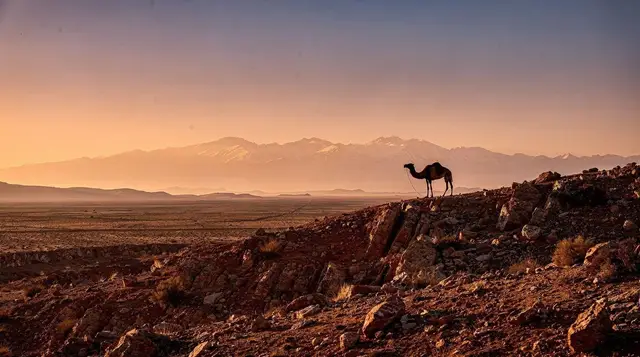
The reflecting pool is the reason people come, and specifically the view across it toward the pavilion with the Atlas Mountains as backdrop — one of the most recognisable postcard images of Marrakech, and one that genuinely depends on the weather. Clear days, especially in winter when snow caps the peaks, produce the shot everyone’s after; summer haze frequently erases the mountains from view entirely, leaving a decent but unremarkable pool photograph instead. It’s worth checking the forecast rather than building a special trip around a hazy August afternoon.
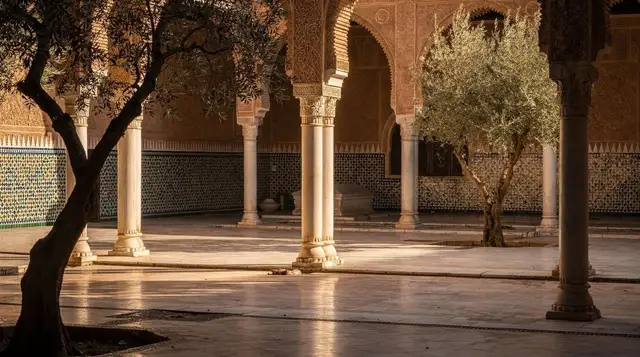
The olive groves surrounding the pool are a working agricultural site, not a landscaped ornamental garden, and walking through them feels noticeably different from Majorelle’s dense botanical planting or Le Jardin Secret’s formal Islamic layout. It’s open, quiet, and largely empty outside weekend afternoons when local families picnic under the trees — genuinely one of the few spots in the city where Marrakchis outnumber tourists. Cyclists and joggers use the perimeter path in the early morning before the day heats up, which is a reasonable time to combine a Menara visit with some exercise if that suits your schedule.
The pavilion and what a paid ticket adds
The green-roofed Saadian-era pavilion on the pool’s edge houses a modest interior — a few rooms once used for royal receptions — and the fee to enter is small enough that it’s not a meaningful budget decision either way. What it mainly buys is a slightly closer vantage point on the water and the chance to see the interior architecture up close, including the carved wooden ceiling. A guided option like this Menara pavilion visit with a digital audio guide adds context on the site’s history and irrigation function that isn’t posted anywhere on-site, which is useful given how little signage exists here compared to Marrakech’s ticketed palaces.
Most visitors are well served by the free grounds alone and can skip the pavilion without missing much; it’s a reasonable add-on if you’re already there and curious, not a reason to make a special trip. Some combined tours pair Menara with Majorelle Garden in a single outing — this Majorelle and Menara gardens carriage tour covers both by horse-drawn carriage, which solves the otherwise awkward taxi logistics of visiting two garden sites on opposite sides of the city in one day.
What Menara doesn’t offer, compared to Marrakech’s other gardens
It’s worth being clear-eyed about what Menara isn’t. There’s no dense planting to wander through, no curated botanical collection, and minimal shade beyond the immediate area around the pavilion and the edges of the olive grove — a real consideration in summer, when the open expanse around the pool offers little relief from direct sun through the middle of the day. Visitors expecting something closer to Majorelle Garden’s cactus terraces or Le Jardin Secret’s shaded courtyards are usually disappointed; Menara rewards a different kind of visit, built around the single wide view rather than a slow walk through varied planting.
The olive grove and how it’s used
The several hundred acres surrounding the pool are a functioning agricultural operation, not simply landscaping around a monument, and the olives harvested here supply oil that’s sold locally rather than existing purely for the view. Harvest typically runs through the autumn months, and visitors passing through during that window sometimes see workers gathering olives by hand or with nets spread beneath the trees, a detail that adds a working, lived-in texture to a site that could otherwise feel purely ornamental. Outside harvest season, the grove functions mainly as shaded walking space, with informal paths cutting between the rows that locals use for exercise and quiet away from the medina’s density.
The scale of the grove also means Menara absorbs visitor numbers more easily than the city’s smaller, ticketed gardens — even a moderately busy weekend rarely feels crowded here the way Majorelle can by mid-morning, simply because there’s so much more ground to spread across. That’s a meaningful practical advantage for anyone visiting during peak season who wants a garden-adjacent outing without the queue management that the ticketed sites require.
A brief history of the basin
The Menara basin dates to the Almohad dynasty in the 12th century, built as part of a wider system of irrigation basins that supplied water to Marrakech’s gardens and orchards using gravity-fed channels from the Atlas foothills. The pavilion seen today, added far later under the Alaouite dynasty in the 19th century, replaced earlier structures and was reportedly used by sultans as a summer retreat, though much of that history is passed down through local guides rather than documented on-site.
The basin’s engineering — a scale of water storage and channel management remarkable for its era — is arguably a more interesting story than the postcard view suggests, and it’s a detail worth reading up on before a visit if the historical context matters to you as much as the photograph.
How to pace your visit
Menara suits a slow, unplanned visit better than a checklist. Arrive, walk to the water’s edge, and take your time with the view before deciding whether the pavilion is worth your attention. Most people do a loop of the pool, pause under the olive trees, and leave feeling they have seen what the site has to offer. If you are travelling with children, the open space is a relief after the medina’s narrow lanes, and there is room to run around that the souks simply do not offer. Our Marrakech with kids guide and the wider family activities page suggest other outings that balance a quiet garden stop with something more active.
Bring water and a hat, since the open ground gives little cover. Wear comfortable shoes for the unpaved paths between the olive rows, and keep your camera or phone ready before you reach the water, because the light on the basin can change quickly. If you plan to photograph the pavilion and the mountains, our Marrakech photography guide has more thoughts on working with light and haze in the city.
Where Menara fits in a Marrakech itinerary
Menara works best as a short, low-effort stop between bigger sights. It pairs naturally with a morning in the Hivernage area or a slow afternoon before dinner, and it gives a quieter counterpoint to days spent in the souks and palaces. If you are building a short stay, the two-day Marrakech itinerary and the three-day itinerary show how to balance headline monuments with calmer moments like this one. Travellers deciding how long to stay can also read our comparison of three versus five days in Marrakech.
For a first visit to the city, the first-time Marrakech guide places gardens like Menara within the bigger picture, so you can judge how much time a free, open site deserves compared with the medina’s busier attractions. If your days are already full, Menara is the sight to drop without regret; if you want a breather, it is the one to keep.
Getting there without stress
A taxi is the simplest way to reach the gardens, and agreeing the fare before you set off avoids the usual argument at the end. Our taxi guide explains how fares and etiquette work, and the getting around Marrakech page covers walking, cycling and other options. For the return trip, ask your driver or your riad to help you arrange a pickup if you are unsure of finding a cab near the gardens. If you prefer to pair the visit with a stay nearby, staying in a riad explains what to expect from the medina’s guesthouses compared with the hotels around Hivernage.
Free sights and the wider budget picture
Because the grounds cost nothing, Menara is a useful way to balance a trip where other sights add up quickly. The Marrakech budget guide shows where free outings like this one fit among paid tickets, meals and transport. It also helps to remember that a free site is not the same as a site with no costs at all: a taxi, a drink, and the optional pavilion ticket are small expenses, but they are still part of the day. Reading the budget page before you go lets you plan which paid sights deserve your money and which free ones, like this garden, can fill the gaps.
Seasons and when to skip it
The reflecting pool rewards clear, cool days, and our best time to visit Marrakech page explains how the seasons shape a trip. In winter the mountain view is at its most photogenic, while in summer the open grounds are hard to enjoy at midday. If the weather looks hazy or very hot, it is perfectly reasonable to swap Menara for an indoor sight such as the museums or a restful hammam, and return on a better day. The weather guide helps you judge what to expect before you commit to a trip across town.
Who will enjoy Menara most
Photographers who care about a single, strong composition will get the most from the site, as will travellers who like open space and quiet more than ornament. Families, joggers and picnickers all find something here, and the relaxed pace suits anyone who needs a pause between busier days. Visitors who want elaborate planting, a museum collection or a guided narrative at every turn will find Menara thin, and they would be better served by Majorelle Garden or the YSL Museum nearby. Think of Menara as a place to breathe, look and move on, not as an all-day destination.
Combining Menara with nearby Hivernage
The walk or short taxi ride between the medina and Menara passes through Hivernage, a quieter, more residential district known for its palm-lined streets and a concentration of mid-range and upscale hotels. It’s a reasonable stretch to build in extra time for if you’re walking rather than taking a direct taxi, offering a calmer contrast to the medina’s density without requiring a special detour of its own.
Getting there and nearby
Menara sits southwest of the medina, past Bab Jdid, in a district covered in more detail in the Menara and Agdal gardens destination guide, which also covers the nearby Agdal Gardens — a much larger historic garden with irregular opening hours, closed whenever the king is in residence at the adjacent palace, so check before planning a visit there specifically. Taxis from the medina take 10–15 minutes and should have a fare agreed before departure.
For a different, ticketed garden experience the same afternoon, Majorelle Garden and Le Jardin Secret both sit closer to the medina and offer denser, more curated planting than Menara’s open parkland. If gardens are the running theme of your Marrakech trip, Anima Garden, further out on the Ourika road, rounds things out with a completely different, more theatrical design.
Garden and photography tours on GetYourGuide
Verified deep-linked GetYourGuide tours. Book through these links and we earn a small commission at no cost to you.
Photo: our own image of the location, not the operator’s product photo.