Marrakech Weather Month by Month
What is the temperature in Marrakech throughout the year?
Daytime highs range from around 18°C in January to 38-40°C+ in July and August. Nights are coolest December-February at 6-8°C and warmest June-August at 18-21°C. Rainfall is light all year and concentrated November-March.
Marrakech’s climate is straightforward in outline — hot dry summers, mild winters, almost no rain — but the month-by-month detail is what actually matters for packing and planning. A trip booked for “spring” can land anywhere between a cool 23°C March and a warm 30°C late May, and those ten degrees change what an afternoon in the medina feels like considerably. Here’s the full year, broken down.
| Warmest months | July, August (38-40°C+) |
| Coolest months | January, February (18-20°C by day) |
| Wettest months | December-February (still light overall) |
| Driest months | June-September |
| Annual rainfall | Roughly 250-300mm, mostly November-March |
Month-by-month temperatures
| Month | Day | Night | Notes |
|---|---|---|---|
| January | 18-19°C | 6°C | Mild days, cold nights, occasional rain |
| February | 20°C | 8°C | Similar to January, warming slightly |
| March | 23°C | 10°C | Start of the best season |
| April | 26°C | 12°C | Widely considered ideal |
| May | 30°C | 15°C | Ideal but warm by midday |
| June | 35°C | 18°C | Hot, transitioning into summer |
| July | 38-40°C+ | 21°C | Peak heat, spikes above 45°C |
| August | 38-40°C+ | 21°C | Same as July |
| September | 33°C | 19°C | Cooling, becoming comfortable |
| October | 28°C | 15°C | Ideal, one of the best months |
| November | 22°C | 11°C | Ideal, cooling toward winter |
| December | 19°C | 7°C | Mild by day, cold at night |
Reading the table: what each range means for a real day
Anything from 20-28°C by day is the comfort zone where a full day of walking — medina, souks, gardens, a rooftop lunch — is enjoyable without much planning around the heat. That covers March through May and September through November, which is why those seven months collectively get recommended more than any others.
Above 30°C, the day still works but needs structure: mornings and evenings for outdoor activity, a shaded or indoor break through the middle hours. This band covers late May through June and creeps back in during early September. Above 35°C — June through August in full — that structure stops being optional; see Marrakech in summer for how to actually plan around it.
Below 20°C by day sounds cold on paper but rarely is in practice, since Marrakech’s winter sun keeps daytime temperatures pleasant even in January. The real winter challenge is the night-time drop to 6-8°C, particularly inside riads without central heating — Marrakech in winter covers that gap in more detail.
Rainfall: lighter than most visitors expect
Marrakech receives only around 250-300mm of rain a year, a fraction of what a typical European or North American city sees, and nearly all of it falls between November and March. Even within that wetter window, rain usually arrives as short, sometimes heavy showers rather than multi-day downpours, and sunny days remain the norm even in the depths of winter. Outside that window, from roughly April through October, meaningful rain is rare enough that packing an umbrella is close to unnecessary.
Rainfall also isn’t evenly spread across the wet months. December and January tend to see the heaviest individual showers, occasionally enough to flood a low-lying medina street briefly, while February and March bring more frequent but lighter rain. None of it typically lasts long enough to derail a day’s plans, and the covered sections of the souks provide reasonable shelter if a shower catches you out walking.
Sunshine, humidity and how the air actually feels
Marrakech sees a genuinely high number of sunny days year-round, with even the wetter winter months averaging several hours of sunshine daily between showers. Humidity stays low throughout the year, since the city sits inland with the Atlas Mountains blocking much of the moisture that would otherwise arrive from the south, and the Atlantic influence from the west is filtered by distance. This low humidity is part of why summer heat, extreme as the numbers look, is more bearable than the same temperature would be in a humid climate — and also why it drops so sharply after dark, since dry air holds far less heat overnight than humid air does.
The one exception worth knowing is the chergui, an occasional hot, dry wind that blows in from the Sahara, usually in late spring or summer. It can push temperatures several degrees above the seasonal average for a day or two and dries the air further still, making already-hot periods feel more intense. It’s not predictable months in advance, but it’s worth checking a short-range forecast rather than relying purely on seasonal averages if you’re travelling in May or June specifically.
Averages versus what you’ll actually get
Every figure in the table above is a long-term average, not a guarantee for your specific week. A “typical” 26°C April can still produce the occasional cooler, cloudier day or an unusually warm spell that pushes past 30°C, and it’s worth checking a short-range forecast once you’re within a week or two of travelling rather than packing purely off seasonal figures. That said, Marrakech’s climate is stable enough that averages are a genuinely reliable planning tool at the month level, even if the exact daily figure on any given Tuesday will vary somewhat around them.
How the weather shapes day trips
The city’s weather isn’t the only variable worth tracking — the Atlas Mountains and the desert run noticeably different temperatures than Marrakech itself. An Atlas Mountains and Ourika Valley day tour climbs into air that’s typically several degrees cooler than the plain, useful relief on a hot Marrakech day and a reason to pack an extra layer even in summer. In the other direction, a day trip to Essaouira trades inland heat for a steady Atlantic breeze that runs notably cooler than the city on almost any given day of the year.
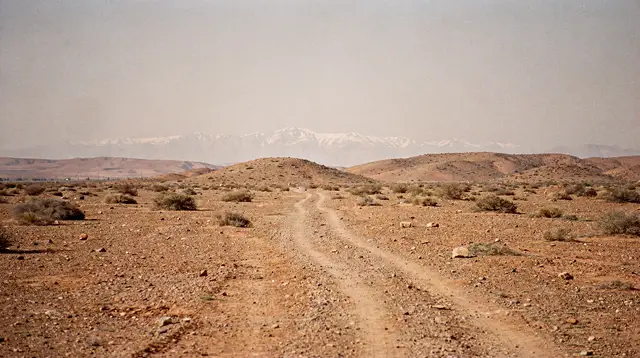
Desert trips run the opposite pattern: daytime desert heat can exceed the city’s, while desert nights, even in summer, drop faster and further than Marrakech itself thanks to clear skies and low humidity. A 3-day desert tour from Marrakech to Merzouga is more comfortable in the shoulder seasons for exactly this reason — moderate daytime heat on the drive, without winter’s near-freezing desert nights.
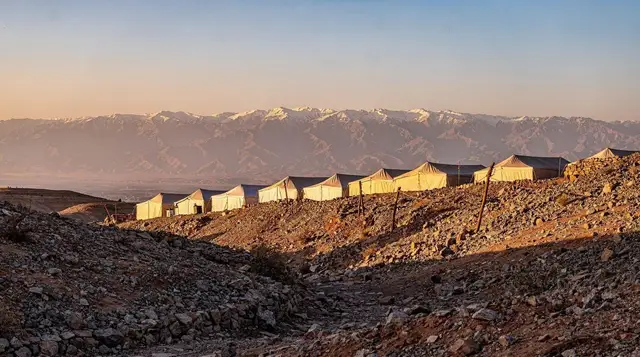
Closer to the city, the Agafay Desert follows the same broad pattern as the Sahara on a smaller scale: daytime heat that can exceed Marrakech’s own temperature on an exposed, shadeless plateau, and evening temperatures that drop faster once the sun goes down than the city centre a short drive away. This is worth factoring into what to pack for even a short desert evening trip, regardless of how warm the day in Marrakech itself has felt. A warm layer in your bag for any evening desert excursion is worth it in every season, not only winter.
Planning a sightseeing day around the temperature
The weather table is most useful when you turn it into a rhythm for the day. In the comfortable months you can walk the old city at almost any hour, so a route like the one in the medina walking route can be done in a single stretch. In the hotter months, the same route works better split in two: the early morning for the narrow, shaded lanes, and the evening for the open squares once the sun drops.
Palaces and gardens reward the same logic. The Bahia Palace and the El Badi Palace have large open courtyards with little shade, so they are best visited early when it is hot, while the Majorelle Garden and the Menara Gardens are far more pleasant in the softer light of the cooler seasons. If the heat catches you out, a museum is an easy shelter: the museums guide lists the indoor options worth a long, slow visit.
Midday is the natural moment for a break whatever the month. A long lunch, a rest back at the riad, or a hammam session all fit the hottest hours well, and the hammam guide explains what to expect if you choose that route. In winter the logic reverses: the middle of the day is the best time to be outside, and the evening is when you want to be somewhere warm.
Choosing where to stay with the climate in mind
The season should influence your accommodation as much as your itinerary. In the hot months a riad with a plunge pool or a shaded courtyard becomes a genuine part of the day, somewhere to retreat between outings. In the cooler months, the question is heating: many traditional houses are built around open courtyards that hold the night chill, so it is worth asking how rooms are warmed before you book. Staying in a riad covers what to look for, and riad versus hotel helps if reliable air conditioning or heating matters more to you than atmosphere.
Location matters too. The tight lanes of the medina trap heat and shade it at the same time, depending on the hour, while the more open streets of the new town feel different. Medina versus Gueliz compares the two areas if you are weighing up which suits your travel month.
What to pack and wear through the year
Marrakech rewards light layers in every season. Breathable cotton and linen suit the warm months, and a light scarf or hat protects against the sun and the occasional dusty wind. In winter, add a proper jumper or jacket for the evenings, since the swing between a mild afternoon and a cold night is the main surprise for first-time visitors. Comfortable closed shoes matter all year, because the medina’s uneven paving is hard on sandals. For guidance on modest, practical clothing that works in the heat, see what to wear in Marrakech, and for the specific extras a desert night demands, the desert tour packing guide is the one to follow.
Sun protection deserves its own line. Sunscreen, sunglasses and a water bottle belong in the bag in every month, not only in summer, because the clear dry air makes the sun strong even on a cool winter afternoon.
Weather and the wider Morocco circuit
If Marrakech is the start of a longer trip, the climate shifts as you travel. The coast, the mountains and the southern oases each have their own pattern, and the best month for one is not always the best for another. The Ourika Valley guide and the Atlas Mountains day trip guide help you judge what the high country feels like in your month, while the Essaouira day trip guide covers the breezier coast. For the long drive south, Marrakech to Merzouga is worth reading before you commit to a season.
Hikers should treat the mountains separately from the city. Conditions at altitude can change quickly and do not follow the forecast for Marrakech, which is why the Toubkal trek guide and the hiking week itinerary are worth consulting before you plan anything strenuous. Visitors travelling by car should also read driving in Morocco, since heat, wind and the occasional winter shower all affect road conditions.
Matching your dates to a trip length
Once you know the month, the next question is how many days to give the city. A short stay in a hot month is easier to manage than a long one, because you are not obliged to fill every hour, while a longer stay in a mild month lets you mix city days with excursions. Marrakech in three versus five days helps you decide, and the two-day itinerary and the three-day itinerary show how a compact visit can be arranged around the heat or the cool.
Using the weather to decide, not to worry
It is easy to over-read a climate table and talk yourself out of a perfectly good trip. The honest summary is that Marrakech works in every month if you adapt to it: the hot months ask you to move your activity to the cooler ends of the day, the cold months ask you to dress for the evenings, and the in-between months ask for very little at all. If your dates are fixed, treat the weather as a planning input rather than a verdict, and build the schedule around it. Families with young children, older travellers and anyone sensitive to heat will feel the difference most, so Marrakech with kids is worth a look if that describes your group.
If your priority is simply the easiest possible experience, aim for the shoulder months and keep a flexible first morning, so that a surprise cool spell or warm day does not force a rethink. If your priority is value or avoiding crowds, the quieter months can suit you well as long as you are comfortable with the trade-offs described above. Whichever you choose, a quick look at the short-range forecast a few days before you fly will tell you more than any average can.
For the season-by-season verdict rather than the raw numbers, the best time to visit Marrakech pulls this same data into a direct recommendation, and visiting Marrakech during Ramadan is worth checking separately if your dates might overlap with the fasting month, since it changes daily rhythm independent of the season.
Seasonal experiences on GetYourGuide
Verified deep-linked GetYourGuide tours. Book through these links and we earn a small commission at no cost to you.
Photo: our own image of the location, not the operator’s product photo.