Ourika Valley guide
What is Ourika Valley and is it worth visiting?
Ourika is a river valley in the High Atlas about an hour from Marrakech, lined with restaurants built into the riverbed and leading up to the village of Setti Fatma and its waterfalls. It's worth doing as an easy half or full day out, though it's more about the drive and the riverside setting than any single attraction.
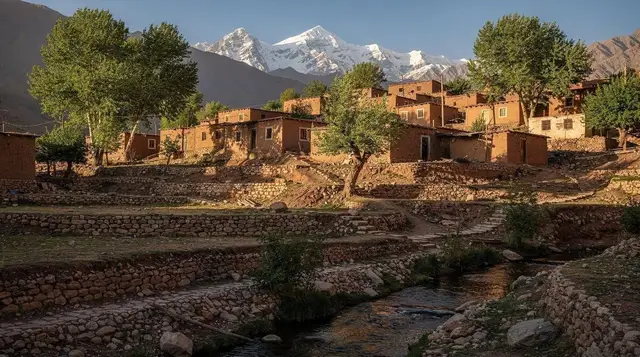
Ourika Valley is the Atlas Mountains day trip most visitors to Marrakech end up on, not necessarily because it’s the most spectacular option but because it’s the closest and easiest. The road up from the city is good, the drive takes about an hour, and the valley itself has a clear, repeatable structure: villages and orchards on the lower slopes, a strip of restaurants built directly into the riverbed, and the road continuing up towards Setti Fatma and its waterfalls.
It’s a pleasant day rather than a dramatic one. Understanding that in advance saves disappointment for travellers expecting something closer to genuine wilderness.
| Where | High Atlas foothills, about 1 hour south of Marrakech |
| Cost | Shared day trips roughly 250-400 MAD (23-37 €); lunch typically 80-150 MAD (7-14 €) extra if not included |
| Time needed | Half day (4-5 hours) to full day if combined with Setti Fatma |
| Getting there | Shared or private day tour, or self-drive on the well-signed P2017 road |
| Best time | Spring and autumn for comfortable weather; avoid lingering riverside during or after storms |
The drive up the valley
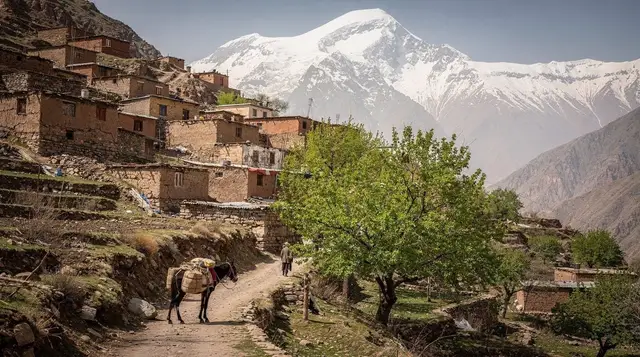
The road from Marrakech climbs gradually, passing through small villages, roadside stalls selling walnuts and dried fruit, and increasingly green terraced slopes as you gain altitude. It’s a scenic drive in its own right, and most tours build in a photo stop or two along the way. A standard day trip to Ourika Valley from Marrakech covers this drive with a guide who’ll usually point out the agriculture and irrigation systems that make the valley one of the more fertile pockets near the city.
The riverside restaurants
The signature image of Ourika is the string of restaurants built on platforms directly over the riverbed, shaded by trees and often reached by short wooden footbridges. They serve fairly standard tourist-oriented Moroccan food — tagines, grilled meat, salads — at prices a little higher than you’d pay in the Marrakech medina but reasonable for a sit-down meal with the setting. A day trip pairing a camel ride with lunch in Ourika is a common package that adds a short camel ride to the standard restaurant stop.
Choose a restaurant that’s visibly busy with other tour groups rather than the first one someone tries to steer you towards; quality and value both tend to track popularity here, much as they do with food stalls in Jemaa el-Fna.
The flash flood risk — take this seriously
Ourika Valley has a documented history of sudden, dangerous flash floods, most often in August and September when intense localised storms in the High Atlas send a fast-moving wall of water down the narrow riverbed. The danger is that it can happen even when the weather at the restaurants themselves looks calm — the storm is happening upstream, out of sight, and the water arrives with very little warning. Restaurant platforms and footbridges built close to or over the riverbed are exactly the structures most exposed.
The practical rule is simple: if there’s been recent rain in the mountains, if the sky looks unsettled, or if a guide or restaurant staff seem uneasy about the weather, don’t sit directly over or immediately beside the riverbed, and move to higher ground without waiting to see what happens. This isn’t a remote statistical risk — it’s a known local hazard that tour operators and restaurant owners are generally aware of and take seriously, and visitors should too.
Continuing on to Setti Fatma
Most full-day Ourika trips continue up the valley road to Setti Fatma, where a scramble over rocks leads to the first of seven waterfalls in around 30-45 minutes. An Ourika Valley waterfalls day trip typically bundles both stops into one itinerary. The Setti Fatma waterfalls guide covers what the walk actually involves and why most visitors only manage the first cascade or two.
Photography along the valley road
Ourika’s mix of terraced agriculture, mountain backdrop and the riverside restaurant scene gives plenty of photo opportunities along the way, and most tours build in at least one dedicated stop specifically for photos rather than expecting you to shoot from a moving vehicle. Early morning light on the terraces tends to be more flattering than the flatter light of midday, which is one more reason an earlier departure from Marrakech pays off beyond simply beating the crowds to the restaurant strip. Drone photography is technically restricted in Morocco without the correct permits, so it’s worth leaving a drone at the hotel rather than assuming casual use is fine in a scenic valley like this one.
Villages and terraced farming along the way
The valley’s lower and middle slopes are terraced for agriculture — walnut and fruit orchards, vegetable plots and small irrigation channels that carry water down from higher in the mountains, a system that’s sustained farming here for generations. Several small villages sit along the road, most too small to have a name recognised outside the immediate area, but worth a slow look through the vehicle window as the road climbs, since they give a more grounded sense of daily Atlas life than the restaurant strip further up. Some day tours build in a brief stop at one of these villages, though it’s less formalised than a dedicated Berber village visit and shouldn’t be expected as standard on every itinerary.
Weather and what to pack
Ourika sits noticeably cooler than Marrakech given the increase in altitude, which is part of its appeal as a summer escape from the city’s heat — expect temperatures several degrees lower than in the medina, particularly once you’re up near Setti Fatma. A light layer is worth bringing even in summer, since shaded riverside restaurant tables can feel cool once you’re out of direct sun, and the temperature drops further if you continue up towards the waterfall walk. In winter, temperatures in the valley can be markedly colder than Marrakech, occasionally with light snow visible on the higher peaks above, so a proper jacket is worth packing for a winter visit rather than assuming Morocco means warm weather everywhere.
Shopping and informal guides along the road
As with most tourist routes in Morocco, Ourika has its share of roadside stalls selling argan oil, rugs and local produce, along with people offering to “guide” you to specific spots for a fee. None of this is inherently a problem, but prices for informal guiding or goods are rarely fixed — agree a figure before accepting help or making a purchase, the same haggling approach that applies throughout Marrakech and its surrounding valleys.
A private Ourika Valley excursion with a guided hike is a more structured way to combine the drive, the restaurant stop and a proper walk without needing to negotiate informal guiding on the day.
Choosing between a tour and driving yourself
The valley suits both approaches, and the choice mostly comes down to how much you want to organise. A tour removes parking, navigation and the question of which restaurant to trust, and a guide can explain what you’re looking at along the way. Driving yourself gives you control over timing, which matters if you want to leave early or linger over a long lunch. The trade-offs are laid out in guided tour or independent travel, and if you lean towards a rental car, driving in Morocco explains what to expect from mountain roads, police checks and local driving habits before you commit.
If you don’t want to rent a car but don’t want a group either, a private driver sits in between: you set the pace, and someone local deals with the road. For anything beyond the first stretch of the valley, it is worth deciding in advance where you intend to stop for lunch, so that you aren’t choosing under pressure from a tout at your car window.
Who Ourika suits best
Ourika works well for first-time visitors who want a taste of the mountains without a long day of travel. After the intensity of the medina, the quiet of the valley is a genuine change of pace, and the Marrakech first-timer guide lists it among the easy additions to a city stay. Families tend to like it because nothing in the standard itinerary is demanding, and Marrakech with kids is worth reading for the practical side of travelling with younger children, including how to pace a day that starts early.
It suits less well anyone who wants a serious walk, a night in the mountains or a sense of isolation. For that, look at the Toubkal trek guide or a longer stay in the High Atlas rather than a single day trip.
Timing your day
An early start is the single most useful piece of advice for this valley. Leaving Marrakech in the morning means a calmer road, softer light for photographs, and a better chance of getting a table you like before the tour groups arrive. It also gives you margin if you continue to Setti Fatma, since the scramble to the falls is easier when you are not hurrying to beat the afternoon. If you are visiting in the hotter months, an early start also means doing the walking before the heat builds; Marrakech in summer and the Marrakech weather guide explain what the seasons are like in the city and why the valley feels so different from it.
For the choice of season itself, the best time to visit Marrakech covers the broader picture. Remember that the flash-flood risk described above is tied to the stormier months, so treat the weather forecast for the mountains, not just for the city, as part of your planning.
What to wear and carry
Comfortable shoes with a decent grip matter more here than anywhere else on a typical Marrakech day, because the path to the falls crosses rocks that are often damp. Beyond footwear, dress modestly when passing through villages, as you would elsewhere in the country; what to wear in Marrakech covers the reasoning without turning it into a rulebook. Carry water, a small amount of cash for lunch, tips and small purchases, and keep your phone and valuables somewhere secure when scrambling over rocks. If you are unsure how much to leave at the end of a meal or for a guide, tipping in Morocco explains the usual customs.
A slower look at the setting
The valley is part of the wider High Atlas, and seeing it as such helps explain what you are driving through. The Ourika Valley destination page places it on the map alongside its neighbours, and the High Atlas overview gives the larger context of the range behind it. Further up the road, Setti Fatma is the village where the valley road effectively ends and the walking begins, while Asni belongs to a different approach into the mountains and is a useful reference point if you are comparing routes.
Take a moment at lunch to enjoy the setting rather than rushing on. Mint tea after a meal is part of the rhythm of the day, and the Moroccan mint tea guide explains how it is poured and why it is offered. Roadside stalls selling argan products are a common feature of the route, and the argan oil guide helps you tell a genuine cooperative product from a souvenir sold at a tourist markup.
Staying safe and avoiding hassle
The valley is generally an easy place to travel, but the same awareness that serves you in the city applies here. People who approach cars at parking areas, or who offer unrequested help, are usually after a commission or a fee. Being polite, firm and clear about prices handles most situations, and the haggling guide gives a practical approach to negotiating without friction. For a broader view of the common tricks aimed at visitors, see the Marrakech scams guide and the Marrakech safety guide, both of which apply equally once you leave the medina.
Making the day part of a longer stay
Ourika rarely needs a full day of its own if you are short on time, which makes it easy to fit around other plans. The best day trips from Marrakech puts it alongside the alternatives so you can choose according to your interests, and the two days in the Atlas itinerary shows how to give the mountains more room if one afternoon feels too short. If you are building the rest of the trip around it, the three-day Marrakech itinerary leaves space for a valley day without rushing the city. For a more personal take on the mountains in the colder months, the blog piece the Atlas in winter is a good companion read, and photography tips for Marrakech is useful if you plan to shoot the terraces and the river.
Combining Ourika with other stops
Ourika pairs naturally with Setti Fatma on the same road, and several tours extend further to include Asni or a Berber village visit — see Berber village visits, honestly before booking one of these, since the quality and honesty of these stops varies considerably. It doesn’t pair sensibly with Ouzoud Falls or Imlil in a single day; both require the bulk of a full day on their own. If you’re deciding between Ourika and the more dramatic but further-out waterfall, Ouzoud or Ourika lays out the trade-off directly.
For the wider comparison of Atlas day-trip options, see Atlas Mountains day trips. If you’d rather trade the restaurant-strip atmosphere for a mountain village with mules and gîtes, the Imlil guide covers the alternative an hour further along a different road.
Atlas Mountains and valley tours on GetYourGuide
Verified deep-linked GetYourGuide tours. Book through these links and we earn a small commission at no cost to you.
Photo: our own image of the location, not the operator’s product photo.