Imlil guide
What is Imlil and why do people visit?
Imlil is a mountain village at 1,740 metres in the High Atlas, about 1 hour 30 minutes from Marrakech, and the starting point for treks up Mount Toubkal. It works both as a day trip for a gentle walk and mountain air, and as a base for one or more nights before heading higher.
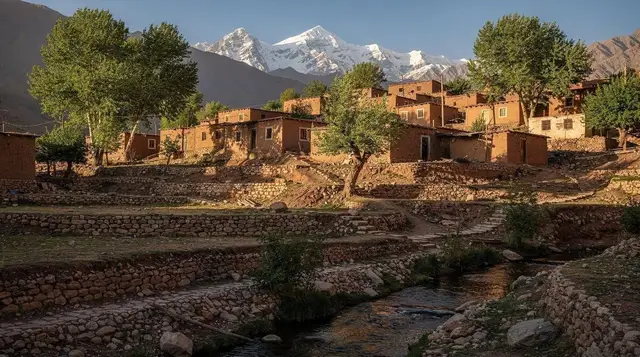
Imlil is a small village at 1,740 metres in the Ait Mizane valley, about 1 hour 30 minutes’ drive from Marrakech, and it’s the place most people mean when they talk about “the Atlas Mountains” in a more serious sense than a riverside lunch stop. It’s the trailhead for Mount Toubkal, North Africa’s highest peak, but it’s also a worthwhile destination on its own — a walkable mountain village with mule trains carrying supplies, small gîtes, and views that make Marrakech’s heat feel a long way off even though it isn’t.
This guide covers Imlil as a day trip and as an overnight base, separately from the full trek itself, which has its own guide.
| Where | Ait Mizane valley, High Atlas, 1,740m elevation |
| Cost | Day trips roughly 300-500 MAD (28-46 €); gîte beds from around 150-300 MAD (14-28 €) per night |
| Time needed | Half day for a village visit; a full day with the Aroumd walk; overnight if combining with any trekking |
| Getting there | About 1h30 from Marrakech by tour, private car or grand taxi from Bab Doukkala |
| Best time | April-June and September-October for mild trekking weather; clear but cold December-February |
What Imlil actually looks like
Imlil is small — a main street of shops selling trekking gear and snacks, a scattering of gîtes and guesthouses, and a trailhead office where Toubkal guides and mules are arranged. It’s built into a steep valley side, so most walking within the village itself involves some incline, and the surrounding slopes are terraced with apple and walnut orchards that give the valley a cultivated, lived-in feel rather than pure wilderness. A guided Imlil walking tour covers the village and its immediate surroundings without requiring any serious hiking fitness.
The walk to Aroumd
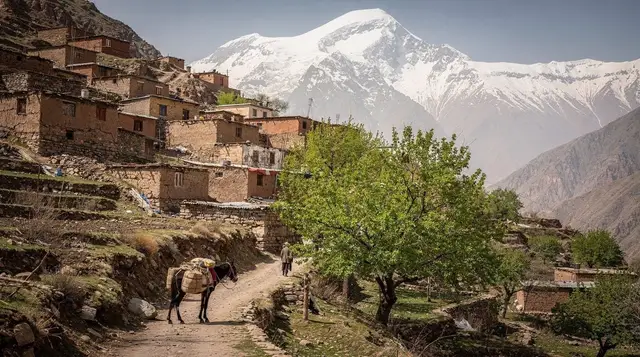
The most rewarding short walk from Imlil goes to Aroumd, a smaller and quieter village about 45 minutes further up the valley on foot. The path is unpaved but not technical, climbing gently with views back down the Ait Mizane valley, and it’s a reasonable target for anyone who wants a taste of mountain walking without any of Toubkal’s altitude or duration demands. An Imlil village and Kik Plateau day trip extends the outing further onto open plateau terrain above the valley, which suits travellers wanting more distance and a different landscape from the valley floor.
Mules, not just for trekkers
One of the more distinctive sights in Imlil is the constant traffic of mules carrying supplies, luggage and building materials up and down the steep paths, since much of the valley above the village has no vehicle access at all. This isn’t a tourist performance — it’s how goods actually move here, and it’s worth watching for a few minutes rather than walking past. Mule hire is also available for visitors who want the option on a longer walk or trek, typically arranged through the same trailhead office that organises Toubkal guides.
Lunch in a local family house
A common and worthwhile addition to an Imlil day trip is lunch cooked and served in a local family’s home rather than a restaurant — a more direct way to put money into the village economy and to get an honest sense of daily life rather than a staged cultural show. An Imlil day trip with lunch in a local family house is the standard version of this, usually including the walk to Aroumd or a similar short outing either side of the meal.
Imlil as a base rather than a day trip
Staying overnight in Imlil changes the visit considerably. Evenings are quiet and cold even in summer once the sun drops behind the ridgeline, gîtes serve simple home-style dinners, and the early morning light on the surrounding peaks is markedly better than anything you’ll see arriving mid-morning on a day tour. An Atlas Mountains Imlil valley tour with waterfalls works well as a first day if you’re staying over, saving a further walk or the Toubkal ascent itself for the following morning.
An overnight stay also removes the time pressure of a day trip, which matters if you want to properly explore rather than rushing between Imlil and Aroumd inside a few hours before the drive back to Marrakech.
Imlil and Toubkal
Since 2023, anyone summiting Mount Toubkal has been required to use an accredited guide, and Imlil is where those guides and the standard two-day itinerary are organised. Even travellers with no intention of attempting the summit will see the trekking infrastructure everywhere — porters, mule handlers and shops geared entirely towards multi-day treks. The full trekking Mount Toubkal guide covers the ascent itself, the mandatory guide requirement, and what the classic two-day format actually involves.
Choosing between Imlil and the other mountain options
Marrakech sits close to several mountain destinations, and each one answers a different mood. The Ourika Valley is the easy riverside option, Setti Fatma adds waterfalls at the end of that same valley, and Oukaimeden is better known for its high-altitude setting. Imlil is the one that feels most like a working mountain community, and it is the natural pick if the idea of walking from one village to the next appeals to you. If you are still weighing the choices, the Atlas Mountains day trip guide and the best day trips from Marrakech put them side by side. For the wider picture of the range itself, the High Atlas destination page gives useful context, and the village has its own entry at Imlil.
How a typical day trip unfolds
Most day trips follow the same rhythm. You leave Marrakech in the morning, the road climbs gradually into the foothills, and the landscape changes from flat plain to terraced slopes well before you reach the village. Once in Imlil, there is usually time for tea, a walk through the village, and the path towards Aroumd, with lunch somewhere along the way, either in a gîte, a small café or a family home. The return drive takes you back to Marrakech in the late afternoon. Because the drive eats into the day, a tour that starts early gives you more daylight on the trail and a calmer village before the groups arrive.
If you would rather skip the logistics of a group outing, the guided tour versus independent travel guide helps you decide how much you want arranged for you. Travellers who like the idea of a mountain day but want a gentler pace can combine it with a slower afternoon, since nothing forces you to push on to the highest viewpoint.
Who Imlil suits best
Imlil works well for walkers of any level who enjoy being outdoors, for travellers who have already spent a few days in the medina and want a change of scenery, and for families with older children who can manage an uneven path. The terrain is the main consideration: paths are unpaved, steep in places and shared with mules, so sturdy shoes matter more than any special equipment. If you are travelling with younger children, the Marrakech with kids guide gives broader advice on what suits them, and you may decide that a shorter stroll in the village is plenty.
Those who prefer a more active outing can look at mountain biking from Marrakech, which covers another way of getting out of the city and into the hills.
Fitting Imlil into a longer stay
Imlil rewards a little planning. Because the village is a place to slow down, it sits well in an itinerary after the busier days in the city. The Marrakech Atlas two-day itinerary shows how a mountain overnight can be built into a trip, and the Marrakech hiking week goes further for anyone who wants walking to be the centre of the visit. If you are still deciding how long to spend in the city itself, the Marrakech first-time guide will help you shape the rest of the trip around a mountain day.
Seasonal timing also shapes the experience. The best time to visit Marrakech explains how the year unfolds, and the same logic applies in the mountains, where weather changes the feel of every walk. For a reflective account of the range outside the main season, the blog piece on the Atlas in winter is a good companion read.
Getting the most from your time in the village
Slow down once you arrive. The best moments in Imlil are rarely the planned ones: a conversation over tea, the sound of a mule train on the path, the light changing on the slopes. Leave room in the day for these rather than packing in every possible stop. Carry water, keep small change for simple purchases, and take your time on the climb to Aroumd rather than treating it as something to complete quickly. Walking at a conversational pace is both more pleasant and more sensible on uneven ground.
It also helps to think about the return journey before you set off. If you are travelling by grand taxi or private car, agree the pick-up arrangement in advance so you are not hurrying back along the trail. For more on how the transport side works, the getting around Marrakech guide covers the basics of moving around the region.
Phone signal and connectivity
Mobile coverage in Imlil itself is generally reliable enough for messaging and basic browsing, since the village is well established as a trekking hub with corresponding infrastructure, but signal thins out quickly once you’re on the trail towards Aroumd or higher into the valley. Wifi is commonly available in gîtes and guesthouses, though speed and reliability vary considerably between establishments. It’s worth downloading offline maps and letting anyone expecting to hear from you know that connectivity may be patchy for a few hours if you’re heading beyond the village centre, rather than assuming constant coverage the way you’d expect in Marrakech.
Weather and what to pack
Imlil’s higher altitude means noticeably cooler temperatures than Marrakech year-round, and the difference is more pronounced than many first-time visitors expect — a warm, sunny afternoon in the city can coincide with a genuinely chilly morning in the village, particularly before the sun clears the surrounding ridgeline. Layers work better than a single heavy jacket, since temperatures swing considerably between direct sun and shade, and between daytime walking and sitting still in the evening. Rain is more common here than in Marrakech, especially in spring, so a light waterproof layer is worth packing even on a day trip, not just for an overnight stay.
Shops and trekking gear
Imlil’s main street has a reasonable selection of shops selling or renting basic trekking gear — walking poles, gloves, hats, and simple waterproofs — aimed at travellers who arrive underprepared for a spontaneous walk or trek. Quality and price vary between shops, so it’s worth a quick look at two or three rather than buying from the first one you pass, and renting rather than buying makes sense for anyone who won’t need the gear again after this trip. This is a useful backup rather than something to rely on exclusively — travellers planning anything beyond a short village walk are still better off arriving with their own proper footwear.
Respecting the village and its economy
Imlil depends heavily on trekking and day-trip tourism, and the same etiquette that applies to any Berber village visit applies here: ask before photographing people, expect that a tea invitation from a shop or gîte owner may come with a sales pitch attached, and don’t hand out sweets or money to children, which encourages begging rather than helping anyone. The Berber village visits guide covers this in more detail and applies directly to Imlil and Aroumd.
Before you go
A mountain day asks for a little more preparation than a city outing. Check the weather before you leave, since conditions in the valley can differ from those in Marrakech, and read the Marrakech weather guide for a sense of how the seasons behave. Bring comfortable walking shoes, a layer for the evening, and enough water for the trail. If you plan to stay overnight, tell your gîte what time you expect to arrive, and keep your plans flexible in case the walk takes longer than you thought. A relaxed attitude is the best piece of kit for a village where nothing is hurried, and it makes the contrast with the medina, described in the Marrakech medina walking route, all the more enjoyable.
For the fuller mountain-day comparison, see Atlas Mountains day trips. If a village stop closer to Marrakech suits your schedule better, the Ourika Valley guide covers the easier, lower-altitude alternative.
Atlas Mountains and valley tours on GetYourGuide
Verified deep-linked GetYourGuide tours. Book through these links and we earn a small commission at no cost to you.
Photo: our own image of the location, not the operator’s product photo.