The Atlas in Winter
I’ve stood in a Marrakech courtyard in a t-shirt at midday in January, looked south, and seen a genuinely snow-capped mountain range on the horizon like something out of a postcard mismatch. That’s not a trick of distance or imagination. The High Atlas holds snow through the winter months while the city at its feet stays mild enough for lunch outdoors, and the two exist within an hour of each other without contradiction.
Two climates, one short drive
Marrakech in winter typically sits around 18–20°C by day, cool but entirely pleasant, with nights dropping to 5–8°C. Drive an hour toward Imlil or Oukaimeden and the temperature falls steadily with the altitude, until the peaks above roughly 2,500 metres are reliably under snow from December through into March some years. It’s an odd, specific kind of day trip — leaving a city where a light jacket suffices and arriving somewhere that genuinely calls for gloves.
Imlil, the gateway village, in its quieter season
Imlil sits at the base of Toubkal, North Africa’s highest peak, and functions as the trailhead village for most Atlas trekking. In winter it empties of the summer’s serious hiking traffic and takes on a different character — mules still working the steep paths, walnut trees bare, woodsmoke from village houses hanging low in the cold morning air. An Atlas Mountains Imlil Valley trip with waterfalls in this season shows a valley genuinely different from its summer self — quieter trails, sharper light, and snow visible on the surrounding ridgelines even when the valley floor itself stays clear.
Oukaimeden: skiing an hour from a warm city
Oukaimeden, roughly 75 minutes from Marrakech, is one of Africa’s few functioning ski resorts, with lifts running when snowfall allows, typically from December into March depending on the year. It’s a modest operation by Alpine standards — a handful of runs, rental gear that’s serviceable rather than premium — but the sheer improbability of skiing an hour from a city where locals are still sitting outside cafés in light layers is most of the appeal.
An Oukaimeden day trip with Berber villages combines the resort with stops in the valleys below, worthwhile even in years when snow cover is thin, since the drive and villages hold up regardless of what the lifts are doing that week.
Berber villages under a different light
Villages throughout the high valleys look different in winter — flat mud-brick roofs sometimes dusted with snow, terraced fields lying dormant instead of green, smoke rising from more chimneys than you’d see in April. A day trip to Atlas Mountains and Berber villages in this season often includes a stop for mint tea by a wood stove rather than in a shaded courtyard, which changes the whole tone of the visit — slower, warmer in the specific sense of shelter rather than climate, and quieter without the summer’s day-tripper volume.
What to actually wear, since the gap catches people out
The single biggest planning mistake for a winter Atlas day trip is dressing for the Marrakech morning rather than the mountain afternoon. Layers are essential: something light for the city departure, a proper warm layer and waterproof outer shell for altitude, and solid closed shoes if snow or slush is likely underfoot. Sunglasses matter more than people expect too — snow glare at altitude is genuinely strong even on an overcast day.
A short hike, properly bundled
A half-day guided trek from Imlil in winter conditions is a different, gentler proposition than the same route in July — shorter daylight hours mean an earlier start, and a guide who knows current trail conditions is worth far more in winter than in the reliable dry season, when ice and recent snowfall can close sections without warning.
The light is different, and photographers know it
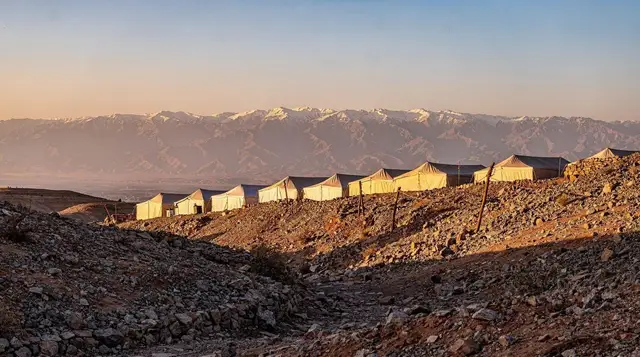
Winter’s lower sun angle changes the whole character of the Atlas landscape — longer shadows carving out the terraced fields, snow on distant peaks catching a warmer late-afternoon light than the flat glare of a summer noon ever produces. Photographers who know the region often prefer this season specifically for that reason, even setting aside the practical advantages of thinner crowds. A day spent chasing this particular light, from a village courtyard in the morning to a snow-dusted ridge by early afternoon, rewards patience more than any single fixed itinerary could.
Why the contrast rarely gets old
I’ve made this particular day trip more times than I can easily count, and the specific moment of stepping out of a warm van into properly cold mountain air, then looking back down the valley toward a city still basking in short sleeves, hasn’t lost its strangeness yet. It’s not a spectacular landscape in the way the Alps or the Rockies are — the High Atlas is more modest, more lived-in, dotted with working villages rather than resort infrastructure — but that modesty is part of the appeal. This is a mountain range people actually farm and herd through the winter, not a backdrop built purely for visitors.
Wildlife and quieter trails in the cold months
Winter thins out more than just the tourist traffic — several bird species overwinter in the high valleys, and the quieter trails around Imlil and Oukaimeden make for genuinely better wildlife spotting than the busier, louder trekking season allows. It’s a small bonus rarely mentioned in standard trip planning, but hikers who slow down and go quiet on a winter Atlas trail are consistently rewarded with sightings that a summer crowd, moving in larger groups and talking as they go, simply doesn’t get the chance to notice.
Booking around uncertain snow, sensibly
Because snowfall varies meaningfully from year to year, it’s worth building any winter Atlas day around activities that hold up regardless of whether the season delivers a heavy or a thin year — a valley drive, a village visit, a lower-altitude walk — and treating skiing or a snow-dune sighting at the summit as a bonus rather than the guaranteed centrepiece. Operators running Oukaimeden trips generally know current conditions well and will say plainly if the lifts aren’t running that week; trust that assessment over an outdated blog post or a hopeful assumption based on the calendar alone.
Where to go next, depending on your winter plans
If the mountains are only one part of your trip, the Marrakech in winter guide explains what the city itself offers in the cold months, and the best time to visit Marrakech guide helps you decide whether winter suits you at all. For a closer look at the places mentioned here, the pages on Imlil, Oukaimeden and the wider High Atlas give the local context, while Asni is one of the villages you pass on the way up.
Travellers who want the valleys without the altitude can look at the Ourika Valley and Setti Fatma, which make a gentler winter outing. The Berber village visits guide is worth reading before you step into a family home for tea, and the guided tour vs independent comparison helps if you’re unsure whether to drive yourself on mountain roads in winter. The what to wear in Marrakech guide also covers the layering question in more detail.
For building the mountains into a longer stay, the two-day Atlas itinerary and the hiking week itinerary show how the pieces fit together, and the Marrakech weather guide is the place to check what the seasons usually bring. If you like the reflective side of travel writing, Is Marrakech worth it? and Desert dawns make good companions to this piece.
Why it’s worth the layers
The contrast is what stays with you — leaving a mild city morning and, within an hour, standing somewhere with snow crunching underfoot and your breath visible in the air, before returning that same evening to a rooftop dinner back down at 20°C. Few places offer that specific whiplash so easily.
The Atlas Mountains day trip guide covers route options in more depth, the Imlil guide is essential if you’re basing a full day around the valley, the Toubkal trek guide is the one to read seriously before any winter summit ambitions, and the Ourika Valley guide covers the lower, gentler alternative if full winter mountain conditions aren’t what you’re after this trip.
tours.Stories
Verified deep-linked GetYourGuide tours. Book through these links and we earn a small commission at no cost to you.
Photo: our own image of the location, not the operator’s product photo.