Visiting a Berber village honestly
What does a 'Berber village visit' near Marrakech actually involve?
Most tours include a walk through a High Atlas village, a stop at a family home for mint tea (which is often, honestly, a sales pitch for argan oil or crafts), and sometimes a simple lunch. 'Berber' is the term most tours use, but 'Amazigh' is the correct and preferred term for the indigenous people of North Africa, including the communities you'll be visiting.
“Berber village visit” appears on nearly every Atlas Mountains day-trip itinerary out of Marrakech, and it’s worth understanding what’s actually on offer before you book one, both practically and in terms of terminology. The people who live in these villages are Amazigh — the indigenous people of North Africa — and while “Berber” remains the term most tourism marketing uses, “Amazigh” is the one the communities themselves prefer.
This guide covers what a typical visit involves, the tea-and-sales-pitch dynamic that catches some travellers off guard, and how to visit in a way that’s genuinely respectful rather than just polite.
| Where | High Atlas villages, most commonly around Ourika, Asni, Imlil and the wider Ait Mizane and Ourika valleys |
| Cost | Usually bundled into a broader Atlas day trip, 250-500 MAD (23-46 €); expect informal offers to buy crafts on top |
| Time needed | 1-2 hours as part of a longer day trip |
| Getting there | Included as a stop on most Ourika, Imlil or Asni-based tours |
| Best time | Any season; spring and autumn make the walking parts of the visit more comfortable |
Berber or Amazigh: the terminology that matters
“Berber” is the word most guidebooks, tour operators and even road signs use, but it derives from a term historically applied by outsiders and carries connotations some Amazigh people find outdated or even pejorative, depending on context. “Amazigh” (plural “Imazighen”) is the term the people themselves use, and it’s increasingly recognised officially — Tamazight, the Amazigh language, has constitutional status in Morocco alongside Arabic. Using “Amazigh” rather than “Berber” when you’re talking with a guide or a village host costs nothing and is simply the more respectful, accurate choice, even though this guide’s title uses the word most searches expect.
What a typical visit actually looks like
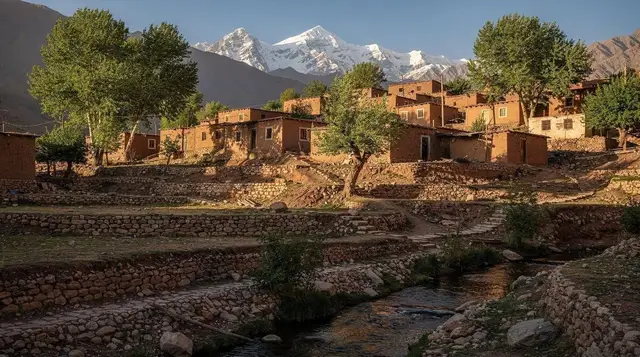
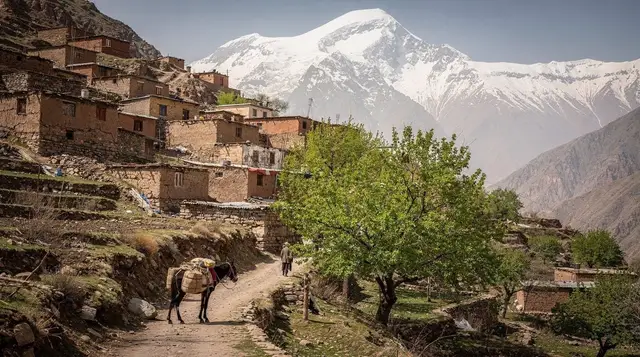
Most Berber village tours follow a similar shape: a drive into the High Atlas, a walk through a village with a local or Marrakech-based guide narrating daily life, a stop at a family home for mint tea, and often a simple lunch cooked on site. A day trip to the Atlas Mountains and Berber villages follows this standard format. Some tours add a cooking demonstration or a market visit if timed to coincide with a local souk day — an Atlas Mountains day trip combining a market, cooking and village walk is built specifically around this fuller version.
Which village you end up in depends largely on the route your operator has chosen. Tours heading up the Ourika Valley tend to stop in the hamlets along the river, those going via Asni climb towards the trekking country around Imlil, and some drive on towards Amizmiz or the wider High Atlas. The broader choices are laid out in the Atlas Mountains day trip guide, which is a good place to start if you have not yet decided which direction suits you.
The tea invitation, honestly
The mint tea stop in a family home is a fixture of these tours, and it’s worth knowing upfront that it’s frequently followed by a display of argan oil, rugs, jewellery or other crafts for sale. This isn’t a bait-and-switch exactly — households genuinely do welcome visitors and serve tea as hospitality, but tourism has also made this a recognised, semi-formalised income stream, and guides know it. You’re under no obligation to buy anything, and a polite decline is entirely normal and accepted; but going in aware of the dynamic means you won’t feel ambushed if a warm welcome turns into a soft sales pitch a few minutes in.
Why a guided visit usually beats turning up alone
It is tempting to skip the organised format and simply wander into a village by yourself. Sometimes that works, particularly on a trekking route where you are walking through anyway, but it can also feel awkward: you are a stranger in someone’s neighbourhood with no introduction, no shared language and no obvious reason to be there. A guide changes that. They explain what you are looking at, make the introduction to a host family, and handle the small negotiations that would otherwise fall on you. The trade-offs between the two approaches are covered in guided tour versus independent travel, and the same logic applies here even more strongly than in the city.
If you are weighing a village stop against other things you could do with the same day, the best day trips from Marrakech page puts the options side by side. The village visit is rarely the whole day: it is one chapter inside a longer outing, and it works best when you treat it that way.
The September 2023 earthquake
The Al Haouz earthquake in September 2023 struck the High Atlas hard, and villages including Asni, Amizmiz, Ouirgane and Talat N’Yaaqoub suffered serious damage and loss of life. It’s worth knowing this history rather than treating these villages as an unchanging tourist backdrop. Rebuilding has been substantial in the time since, and the main tourist routes, trails and hospitality businesses that tour groups pass through have largely reopened — visiting isn’t something to avoid out of misplaced caution, and tourism income genuinely supports the ongoing recovery in these communities. A guide from the area will usually mention it if you ask, and it’s a reasonable, respectful thing to acknowledge rather than ignore.
Daily life beyond the tour stop
What you see on a village walk is a snapshot rather than the full picture — agriculture, mostly walnuts, apples and vegetables on terraced plots, remains the backbone of the local economy alongside tourism, and much of daily life continues around visitors rather than for them.
Children are often at school during the hours most tours pass through, which is worth remembering if a village feels quieter of young people than expected; the busy, market-day version of a village looks quite different from a quiet weekday afternoon. Guides who know a village well can usually explain what’s happening seasonally — harvest time, a wedding preparation, building repair work — which adds real context beyond a generic “this is how Berber villages live” narration that some less experienced guides fall back on.
Food, lunch and what to expect at the table
If your tour includes a meal, it is usually a simple home-style lunch rather than a restaurant production: bread, a tagine or something similar, salads and tea. Eating with a family or in a setting run by one is part of what distinguishes a village visit from a scenic drive, and it is a good moment to ask questions, since people are generally more relaxed once everyone is seated. If you are curious about the dishes themselves, the Moroccan food guide explains what you are likely to be served, and the story of the tea ritual is told in the mint tea guide. Tell your guide about any dietary restriction before the day, not at the table, so that the household is not caught out.
For a fuller sense of how hospitality works in Morocco, the essay on Moroccan hospitality is a useful companion read, and it helps explain why the tea invitation can be both genuine and commercial at once.
Language and greetings
Most Amazigh communities in the High Atlas speak Tashelhit, one of the Amazigh language varieties, alongside Moroccan Arabic and, among younger or more tourism-facing residents, some French or English. Learning a simple greeting — even just attempting one — tends to be well received as a small gesture of respect, though guides will usually handle the bulk of communication during a standard tour stop. It’s not expected that visitors know any Tashelhit at all, but the attempt, however imperfect, is noticed and generally appreciated more than defaulting entirely to English or French without any acknowledgement of the local language.
How to visit respectfully
A few practical habits make a real difference to how a village visit lands, for you and for the people you’re visiting. Always ask before photographing people, the same rule that applies in the Marrakech souks — a smile and a gesture towards the camera is usually enough, and a “no” should be respected without argument.
Don’t hand out sweets, pens or small money directly to children, however well-meaning it feels; it encourages begging behaviour and undermines rather than helps the community, and if you want to give something, a contribution through your guide or a purchase from an adult-run stall does more good. A guided day tour to Ourika Valley and Berber villages typically includes a guide who can advise on these norms directly if you’re unsure how to behave in a specific setting.
What to wear and bring
A village is a residential place, and modest, practical clothing is the respectful choice: covered shoulders and knees, and shoes that cope with uneven paths. The advice in what to wear in Marrakech carries over, with the addition that mountain weather can differ from the city, so a layer is sensible. If your trip falls in the colder months, the Atlas in winter essay gives a feel for how different the same landscape looks. Small bills are handy for any purchase or tip, and the tipping guide explains what is customary for guides and drivers.
Buying crafts directly
If you do want to buy something during a village visit — argan oil, a rug, a piece of pottery — buying directly from the household or stall you’re visiting tends to put more of the money in local hands than a similar purchase back in a Marrakech medina shop, where a longer supply chain and higher rent take a larger cut.
Prices are still worth discussing rather than accepting the first figure offered, following the same general haggling approach used throughout Morocco, but it’s worth remembering that a village purchase is also a more direct, meaningful transaction than the equivalent souvenir bought in the city, even at a broadly similar price. If argan oil is what interests you, the argan oil guide explains what to look for, and the haggling guide covers the etiquette of discussing a price without turning it into a contest. Take your time: nobody is served by a rushed purchase you regret on the drive back.
Fitting a village visit into your trip
A village stop sits naturally inside a short Atlas excursion, and the two-day Atlas itinerary shows one way to give the mountains more room than a single day allows. If you have only a few days in the city, the three-day Marrakech itinerary helps you judge whether a half-day in the hills is worth the time. Travellers who prefer more flexibility sometimes combine a village visit with a walk, and the Imlil guide is the better starting point for that. Whatever you choose, going with curiosity and a willingness to listen will shape the experience far more than the exact route.
Choosing an honest operator
Not every “Berber village visit” is equal — some are rushed, transactional stops squeezed between other attractions, while others genuinely spend time letting you talk with residents and understand daily life rather than just walk through and leave. An Atlas Mountains village walk focused on nature, culture and hospitality is framed specifically around a slower, more conversational visit rather than a quick photo stop, which is worth looking for in the tour description if this side of the trip matters to you as much as the scenery.
For the village most closely tied to trekking rather than a day-trip stop, see the Imlil guide. For the easier, closer valley these visits are often combined with, the Ourika Valley guide covers the rest of a typical day.
Atlas Mountains and valley tours on GetYourGuide
Verified deep-linked GetYourGuide tours. Book through these links and we earn a small commission at no cost to you.
Photo: our own image of the location, not the operator’s product photo.