Argan oil: what is real and what is not
How do I know if an argan oil cooperative is real?
A genuine women's cooperative displays an official agrément (registration) number and sells oil by weight, with prices that don't collapse the moment you hesitate. Most roadside 'cooperatives' on the Ourika and Essaouira routes are private shops paying commission to tour drivers, not registered cooperatives at all.
Argan oil is genuinely useful, genuinely Moroccan, and genuinely surrounded by more staged theatre than almost any other product sold to visitors here. The oil itself comes only from the argan tree, which grows wild in a specific region of south-western Morocco and nowhere else at commercial scale, and its production has been organised for decades around women’s cooperatives set up specifically to keep more of the profit with the people doing the pressing. That’s a good story, and a lot of businesses on the tourist routes have learned to borrow it without actually being one.
Knowing the difference between a real cooperative and a private shop dressed as one, and between culinary and cosmetic oil, takes about five minutes to learn and will save you from paying premium prices for diluted or mislabelled product.
| Where | Genuine cooperatives mostly around Essaouira and the Souss region; sold everywhere in Marrakech |
| Cost | Real oil roughly 150-350 MAD (€14-32) per 100-250ml bottle, depending on grade and quantity |
| Time needed | A cooperative visit runs 20-40 minutes if it’s a genuine stop on a tour |
| Getting there | Most Marrakech souk stalls sell it; day trips toward Essaouira pass working cooperatives |
| Best time | Any time; no seasonal factor affects buying |
Culinary versus cosmetic, and why the smell matters
These are genuinely different products from the same tree, and mixing them up wastes money either way. Culinary argan oil is pressed from roasted kernels, which gives it a distinctly nutty, toasted colour and smell — it’s used the way olive oil is used elsewhere, drizzled on bread, couscous or amlou (a spread made with argan oil, almonds and honey). Cosmetic argan oil, the kind used on skin and hair, is pressed from unroasted kernels specifically because roasting would give it a strong smell that nobody wants on their face. If a bottle sold as “cosmetic” has a heavy toasted aroma, either the label is wrong or the seller doesn’t know the difference — neither is reassuring.
Spotting a real cooperative
A genuine women’s cooperative is a registered organisation, and the sign of that registration is an agrément number, usually displayed on a certificate or sign near the till. Real cooperatives also sell oil by weight or measured volume rather than by vague “bottle size,” and prices tend to hold steady rather than crashing by half the moment you look unconvinced — a business built around fair wages for the women pressing the oil doesn’t need to discount that aggressively to make a sale.
A guided tour through the medina’s herbalists and argan sellers is a straightforward way to see this distinction explained on the spot by someone who deals with these stalls regularly, rather than working it out cold.
How the oil is actually made
Understanding the production process explains both the price and the labour the cooperative model is built to protect. Argan fruit is harvested by hand, dried, and the outer pulp removed before the hard nut inside is cracked open — a step still done manually with a stone in most cooperatives, since no machine reliably does it without damaging the kernel.
The kernels are then roasted (for culinary oil) or left raw (for cosmetic oil), ground, and pressed, traditionally by hand using a stone mill, though some larger cooperatives now use mechanical presses for the initial stage while keeping the cracking manual. It takes roughly 30kg of argan fruit to produce about a litre of oil, and a full day’s work from one woman to crack enough nuts for a single litre — numbers that make clear why a genuinely fair price was never going to be a bargain price.
Reading a label
A few details on a bottle are worth checking before buying, wherever you are. A clear region of origin (Essaouira, Agadir, the Souss valley) is a good sign; a bottle that simply says “Morocco” with nothing more specific is less reassuring. An ingredients list showing 100% argan oil and nothing else matters too — some cheaper bottles cut the oil with sunflower or corn oil, which shows up as a lighter colour, a thinner texture, and a smell that’s noticeably weaker than pure argan. Price is itself a signal: a 100ml bottle selling for the same as a coffee is worth being suspicious of, since it’s simply below what the raw ingredients and labour cost to produce.
The “cooperative” tour stop, examined
The road out toward the Ourika Valley and especially the road to Essaouira are lined with buildings signed as argan “cooperatives,” and a large share of them are private shops that pay tour drivers or guides a commission to stop there — a structure that has nothing to do with the actual women’s cooperative model the signage borrows. That doesn’t automatically mean the oil sold is fake, but it does mean the premium you’re paying is going somewhere other than where the sign implies.
If you want a stop that’s actually run by a certified cooperative, this Essaouira day trip built around a genuine argan oil cooperative is worth booking specifically because the cooperative visit is the stated point of the itinerary, not an unplanned commission stop bolted onto a beach day.
The goats, addressed directly
The argan trees along the Essaouira road really do sometimes have goats standing in their branches, and the goats really do climb for the fruit on their own in the wild — it’s not an urban myth. What is staged is the roadside display: someone owns the tree and the goats, sets them up where buses stop, and expects a small payment for anyone taking photos. It’s harmless as tourist theatre, but worth knowing it’s a paid photo op rather than a spontaneous wildlife sighting, so you’re not surprised when a hand appears for a few dirhams.
Buying it back in Marrakech
Back in the medina, argan oil turns up at herbalist stalls, spice shops and dedicated cosmetics stores, with quality varying enormously stall to stall. The same rules apply as on the road: ask where it’s from, check whether cosmetic oil actually smells neutral rather than toasted, and don’t be swayed by a bottle that’s much bigger or much cheaper than everything around it. This hammam and argan oil massage experience with lunch is a good way to try a properly sourced product used correctly, in the context — a post-hammam massage — it’s actually meant for.
Argan oil beyond bottles
The oil itself isn’t the only argan product worth knowing about. Amlou, the almond-and-argan-oil spread mentioned earlier, is sold in the same herbalist stalls and makes a genuinely good souvenir that doubles as breakfast back home — check the ingredients list for the same reasons you’d check a bottle of oil, since cheaper versions cut the almonds with peanuts. Argan-based soaps and cosmetics (creams, shampoos) are widely sold too, though these are blended products rather than pure oil, and worth treating as a different, lower-stakes purchase than a bottle of the oil itself — a soap with a small percentage of argan oil isn’t a scam, just a different product from what the same shelf’s pure-oil bottles are.
This traditional hammam experience built specifically around argan oil is a straightforward way to see the product used in its proper post-scrub context, on skin that’s just been through the full savon noir and kessa ritual — which is genuinely when it works best.
Questions to ask at any stall
Whether you are in a cooperative or a medina shop, a handful of plain questions sorts the honest sellers from the rest. Ask where the oil was pressed and in which region the fruit was gathered. Ask whether this particular bottle is culinary or cosmetic, and let them show you the difference by smell rather than by label alone. Ask to see the ingredients printed on the packaging. A seller who enjoys answering these is usually one worth buying from; one who changes the subject, or reaches for a bigger bottle, has told you what you needed to know.
Do not feel obliged to buy anything just because you were offered a sample or a cup of tea. Accepting hospitality and declining a purchase politely is normal, and our haggling guide explains how to do it without awkwardness. The same calm approach helps with the pressure tactics described in our scams guide, where fake “cooperative” detours appear alongside other familiar tricks.
Where argan fits into a Marrakech visit
Argan oil is rarely the reason to travel, but it slots naturally into other things you will already be doing. If you are wandering the old city, our medina walking route passes through the same lanes where herbalists and spice sellers set out their bottles, and the broader souks guide helps you read which stalls deserve a second look. The medina destination page gives the wider picture of the quarter.
If you are more interested in how local craft is made than in shopping, our artisan workshops guide covers other hands-on visits, and the spa guide shows where an argan massage sits among the other treatments on offer. For a first visit that mixes all of this with the big sights, the first-time guide is a good place to start planning.
Bringing it home
Pure oil is a simple thing to carry, but treat the bottle with care. Keep it tightly closed, away from heat and direct sun, and wrap it well in your luggage so a cracked cap does not ruin your clothes. Check your airline’s rules on liquids before you pack it in hand baggage. A smaller bottle from a seller you trust will always serve you better than a large one from a stall you were unsure about, and it makes a more personal gift too, especially if you can tell the recipient where and how it was made.
When you use it, a little goes a long way. Culinary oil is best kept for finishing dishes rather than cooking at high heat, so its toasted flavour stays intact. Cosmetic oil suits skin and hair in small amounts, and a bottle that feels greasy and smells strongly of nuts is another reason to doubt what you were sold. Our shopping guide and the budget guide help you decide how much of your trip’s spending to set aside for souvenirs like this one.
Argan oil comes up again in our wider Marrakech shopping guide, and in the context of a post-hammam ritual in our hammam guide. If a cooperative visit is part of a longer coastal day, see our Essaouira day trip guide and the Essaouira destination page for the rest of that itinerary. If you would rather skip the coast, the Essaouira transport guide and the two-day Essaouira itinerary show other ways to combine the town with a cooperative visit, while the public versus private hammam guide helps you choose the setting for an argan massage.
Hammam and wellness experiences on GetYourGuide
Verified deep-linked GetYourGuide tours. Book through these links and we earn a small commission at no cost to you.
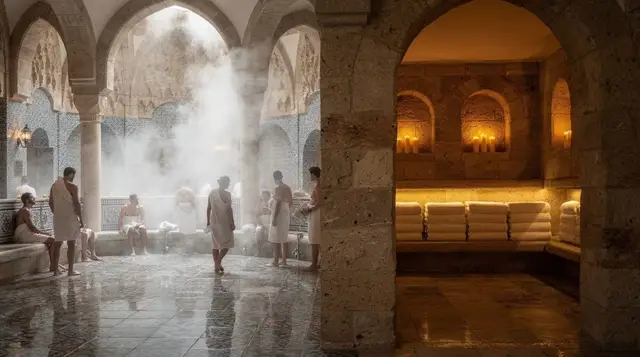
Photo: our own image of the location, not the operator’s product photo.