Marrakech shopping guide
What should I actually buy in Marrakech?
Rugs, leather goods, pottery and ceramics, brass lanterns, spices and argan oil are the categories Marrakech genuinely does well, each concentrated in its own part of the souks. Almost none of it has a price tag, so budget time to negotiate rather than expecting to browse and pay like at home.
Marrakech’s souks are genuinely good for shopping — not in the vague sense that any market is fun to wander, but in the specific sense that several craft traditions here are still made locally, well, and at prices that undercut what the same quality would cost shipped to a Western shop. The trap isn’t a lack of good goods; it’s the volume of mediocre goods sitting right next to the good ones, sold with equal confidence by sellers who know most visitors can’t yet tell the difference.
This guide covers what’s actually worth your money, roughly where to find it, and the pricing reality that catches out most first-time buyers: almost nothing in the medina has a price tag, and that’s by design, not an oversight.
| Where | The souks north and east of Jemaa el-Fna, plus Gueliz and Ensemble Artisanal for fixed prices |
| Cost | Wildly variable by category and negotiation skill; see individual craft guides |
| Time needed | A focused shopping session runs 2-3 hours; a full souk exploration, a half or full day |
| Getting there | On foot within the medina; taxi to Gueliz or Ensemble Artisanal |
| Best time | Mornings before 11am, when stalls are freshest and sellers less fatigued by haggling |
What’s actually worth buying
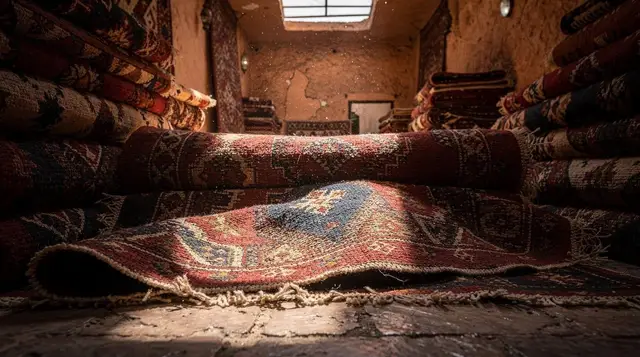
Four categories consistently deliver real quality for the money: rugs (Beni Ouarain, Azilal, boucherouite and kilim, each distinct — see our rug buying guide for the differences), leather goods like babouches, bags and poufs, pottery and ceramics from Safi, Tamegroute and Fes traditions, and brass or wrought-iron lanterns, which travel well and don’t need the same quality scrutiny as textiles or leather. Spices and argan oil round out the list, though both come with their own authenticity questions covered in our argan oil guide.
What’s generally not worth the money: mass-produced “Berber” jewellery sold identically at a dozen stalls, anything claiming to be a genuine antique without documentation, and oversized “bargain” bundles of items that are cheap for a reason. A guided handicrafts shopping experience with a local is a useful way to get a first read on quality across categories before buying anything solo.
Beyond those four, smaller categories still worth a look include woven baskets, wooden boxes with inlaid bone or metal detailing, hand-painted glass tea sets, and the metal lanterns already mentioned, which range from small candle-holders to full standing floor lamps. None of these require the same scrutiny as a rug or a leather bag — the main risk is simply paying more than a fair price, not ending up with something poorly made, since basketry and woodwork are harder to fake convincingly than a “genuine antique” claim.
How to judge quality before you pay
Whatever the category, the same habits help. Handle the item rather than just looking at it: turn a bag inside out to check the stitching and lining, run your thumb along a ceramic rim for chips or rough glaze, and lift a lantern to see whether the metal feels solid or thin. Ask where and by whom something was made, and notice whether the answer is specific or vague. A seller who can tell you the region, the technique and the material is usually selling something real, while a seller who answers every question with “very old, very special” is usually not.
Compare before you commit. Seeing the same type of item at three or four stalls teaches your eye faster than any written guide, and it gives you a sense of the spread between a bargain and a tourist price. Our souks guide explains how the different markets connect, which makes it easier to compare like with like, and the artisan workshops guide shows where you can watch the making process and understand what a well-made piece involves.
Choosing between a stall, a workshop and a shop
Not every purchase has to happen at a medina stall. Some travellers prefer to buy where the maker is, and visiting a workshop gives you a conversation about materials and time that a busy stall rarely allows. Others prefer the predictability of a fixed-price shop. Each route has trade-offs: stalls offer the widest choice and the most room to negotiate, workshops offer context and often a better sense of provenance, and shops offer simplicity. Mixing the three over a trip is often the most satisfying approach, and it spreads your spending across different kinds of sellers.
If you are also exploring the wider old city, the medina guide gives the background on how the quarters fit together, and the medina walking route is a good frame for a day that mixes sightseeing with shopping.
A realistic day of shopping
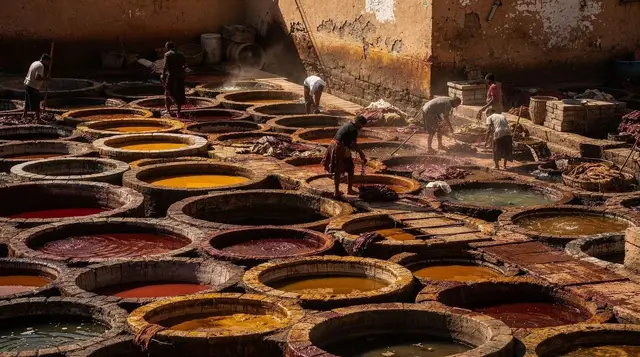
Trying to cover every category in one pass tends to produce decision fatigue and rushed purchases, so it’s worth planning a rough route rather than wandering without a plan. A sensible sequence starts at Rahba Kedima for spices and a first look at textiles, moves to Souk des Teinturiers for rugs and dyed fabric, continues toward Semmarine for leather, and finishes near the Mouassine fountain for metalwork and lanterns — roughly the order the souks naturally flow in if you’re starting from Jemaa el-Fna.
Building in a stop at a café partway through matters more than it sounds like it would; negotiating fatigue is real, and a fresher approach in the afternoon usually gets better prices than pushing through tired in the same session you started in the morning.
If you start from the main square, Jemaa el-Fna is the natural launch point, and it is worth reading the Jemaa el-Fna guide first so you know what to expect when you step into the lanes beyond it. Many visitors find it helpful to pair the shopping route with a break in the Mouassine quarter, where the pace of the streets tends to feel calmer than in the busiest souk corridors.
Dealing with sellers and guides
Expect to be approached. Friendly strangers offering directions, “shortcuts” or a visit to a cousin’s shop are a common feature of the medina, and the commission arrangements behind them mean prices at those shops often carry a margin. A polite refusal and a steady walk are usually enough. Our scams guide goes through the patterns in more detail, and the safety guide covers general street awareness.
Tea offered inside a shop is hospitality, and accepting it does not oblige you to buy. Equally, you owe no one a purchase after a long conversation. If you want to see the best of the trade without the pressure, a guide who works for you rather than for the shops can change the whole experience, and our comparison of a guided tour versus going independently helps you decide whether that is worth it for your trip.
Where to shop by category
The souks aren’t randomly arranged — trades cluster by tradition, and knowing the rough map saves a lot of backtracking. Leather and babouches concentrate near Semmarine and toward Bab Debbagh and the tanneries; see our leather and tanneries guide for that specific area. Textiles, rugs and dyed fabric cluster around Souk des Teinturiers (the dyers’ souk) and Rahba Kedima.
Metalwork, lanterns and lighting are thickest near the Mouassine fountain, and spices, herbs and cosmetics stalls ring Rahba Kedima itself. Pottery and ceramics turn up throughout but are best assessed with the regional context in our pottery guide, since quality and origin vary enormously stall to stall.
A private souks shopping tour is worth the modest premium over a group tour if you have a specific category in mind — a guide who knows you’re there for rugs, not lanterns, can skip the stalls that waste your time.
The two places prices are fixed
Two exceptions exist to the negotiate-everything rule, and both are genuinely useful as a benchmark before you head into the souks. Shops in Gueliz, the ville nouvelle, generally post fixed prices in the way a shop anywhere else would, and tend to run slightly higher than a well-negotiated souk price but with none of the back-and-forth. Ensemble Artisanal, a state-run cooperative shop near Bab Nkob, posts fixed prices set to reflect fair value across most craft categories — walking through it before shopping in the souks gives a rough sense of what a fair price actually looks like, so you’re not negotiating blind.
Dressing and packing for a shopping day
Comfortable, closed shoes matter more than anything else: the lanes are uneven, crowded and sometimes wet underfoot. Wear light, modest clothes and carry a small bag worn across the body, keeping it in front of you in tight passages. Our what to wear guide covers the details. Bring a reusable bag for small purchases, and keep your cash split between pockets so you are not pulling out everything at once when you pay.
Pace yourself. The souks are tiring, and the best shopping decisions rarely come at the end of a long, hot walk. If you are visiting in the warmer months, the guide to Marrakech in summer explains how to adapt your day, and the best time to visit helps you choose a season that suits both the weather and the shopping.
Fitting shopping into your itinerary
Shopping works best when it is one thread in a trip rather than the whole plan. A first-time visitor can slot a souk morning between palaces and gardens, leaving the afternoon free for a rest. Our first-time guide shows how the main sights fit together, and the two-day itinerary and three-day itinerary both leave room for a focused session in the markets. If your budget is a concern, the budget guide helps you decide how much to set aside for souvenirs, and the blog piece on shopping without getting ripped off is a good companion read for the mindset.
Getting purchases home
Small items — spices, lanterns, leather goods, ceramics wrapped well — travel fine in checked luggage. Rugs are the main exception: a rolled Beni Ouarain or kilim takes real suitcase space, and most established sellers offer courier shipping instead, usually two to six weeks and added to the purchase price. Fragile pottery is worth having the seller wrap properly on the spot rather than relying on your own packing; ask before you pay, since a good stall will do it without being asked twice.
Spices and food items generally clear customs without issue in most countries in personal quantities, but it’s worth checking your home country’s specific rules on plant and food imports before buying in bulk — a few countries restrict certain seeds and dried goods regardless of quantity. Leather goods rarely cause any customs difficulty. If you’re buying enough across several categories that a single suitcase won’t hold it, some riads and tour operators can arrange a consolidated shipment covering multiple purchases from different stalls, which is usually cheaper per item than shipping each one separately.
Gifts and souvenirs worth the suitcase space
For gifts, think small, durable and easy to wrap. Spices in sealed bags, a pair of babouches, a small ceramic dish, or a bottle of argan oil all travel well and say something about the place they came from. Tea lovers may want a glass set to go with the ritual described in our mint tea guide, and anyone drawn to the oil should read the argan oil guide before buying, since labels and sellers vary. Choose things you will actually use at home, because the pieces that stay in a cupboard are the ones you regret buying.
Paying for purchases
Cash in dirhams is still the default across almost every souk stall, and it’s worth carrying enough for a day’s shopping rather than assuming cards will work — some larger, more established shops in the souks and most Gueliz stores take cards, but small stalls generally don’t, and even where they do, cash often gets a better negotiated price since it avoids the seller’s card processing fee. Withdraw dirhams from an ATM rather than exchanging currency at your home airport, where rates are consistently worse; city-centre ATMs and bank branches near Jemaa el-Fna and in Gueliz both work reliably for this.
For the negotiation method itself, our haggling in the souks guide covers a full approach in detail, and if you’re weighing how much time and budget to set aside for shopping against everything else on a short trip, three days or five in Marrakech is a useful companion read.
Shopping and craft tours on GetYourGuide
Verified deep-linked GetYourGuide tours. Book through these links and we earn a small commission at no cost to you.
Photo: our own image of the location, not the operator’s product photo.