Artisan workshops and craft classes
What craft workshops can I do in Marrakech?
Pottery and ceramic painting, zellige mosaic-making, wood carving, rug weaving, leatherwork, jewellery-making, henna and Arabic calligraphy are all bookable as hands-on sessions, typically two to three hours long, usually including tea and a take-home piece.
Watching a craft being made in the souks is interesting for about five minutes before the urge to actually try it sets in, and Marrakech has a genuinely large range of workshops built for exactly that. These aren’t performances staged for visitors — most are run by working artisans, in their actual workshops, teaching the same techniques they use professionally, just slowed down and simplified enough for a first attempt to produce something worth keeping.
| Where | Medina workshops throughout the souks, plus Sidi Ghanem’s design studios |
| Cost | Roughly 250-600 MAD (€23-56) per person for a group session, more for private classes |
| Time needed | 2-3 hours for most workshops |
| Getting there | On foot within the medina for most; a short taxi for Sidi Ghanem studios |
| Best time | Any time of day; useful as a rainy-day or midday-heat alternative to walking |
What’s actually available
The range is broader than most visitors expect. Pottery and ceramic painting sessions let you throw a simple piece or paint a pre-made one in the Safi, Tamegroute or Fes styles covered in our pottery guide. Zellige mosaic workshops teach the geometric tile-cutting technique behind Morocco’s most recognisable architectural decoration — this mosaic lamp workshop is a compact version that sends you home with an actual lantern rather than just a sample tile.
Wood carving, jewellery-making, leatherwork, henna and Arabic calligraphy each have dedicated sessions too. A hands-on wood carving workshop with a local expert covers the carved cedar detailing seen throughout riad doorways and furniture, while a jewellery-making session works with the same silverwork techniques used in traditional Berber pieces, run by an artisan who typically sells finished pieces from the same workshop.
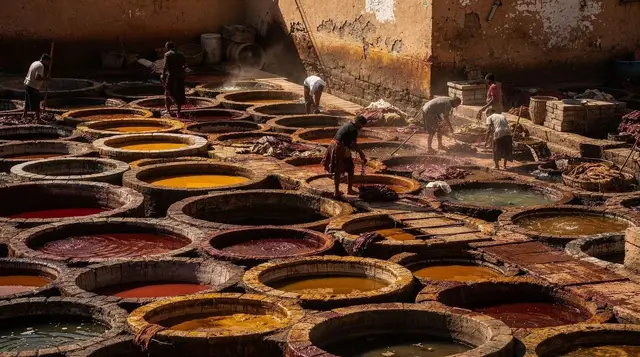
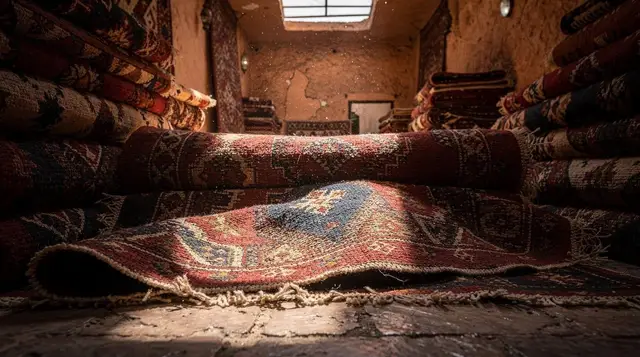
Rug weaving, covered in more depth in our rug buying guide, and leatherwork, covered in leather and the tanneries, both have their own dedicated hands-on sessions as well.
Where the medina fits in
Most of these workshops sit inside the old city, so it helps to know the ground before you go. The medina is a maze, and the craft quarters inside it are where many of these skills grew up. The Mouassine district has long been a quiet corner for artisans and small studios, and the streets around Jemaa el-Fna lead out into the souks where finished work is sold. If you want to see those lanes before you try a craft yourself, our souks guide explains how the market is laid out, and the medina walking route gives a sensible way to cover it on foot.
Sidi Ghanem is the other name that comes up. Its design studios work differently from a souk workshop: the setting is more like a studio than a stall, and the atmosphere is calmer. See the Sidi Ghanem page if you want to know what the area is like before you commit to a taxi out there.
Choosing the craft that suits you
Picking a craft is easier if you decide what you want to take home. If you want something useful on a shelf or a table, mosaic and pottery give you an object you will actually use. If you want something wearable or something to give as a gift, jewellery and henna fit better. If what you want is the experience itself and a better eye for the city around you, calligraphy and wood carving reward attention, because once you have tried them you notice them everywhere, on doorways, signs and ceilings.
It also helps to think about your own energy. A craft that asks for patience, such as carving or careful tile-cutting, suits someone who enjoys quiet concentration. A craft that is quick and forgiving, such as painting or henna, suits a tired traveller or a group with mixed ages. Neither is the better choice; they simply give you different afternoons.
Getting more from the session
A few habits make a workshop more rewarding without costing anything extra:
- Ask the artisan how they learned the craft. Many are glad to talk, and the answer often tells you more than the demonstration does.
- Watch the hands during the demonstration, not the finished piece. The small movements are the part you cannot learn from a photograph.
- Do not rush the first attempt. The goal of a beginner’s session is a piece you are happy with, not a perfect one.
- Wear clothes you do not mind marking. Clay, dye, glue and wood dust all find their way onto sleeves, and our advice on what to wear in Marrakech covers sensible choices for the medina in general.
- Bring a small bag or wrapping for your finished piece, since fragile items travel better when they are protected from the start.
Fitting workshops into a wider trip
A workshop is a good change of pace between the big sights. After a morning at a palace such as Bahia Palace or El Badi Palace, seeing how tilework and carved wood are actually made gives the decoration you just admired a different meaning. The same goes for the intricate tilework at the Ben Youssef Madrasa, which is far easier to read once you have tried cutting a few shapes yourself.
If you are planning the whole stay, a workshop slots easily into a short itinerary. The two-day plan is tight and leaves little room, but the three-day plan and the five-day plan both have enough slack for a half-day of making something. Our Marrakech first-time guide helps you decide how many days you need overall.
Workshops also pair well with other hands-on activities. If you enjoy learning by doing, the cooking class guide covers a food-focused equivalent, and the blog post on learning to cook a tagine gives a personal view of what that kind of day feels like. Travelling with children? Our family activities guide places workshops alongside other options that keep younger visitors busy.
What a typical session actually looks like
Almost every workshop follows a similar shape regardless of craft. You arrive to a working space rather than a classroom — often the same room the artisan uses for their own production — and start with a short demonstration of the finished technique before being handed materials to try it yourself. Mint tea usually appears partway through, less as a formality and more because most sessions naturally have a pause between steps (clay drying slightly, dye setting, glue curing) that suits a break.
Group sizes tend to stay small, rarely more than six to eight people, which keeps the artisan able to correct technique individually rather than just demonstrating once and leaving everyone to it. Expect to leave with either a finished piece in hand or clear instructions on when and how it’ll be ready if it needs further drying, firing or shipping.
Who these workshops suit
Families find pottery, mosaic and henna workshops particularly well-suited, since they’re hands-on, low-risk and paced in a way that holds younger attention spans without requiring real skill to enjoy. A henna workshop with tea and souvenirs is a reliably easy, low-effort session that works for a wide age range and doesn’t need advance skill of any kind.
Solo travellers and couples looking for something more immersive than a group class often prefer wood carving, calligraphy or jewellery-making, which tend to run in smaller groups with more individual attention from the artisan. An Arabic calligraphy class is a good example — a genuinely meditative couple of hours that also gives some insight into a skill visible on nearly every sign and shopfront in the medina, once you know what you’re looking at.
Groups and larger families sometimes book a private session covering the whole party rather than joining a mixed public class — worth asking about specifically if there are more than three or four of you, since several workshops offer this at a modest per-person premium over the standard group rate, in exchange for a session paced entirely around your group rather than shared with strangers.
What it actually costs
Group sessions generally run 250-600 MAD (€23-56) per person depending on the craft and how much material is involved — pottery and mosaic tend toward the lower end, jewellery-making and wood carving toward the higher end given the cost of the materials used. Private sessions for a single traveller or couple run higher still, often 700-1,200 MAD (€65-111) per person, reflecting the artisan’s undivided time rather than a shared class. Most prices include materials, tea, and the finished piece; it’s worth confirming this specifically when booking, since a small number of workshops price the class separately from the take-home piece, which changes the real cost of the experience.
Hotel pickup, where offered, usually adds a modest amount to the base price but removes the need to find an unfamiliar workshop address alone, which is worth the small premium for anyone staying outside the medina or unsure of their bearings in the souks. Confirm the meeting point either way before the day of the session, since some workshops are tucked down derbs that even a taxi driver won’t reliably find without a landmark to aim for.
Choosing a workshop over just watching in the souk
Watching an artisan work in the souks is free and always available, and for a quick, casual interest that’s often enough — but always ask before photographing someone at work, since a stall is a livelihood, not a display for visitors. A booked workshop goes further: you’re taught directly rather than observing from outside, produce something yourself rather than only buying a finished piece, and the price includes the artisan’s time in a way that a casual souk visit doesn’t. This combined artisan workshops experience is a good way to sample two or three crafts in a single booking if you can’t decide on just one.
Building a themed afternoon around workshops
Because most sessions run two to three hours, it’s realistic to pair one with a related activity rather than treating it as a stand-alone booking. A pottery or mosaic session pairs naturally with a wider look at the Safi, Tamegroute and Fes pottery traditions beforehand, so you’re recognising them in the souks before trying a version of the technique yourself.
A leather or rug workshop similarly benefits from reading the relevant buying guide first, since understanding what separates a well-made piece from a mediocre one makes the hands-on version more informative rather than just a pleasant activity. For a full day built around craft rather than sightseeing, a morning workshop followed by an afternoon browsing the souks with a clearer eye for quality — informed by the morning’s session — tends to work better than doing either alone.
A single workshop also works well as a fallback plan for the hottest part of the day, roughly noon to 3pm in summer, when walking the souks becomes genuinely uncomfortable and an air-conditioned or shaded workshop space is a welcome break from the heat covered in our Marrakech in summer guide. Booking a session for exactly that window turns what would otherwise be dead time into one of the more memorable parts of the day.
Buying the real thing afterwards
Trying a craft changes how you shop. After a morning of handling clay, tile or wood, you tend to look more closely at edges, finish and consistency, which is exactly what helps when a seller quotes a price. If you plan to buy something afterwards, our haggling guide explains how to negotiate calmly, and the blog post on shopping without getting ripped off adds a traveller’s view. A workshop is not a substitute for those skills, but it gives you a better sense of what a fair piece looks like, and a better respect for the time that goes into it.
For the wider shopping context these crafts sit inside, see our Marrakech shopping guide, which covers the two categories above in more depth than this overview does, alongside everything else worth buying in the souks.
Shopping and craft tours on GetYourGuide
Verified deep-linked GetYourGuide tours. Book through these links and we earn a small commission at no cost to you.
Photo: our own image of the location, not the operator’s product photo.