Marrakech Cooking Classes
How much does a Marrakech cooking class cost and how long does it take?
A typical class runs three to four hours and costs 40-70 euros per person, usually including a guided market visit to buy ingredients, the hands-on cooking session itself, and eating the meal you've made together at the end.
A Marrakech cooking class is one of the more reliably worthwhile bookings in a city where plenty of tours oversell what they deliver. The standard format runs three to four hours: a guided walk through a souk market to buy the day’s ingredients, a hands-on cooking session in a riad kitchen or dedicated cooking school, and finally sitting down to eat what you made. Prices typically run 40-70 euros per person, which compares reasonably against a sit-down restaurant meal once you factor in three to four hours of instruction and a market tour included.
The market visit is worth prioritising when comparing options. Classes that skip straight to a kitchen with ingredients already measured out miss the part that actually teaches you something transferable — recognising good produce, understanding spice combinations at the source, and seeing how a working souk market functions outside the tourist-facing carpet and lamp shops most visitors only pass through. A chef walking a market stall by stall, explaining what preserved lemons are, how ras el hanout is blended, and why a particular cut of lamb suits a slow tagine rather than a quick grill, is doing more teaching in twenty minutes than most cookbooks manage in a chapter.
| Where | Riad kitchens and dedicated cooking schools across the medina and Gueliz |
| Cost | 40-70 € (roughly 430-750 MAD) per person for a typical 3-4 hour class |
| Time needed | 3-4 hours, including the market visit |
| Getting there | Most classes include hotel or riad pickup; confirm when booking |
| Best time | Morning classes catch the souk market at its freshest and least crowded |
What a typical class covers
Tagine is close to a constant across every operator: building the spice base (usually ras el hanout or a chef’s own blend), layering meat or vegetables with preserved lemon, olives or dried fruit, and understanding the slow, low-heat method that makes the dish work. Beyond that, classes vary — some add Moroccan salads as a starter course, msemen or khobz bread from scratch, and a simple dessert like oranges with cinnamon and orange blossom water. A handful of higher-end classes let you choose your own tagine ingredients at the market rather than following a fixed menu, which is worth asking about if you have a specific dietary preference or simply want more say in what ends up on the plate.
Group sizes vary from small shared classes with strangers to fully private sessions, and the difference shows up mainly in pacing and how much individual instruction you get at the stove. A private class costs more but gives a chef’s full attention rather than splitting it across six or eight participants, which matters more for anyone hoping to actually retain the technique rather than simply enjoy the afternoon.
This cooking class and market visit follows the standard format closely — market first, then hands-on cooking — while this cooking class with a local family takes the more intimate route of cooking in someone’s actual home kitchen rather than a commercial cooking school.
Choosing between the options
For a class aimed at more structured, technique-focused learning, this Masterchef-style interactive Moroccan cooking class leans into a more formal teaching format than the average riad session, with clearer step-by-step instruction suited to visitors who want to genuinely replicate the dish at home afterward.
If a traditional setting matters more than technique depth, a class cooked in an actual historic riad kitchen keeps things simple and atmospheric rather than staged in a purpose-built classroom. Vegetarian and vegan visitors are well covered too — this vegetarian cooking class with market tour builds the whole menu around plant-based tagine and sides rather than adapting a meat-first class on the fly.
Booking a day or two ahead is generally enough outside major holidays, though Friday classes can sell out faster given the cultural weight of Friday couscous in Moroccan food culture. Confirm dietary restrictions when booking rather than on arrival — most operators can accommodate vegetarian, vegan or allergy needs with notice, less reliably without it. It’s also worth asking whether the class is fixed-menu or lets participants choose between two or three tagine options, since the latter suits mixed groups with different tastes far better.
Before you book: questions worth asking
The listings for most classes look alike, so the differences are easiest to find by asking a few direct questions before paying. Does the market visit happen on the same morning, and is it led by the person who will then cook with you? Is the group shared or private, and how many people are at each stove? Is the menu fixed or can you choose? Where is the class held, and how does pickup work from your riad or hotel? An operator who answers these clearly and quickly is usually one who runs the class carefully too, while vague replies tend to predict a rushed session with more watching than cooking.
It also helps to think about where the class sits in your day. A morning class gives you the market at its best and leaves the afternoon free, but it means the meal you cook becomes your lunch, so there is no need to plan another one. If you are staying in the medina, a short walk back to your riad afterwards is a pleasant way to digest; our medina walking route is a good companion for that slower afternoon, and the wider picture of the old city is covered in the medina destination page.
What the market visit teaches you
The market portion deserves more attention than it usually gets in a booking summary. You are not simply shopping: you are learning how to read a stall. Which vegetables look right for a tagine, how to tell a fresh herb bunch from a tired one, what to smell for in a spice, and how vendors and cooks talk to each other. That vocabulary stays with you long after the class ends, and it makes every later meal in the city more legible.
If the market walk whets your appetite for more, the souks guide explains how the different trades are laid out, and the haggling guide is useful for the days when you go shopping on your own. Many visitors leave a class wanting to buy a few spices or a tagine pot of their own; the shopping guide and the pottery guide help you do that without overpaying or buying something that will not survive the trip home.
Cooking at home afterwards
The real test of a class is whether you can reproduce the dish once you are back in your own kitchen. A few habits help. Write down the order in which ingredients go into the pot, because the sequence matters as much as the list. Note how the chef adjusts heat and when the lid stays on. Ask what can be substituted when an ingredient is hard to find where you live, and which spices are worth carrying home. A tagine cooked gently and left alone rewards patience, and that patience is the main thing a good class passes on.
For a more reflective account of what it feels like to learn this way, the blog piece on learning to cook a tagine is worth reading before or after your own session, and the Moroccan hospitality essay explains why sharing a meal carries so much weight here.
Fitting a class into your Marrakech days
A cooking class works best as the anchor of a relaxed day rather than something squeezed between sights. If you only have a short stay, the Marrakech in 48 hours piece and the 2-day itinerary show how to balance a morning activity with the big monuments. With a little more time, the 3-day itinerary leaves room for a slower morning, and the 3 versus 5 days guide helps you decide how much breathing space your trip deserves.
Travelling with children or a larger group changes the calculation slightly. The family activities guide lists other options that suit younger travellers, and our food guide will help you choose where to eat on the days you are not cooking. Anyone with a stomach that needs careful handling should also read the street food safety guide before trying the stalls in the evening.
What to bring and wear
Most schools provide aprons, but closed-toe shoes are worth wearing regardless given open flames and hot pans are involved throughout. Classes held in outdoor riad courtyards can run warm even in cooler months, so light layers work better than anything heavy. Bringing a notebook or taking photos of the spice measurements as you go is more useful than relying on memory afterward — few classes hand out a written recipe card unless you specifically ask, and the proportions matter more than the method for getting a tagine right at home.
Reading the room: how to get the most from your chef
The best classes are conversations rather than lectures. Ask why a step is done the way it is, not only how. Chefs who cook this food every day often carry small habits that never make it into a recipe: how finely to chop an onion for a particular sauce, when to stop stirring, how to judge that a dish is ready by smell rather than by the clock. Asking about these details turns a pleasant afternoon into something you can actually reuse.
Be ready to get your hands involved. Most of the enjoyment comes from chopping, layering and tasting rather than standing back to watch, and instructors usually respond well to visitors who join in. If you are shy about your skills, say so at the start; a good teacher will adjust the pace without making a fuss about it. Taste as you go, and do not hesitate to ask for a little more of a spice if you prefer a stronger flavour, since the point is to learn what you like.
Finally, treat the shared meal as part of the lesson. Sitting down with the group and eating what you cooked is where the conversation about Moroccan food culture tends to happen, and it is often when the chef shares the stories and family habits behind the dishes.
What happens to leftovers and portion sizes
Classes typically produce more food than a single-portion restaurant meal, since the group cooks a full tagine or set of dishes together rather than individual plates, and eating what’s been made is generally treated as part of the experience rather than optional. Most operators don’t offer to package leftovers for you to take away, largely because of how the dishes are served — straight from the tagine pot at a shared table — so it’s worth arriving with a reasonable appetite and skipping a heavy lunch beforehand if the class runs into the early afternoon. Some higher-end classes do offer takeaway boxes on request, which is worth asking about specifically if it matters to you.
Who classes suit best
Cooking classes work well for a wide range of travellers, but they suit some trip styles better than others. Couples and small groups get the most flexibility, since most operators run both shared and private sessions and can accommodate a two-to-four-hour block relatively easily around the rest of a day’s plans.
Families with children are usually welcome, though the market-visit portion, which involves walking a working souk for thirty to forty-five minutes, can test younger kids’ patience — worth checking with the operator about a shorter or more child-friendly format if travelling with a family. Solo travellers often find a shared class a good way to meet other visitors over a genuinely collaborative activity, which is harder to replicate at a restaurant table alone.
Repeat visitors to Marrakech who’ve already done a class on a previous trip sometimes look for a more advanced or specialised option, such as a pastry-focused session or one built around a specific regional variation of tagine, rather than the standard beginner-friendly format most operators default to. It’s worth asking directly whether an operator offers anything beyond the introductory class if that’s what you’re after, since it’s not always advertised clearly on a general listing.
Pairing a class with the rest of your food itinerary
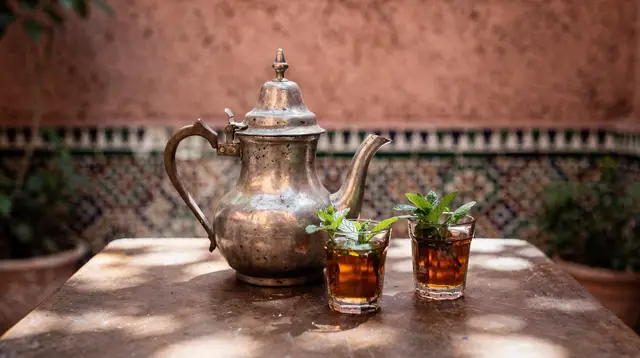
A cooking class pairs naturally with the rest of a food-focused day or trip — see the Marrakech food guide for the dishes you’ll likely be cooking, and the Moroccan mint tea guide for the ritual you’ll almost certainly be offered before the class even starts. If hands-on crafts interest you beyond the kitchen, the artisan workshops guide covers pottery, weaving and leatherwork classes with a similar structure.
For where to eat the rest of your trip once you’ve learned the technique yourself, the Jemaa el-Fna food stalls guide and rooftop restaurants guide round out the practical food picture, and the food and drink hub lists every food-related guide on this site.
Food and drink tours on GetYourGuide
Verified deep-linked GetYourGuide tours. Book through these links and we earn a small commission at no cost to you.
Photo: our own image of the location, not the operator’s product photo.