Eating at the Jemaa el-Fna Food Stalls
How do the Jemaa el-Fna food stalls work?
Dozens of numbered stalls set up across the square from around 7pm, each with its own touts calling out to passing visitors. Pick a stall with a long queue of Moroccan families rather than tourists, confirm prices for each item before it's served, and expect to pay 30-60 MAD (€3-5.50) for a full plate.
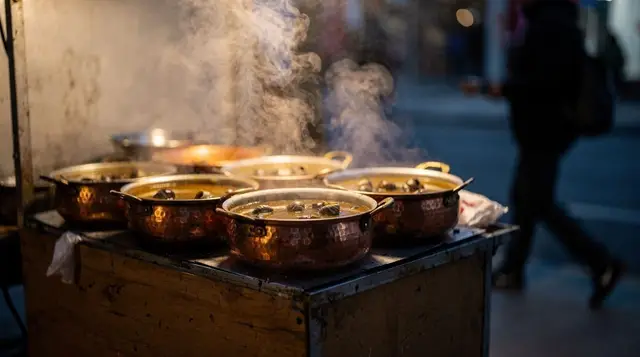
Every evening from around 7pm, Jemaa el-Fna transforms from a wide, half-empty square into rows of numbered food stalls, each staffed by touts who will physically try to steer you to their table over anyone else’s. The stalls themselves are numbered and semi-permanent, run by families who’ve often held the same pitch for decades, and the food — grilled meat skewers, snail soup, merguez sausage, harira, fried fish, tagines kept warm over coals — is genuinely good and cheap by European standards.
A full plate typically runs 30-60 MAD (€3-5.50), which makes the square one of the best-value evening meals in the city, provided you navigate the ordering process carefully. The reputation for tourist traps isn’t really about the food quality, which is usually fine; it’s about the bill, where unrequested extras and unclear pricing can turn a cheap meal into an inflated one if you’re not paying attention. Understanding the pattern once is enough to avoid it for the rest of the trip.
| Where | Jemaa el-Fna square, medina, stalls set up from roughly 7pm |
| Cost | 30-60 MAD (€3-5.50) per plate if you confirm prices as you order |
| Time needed | 1-2 hours for a full evening meal |
| Getting there | Walkable from most medina riads |
| Best time | 7:30-9pm, when the stalls are fully set up but before the latest, most crowded hour |
How to pick a stall
The single most reliable tell for a good stall is who’s eating there: tables full of Moroccan families rather than tourists mean genuine turnover and food made to a standard locals actually expect, not one adjusted for visitors who won’t be back. Long queues matter more than a stall’s number or a tout’s insistence that theirs is “the best” — every tout will tell you that. Walking the full length of the stalls once before committing, rather than sitting at the first table that calls out to you, costs a few extra minutes and consistently pays off in food quality.
Stall 14, known for snails and escargot soup, and the stalls specialising in sheep’s heads are part of the square’s folklore and worth trying if you’re curious, but they’re not objectively better than dozens of other stalls doing solid grilled meats and tagines nearby — treat them as an experience to try, not a required stop. This by-night food tasting walking tour with a local guide takes the guesswork out of stall selection entirely if you’d rather not gamble on a first visit, moving between several stalls the guide already knows rather than committing to one table for the whole evening.
Avoiding the classic overcharging trap
The scam here isn’t the food itself, it’s what gets added to your table without being asked. Bread, olives, a side salad, an extra skewer — all can appear unprompted and all get added to the final bill unless you’ve declined them upfront. The fix is simple but requires actually doing it: ask “bshhal” (how much) for every item as it’s offered, before it touches your table, and count what’s in front of you against what you ordered before paying. Stalls that hesitate to confirm a price upfront are worth skipping entirely, and it’s worth noting that this pattern isn’t universal dishonesty — most stall owners are straightforward once a price is agreed, the issue is specifically the unconfirmed extras.
For visitors who’d rather skip the negotiation altogether, this night food tour and dinner in Jemaa el-Fna and this eat-like-a-local dinner and street food tour both include a guide who handles ordering and pricing directly, which is worth the cost for a first evening if the haggling sounds like more hassle than it’s worth.
The seating and layout, in practice
Stalls generally consist of a cooking station at the front and long communal benches or plastic chairs behind, meaning you’ll often sit shoulder to shoulder with strangers rather than at a private table — part of the square’s character rather than a drawback, and a reasonable way to strike up conversation if you’re travelling solo.
Lighting comes mostly from bare bulbs strung overhead and the glow of the grills themselves, which makes for good atmosphere but poor visibility for reading a menu, if a stall even has one; most communicate their offerings verbally or by pointing at what’s cooking. Toilets are not available at the stalls themselves, so it’s worth planning around the nearest café or hotel if that’s a consideration for your evening.
Payment is cash only at essentially every stall, in dirhams, and it’s worth carrying enough small notes for the evening rather than relying on a single large bill that a stallholder may struggle to break. Card payment simply isn’t part of this part of the economy, unlike some of the more established restaurants elsewhere in the medina.
What to drink alongside the food
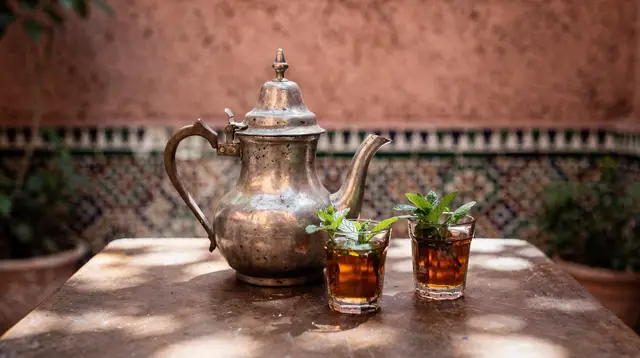
Fresh orange juice from the carts scattered around the square’s edge is the obvious pairing and costs only a few dirhams a glass. Bottled water is the safer choice over anything else on offer, and it’s worth carrying your own rather than relying on finding a shop once you’re seated among the stalls. Mint tea is sometimes offered at the end of a meal as a gesture rather than an extra charge, though it’s worth confirming this rather than assuming, particularly at busier stalls where staff move quickly between tables.
How the stalls change through the week and year
The stalls operate every night of the week, though Fridays and weekends bring noticeably larger crowds, both from tourists and from Marrakchis out for the evening, which can mean longer waits at the most popular tables. During Ramadan, the whole rhythm shifts: stalls open later, after the sunset iftar meal has been eaten at home or in restaurants, and the square takes on a different, later-night character that’s worth experiencing if your visit coincides with the fasting month, though it’s not the same evening scene as the rest of the year. Winter evenings cool quickly after dark, so a layer beyond a light jacket is worth having if you’re planning to sit outside for a full meal rather than eating quickly and moving on.
Whatever the season, a few practical basics carry over every night: bring cash in small denominations since none of the stalls take cards, expect a loud and crowded environment by any measure, and treat the whole experience as theatre as much as dinner. Smoke from the grills can be heavy in the more central rows, worth knowing if you have respiratory sensitivities, and it’s easy enough to pick a stall on the square’s edges instead if that’s a concern without losing much in terms of food quality or atmosphere.
Building an evening around the square
The stalls work best as the centre of an evening rather than the whole of it. Many visitors arrive straight from a day in the souks, tired and hungry, and that is when the touts have the most leverage. A calmer approach is to spend the late afternoon elsewhere, then drift towards the square as the stalls are being set up. The Marrakech medina walking route ends naturally at the square, and the souks guide helps you decide which alleys to leave for another day so you arrive with some energy left.
If it is your first night in the city, the first-time visitor guide explains how the square fits into a wider plan, and the Jemaa el-Fna guide covers the daytime side, from the storytellers to the snake charmers, which is useful context before you sit down to eat among them. Once you have found your rhythm, the Jemaa el-Fna morning blog post is a good counterpoint: the same square, almost unrecognisable without the smoke and the crowds.
Ordering without a shared language
You do not need fluent French or Arabic to eat well here. Most stallholders have learned enough English, French and Spanish to run through the menu, and pointing at what is cooking works at every stall. What matters is that you stay in control of the order. Decide roughly what you want before you sit, ask for it item by item, and repeat the price back so there is no confusion. A calm, friendly tone works better than a firm one: stallholders respond well to a visitor who is clearly relaxed and clearly paying attention.
Sharing is the sensible way to eat. A couple of skewers, a bowl of harira and something fried between two people lets you taste more of the menu and makes it easier to say no to extras. If you are travelling with children, the Marrakech with kids guide has more on how to handle noisy, crowded evenings, and the grilled meats are usually the simplest option for younger eaters.
Eating well and staying healthy
Most visitors eat at the stalls without trouble, and the habits that keep it that way are simple ones. Choose stalls where the food is being cooked in front of you and served hot, favour busy tables where the turnover is high, and be cautious with anything that has been sitting out. The street food safety guide goes through these points in more detail, and it is worth reading before your first night if you have a sensitive stomach.
Pace yourself, too. It is tempting to order everything the first evening, but a lighter first visit lets you see how your stomach handles the richer dishes. Washing your hands before you eat, or carrying a small bottle of sanitiser, is a small habit that costs nothing and is easy to forget once the smell of the grills takes over.
Budgeting for the evening
The stalls are one of the easiest ways to keep a Marrakech trip affordable, and a meal here sits comfortably within the budget approach in the Marrakech budget guide. The only thing that makes the bill unpredictable is the unconfirmed extra, so the budgeting advice is the same as the ordering advice: agree on every price first. If you want a wider sense of what to eat across the city, from sit-down tagines to breakfast pastries, the Marrakech food guide maps it out.
For visitors who want to learn to cook what they have eaten, a Moroccan cooking class with a local chef is a natural follow-up, and the cooking class guide explains how to choose between formats. The tagine blog post gives a feel for what a class is like from the inside.
After the meal
Once you have eaten, the square is still worth lingering in. The musicians, storytellers and performers that gather around the stalls are part of why people come, and the Gnaoua music guide explains what you are hearing when the drums and metal castanets start up. Be aware that performers and photo-takers will expect a tip or payment, so keep a few small coins aside and agree anything upfront, much as you would with the food.
If you want something quieter, a glass of mint tea at one of the cafés on the edge of the square is a gentler way to end the night, and the mint tea guide explains the ritual behind the pour. When you are ready to head back, the Marrakech taxi guide covers how to get a fair ride, and most riads inside the medina are an easy walk, though the alleys feel different after dark, so it helps to know your route or ask your host before you go out.
Beyond the stalls
For the daytime side of the square, and the classic scams to know before you go — the “square is closed” line, unsolicited guides, animal photo demands — see the Jemaa el-Fna destination guide and the Marrakech scams guide. The rooftop cafés ringing the square, covered in the rooftop restaurants guide, are worth twenty minutes before you head down to the stalls, both for the view and for orienting yourself before the evening crowds build.
For a broader look at Moroccan food beyond the square specifically, see the Marrakech food guide and street food safety guide.
Food and drink tours on GetYourGuide
Verified deep-linked GetYourGuide tours. Book through these links and we earn a small commission at no cost to you.
Photo: our own image of the location, not the operator’s product photo.