Marrakech Food Guide
What are the essential dishes to try in Marrakech?
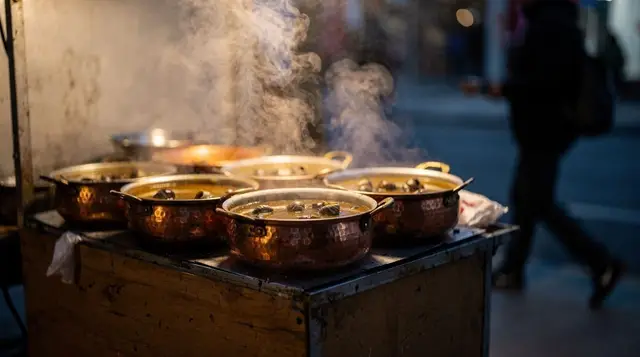
Tagine (slow-cooked stew), couscous specifically on Fridays, tanjia marrakchia (the city's own dish, cooked in the ashes of a hammam furnace), pastilla, msemen flatbread, briouates, and fresh orange juice from the square's stalls, which costs a few dirhams and is genuinely excellent.
Moroccan cuisine in Marrakech runs deeper than the tagine sold to every table on Jemaa el-Fna, though tagine is a legitimate place to start. The word refers to both the conical clay pot and the slow-cooked stew inside it — usually lamb, chicken or vegetables with olives, preserved lemon, dried fruit or almonds, cooked over low heat until the meat falls apart. A decent tagine at a mid-range restaurant runs 60–120 MAD (€5.50–11); the same dish at a riad with a rooftop view can run considerably more for the setting rather than the food itself.
Beyond the tagine, a handful of dishes are worth actively seeking out rather than waiting to be offered. Couscous, traditionally a Friday dish tied to the weekly gathering after mosque prayers, is worth timing a visit around if you can. Tanjia marrakchia — the city’s own contribution to Moroccan cuisine, meat and spices sealed in a clay urn and cooked for hours in the dying embers of a hammam furnace — is specific to Marrakech and traditionally a dish men prepare together rather than something cooked at home.
Pastilla, a sweet-savoury pie traditionally made with pigeon (now often chicken) layered with almonds, cinnamon and sugar under crisp pastry, sits at the more elaborate end of what’s commonly available, and it’s a dish more restaurants get wrong than right, so a recommendation from your riad is worth more than a menu photo.
| Where | Medina restaurants, riad dining rooms, Jemaa el-Fna stalls, and Gueliz’s more contemporary spots |
| Cost | Street snacks 5–30 MAD; a full restaurant meal 80–200 MAD (€7–18) per person; riad dining runs higher |
| Time needed | Varies; a sit-down meal is typically 45–90 minutes |
| Getting there | Walkable in the medina; a short taxi to Gueliz for a different dining scene |
| Best time | Lunch for tagine and couscous; evening for the Jemaa el-Fna stalls and grilled meats |
The everyday dishes
Msemen, a square, flaky flatbread cooked on a griddle, is a breakfast and street-snack staple, often served with honey or amlou, an argan-oil-and-almond spread specific to the south of Morocco. Briouates — small filo parcels filled with spiced meat, cheese or seafood and fried until crisp — appear as starters or snacks throughout the day, typically 5–15 MAD each from a street stall and considerably more plated at a restaurant. Harira, a tomato, lentil and chickpea soup thickened with flour, is eaten year-round but takes on particular significance during Ramadan, when it’s the dish that breaks the day’s fast at sunset alongside dates and msemen.
Fresh orange juice, sold from the numbered carts around Jemaa el-Fna and elsewhere in the medina, costs a handful of dirhams a glass and is one of the few unambiguously good-value purchases in the city — freshly squeezed in front of you, no sugar added unless you ask. It’s worth drinking regularly through a hot day rather than treating as a one-off novelty, and it’s a reliable option for anyone wary of ice or bottled drinks of uncertain origin.
Snacks worth trying beyond the obvious list include sfenj, a plain doughnut sold hot and unsweetened from street carts in the early morning, and kaab el ghazal, almond-paste “gazelle horn” pastries sold in nearly every pâtisserie and a good gift to bring home given they travel reasonably well.
How a day of eating tends to unfold
Eating well in Marrakech is easier when you follow the rhythm locals keep rather than the one tourist menus suggest. Breakfast is light and often eaten standing or at a small café: msemen with honey, a glass of orange juice, mint tea or coffee. If you would like to see how the bread is made rather than just eat it, a hands-on msemen workshop in a local family’s home turns a simple breakfast staple into a lesson in patience, folding and griddle heat.
Lunch is traditionally the main meal, which is why tagine and couscous taste best then: kitchens are working at full tilt, the ingredients are fresh from the morning’s market, and the dish has had hours to cook slowly. Evening meals tend to be lighter or more social, and the grilled meats and stalls around the square come into their own after dark. Plan the heavy meal for midday and keep the evening for wandering and snacking, and you will feel better and eat better.
If you are building a day around the medina, the medina walking route passes through the districts where the small, local eating places cluster, and the souks guide helps you work out where to pause for a snack between shops. Our guide to the medina itself explains how the quarters differ, which is useful when you are deciding which side streets to try.
Choosing a good place to eat
Marrakech has no shortage of restaurants, and the best signals are simple ones. A short menu usually means the kitchen cooks a few things well. A room full of Moroccan families at lunchtime is a better recommendation than any sign. Dishes that arrive at the table steaming, rather than reheated, tend to have been cooked to order. And a host who asks what you like rather than pushing the house special is generally worth trusting.
Be cautious of touts who steer you towards a particular restaurant, because a commission is often built into the bill. The scams guide explains the common patterns, and the guide to haggling is a useful read for anyone nervous about negotiating prices at informal stalls. Where a menu shows prices, check them before you sit down; where it does not, ask first, politely and without embarrassment. Nobody takes offence at the question.
Riad dining rooms deserve a separate mention. Many riads serve dinner to guests and sometimes to outside bookings, usually a set menu cooked by a small kitchen team with a few dishes served in sequence. It is a calm, comfortable way to eat, and the riad staying guide covers how meals fit into a riad stay. If you are weighing a riad against a hotel partly for the food, the riad versus hotel comparison is worth reading too.
Eating at Jemaa el-Fna and beyond
The square is the obvious place for a first evening, and it is as theatrical as its reputation suggests: smoke, lamps, vendors calling out, and rows of numbered stalls serving grilled meat, salads, soups and snacks. It works best if you arrive with a rough plan. Walk the full circuit before sitting down, look at what is actually being cooked, and choose a stall that is busy rather than the one whose staff are most insistent. The Jemaa el-Fna guide covers the square as a whole, and the destination page for Jemaa el-Fna gives the wider context.
For people who would rather not navigate it alone, a guided evening takes the pressure off. a street food tour after dark lets a local guide handle the ordering while you concentrate on tasting. It is also a gentle introduction for anyone worried about stomach trouble, since the guide chooses the stops.
Away from the square, the food scene is quieter and often more personal. Gueliz has contemporary cafés and restaurants with a different feel from the medina, which the medina versus Gueliz comparison lays out. If you are travelling with children, the family activities guide and the Marrakech with kids guide give a sense of how to manage mealtimes with younger travellers, who often do best with simple dishes such as plain couscous, grilled meat and bread.
Food, seasons and timing
What you want to eat changes with the weather. In the hot months, light salads, fresh juice and mint tea carry the day, and heavy midday tagines can feel like a stretch; the summer guide offers advice on pacing a day around the heat. In cooler months, slow-cooked dishes and hot soups are exactly what you want, and the winter guide gives a sense of the season. The best time to visit page helps you decide when the balance of weather and atmosphere suits you.
Ramadan changes the eating pattern of the whole city. Many daytime eating places keep reduced hours or close, and the evening meal becomes the focal point of the day. The Ramadan guide explains what to expect and how to eat respectfully, and the blog piece on Ramadan nights in the medina captures the mood when the fast is broken.
Learning to cook what you eat
Many visitors find that eating a dish once is not enough, and want to understand how it comes together. A class is the natural next step: you see the spice blends, learn why preserved lemon and slow heat matter, and take home a method you can repeat. a class where you cook your own tagine is a good fit for anyone who mostly wants to master that one dish. For a first-person account of what a session feels like, read the blog post on learning to cook a tagine, and see the cooking class guide for how to compare options.
Food shopping is part of the same pleasure. Argan oil, spices and tea are all easy to bring home, and the argan oil guide explains what to look for, while the shopping guide puts food souvenirs in the context of everything else you might buy. The budget guide is a good companion if you are trying to work out how much of your daily spending should go on meals.
Etiquette at the table
Food is hospitality in Morocco, and a few habits make meals smoother. Eat with your right hand when sharing from a common dish, take the portion in front of you rather than reaching across, and accept tea when it is offered. Bread is used as a utensil, so do not hesitate to tear a piece and scoop. If you are a guest in a private home, arriving with a small gift and complimenting the cook is always appreciated, and the blog post on Moroccan hospitality explains the spirit behind it. If a bill has a service line, the tipping guide covers what is customary.
Getting beyond the standard tourist menu
A guided food tour is the fastest way past the handful of dishes every medina restaurant defaults to for visitors. This medina food tour with tastings moves between several small stops rather than one sit-down meal, which suits travellers who want breadth over a single large plate. For an evening version built around the square specifically, this night food tour and dinner in Jemaa el-Fna combines the atmosphere of the stalls with a guide who can navigate the pricing and ordering that trips up independent visitors.
For a deeper dive that goes beyond eating into actually cooking, this Moroccan cooking class with a local chef pairs a market visit with hands-on preparation, typically running three to four hours — enough time to properly understand tagine and couscous technique rather than just tasting the result. See the cooking class guide for what to expect and how to choose between the many options on offer.
Where to actually eat, by budget
Budget eating in Marrakech means street stalls and small hole-in-the-wall spots serving one or two dishes well — a bowl of harira with bread for under 20 MAD, or a plate from a numbered stall at Jemaa el-Fna for 30-60 MAD. Mid-range restaurants, typically riad dining rooms or dedicated restaurants in the medina and Gueliz, run 80-200 MAD per person for a full meal with starters, and this tier generally offers the best ratio of quality to price for visitors wanting a proper sit-down meal without a special-occasion price tag.
At the top end, restaurants attached to five-star riads or dedicated fine-dining spots can run considerably higher, often justified more by the setting, service and wine list than by a meaningfully different version of the same core dishes.
Vegetarian and vegan travellers are generally well served, since Moroccan cuisine leans heavily on vegetables, legumes and grains even in dishes built around meat — a vegetable tagine or a plate of zaalouk (a smoky aubergine and tomato dish) and taktouka (a pepper and tomato salad) makes a satisfying meatless meal at most restaurants without needing anything special ordered. Confirming a dish is genuinely vegetarian is still worth doing directly, since stock and some sauces are occasionally made with meat-based bases even in ostensibly vegetable dishes.
Drinks alongside the food
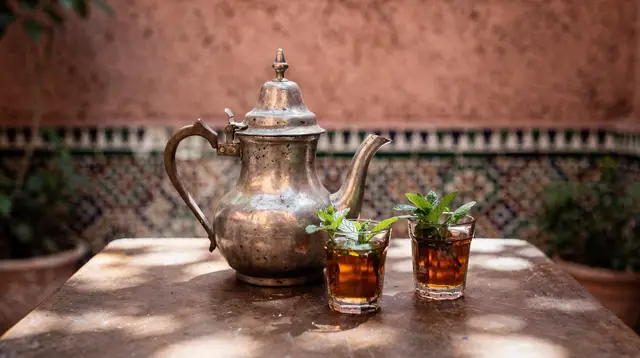
Mint tea accompanies nearly every meal and is offered as hospitality even outside restaurants, poured from height in the traditional style — see the mint tea guide for the ritual and etiquette involved. Alcohol is a separate matter: served in hotels, licensed riad restaurants and much of Gueliz, but rare in the medina proper, and some licensed shops don’t sell it on Fridays. Tap water isn’t recommended for drinking, and the same caution extends to salads washed in it rather than the cooked dishes themselves, which is the more common source of stomach trouble among visitors.
Where this fits into a Marrakech trip
Food is worth building into an itinerary deliberately rather than treating as an afterthought between sights. The rooftop restaurants guide covers where to combine a meal with a view over the medina, and the Jemaa el-Fna food stalls guide is essential reading before an evening at the square specifically, covering how to order without overpaying. For a fuller look at what could go wrong and how to avoid it, the street food safety guide separates the real risks from the imagined ones.
For a wider sense of how food fits into a few days in the city, see the Marrakech in 3 days itinerary, which slots a cooking class and an evening at the food stalls into a broader three-day route through the medina and beyond.
Food and drink tours on GetYourGuide
Verified deep-linked GetYourGuide tours. Book through these links and we earn a small commission at no cost to you.
Photo: our own image of the location, not the operator’s product photo.