Street Food and Stomach Trouble
What actually causes stomach trouble in Marrakech, and is street food to blame?
Salads washed in tap water are the most common cause, not the grilled meat or fried food cooked in front of you at street stalls. High-turnover stalls cooking to order are generally safe; the real risk sits in raw produce and untreated water.
Street food gets blamed for most travellers’ stomach trouble in Marrakech, and it’s largely the wrong target. The bigger risk sits in tap water and anything washed in it rather than the grilled skewers and fried fish cooked to order in front of you at a stall. Tap water in Marrakech isn’t recommended for visitors to drink directly, and the same caution applies to raw salads and garnishes, which are frequently rinsed in tap water before being served — that’s the more common culprit behind a ruined day or two of a trip, not the food sizzling on a grill.
None of this means street food is risk-free, only that the risk profile is different from what most visitors assume. Hot, freshly cooked food — grilled meat, fried fish, soups served steaming — is generally lower risk because heat kills most of what causes trouble. Anything raw, anything that’s been sitting at room temperature for a while, and anything washed rather than cooked deserves more caution. The same logic applies well beyond street stalls specifically — a restaurant salad prepared with unfiltered water carries the same risk as a street-side version, so the precaution is about the ingredient and preparation method, not the setting.
| Where | Applies across the medina — street stalls, casual restaurants, and riads alike |
| Cost | N/A — this is about how to eat safely, not where |
| Time needed | N/A |
| Getting there | N/A |
| Best time | Choose freshly cooked, high-turnover food at any time of day |
What actually causes trouble
Tap water is the recurring thread through most cases of traveller’s stomach trouble in Marrakech, whether it’s drunk directly, used in ice cubes at an unfamiliar bar, or used to wash lettuce and other raw vegetables before serving. Bottled or filtered water is the standard, sensible default for drinking, and it’s worth extending the same caution to salads at less established restaurants, where washing practices vary more than the kitchen’s cooking standards do. Restaurants and riads used to serving visitors are generally more careful about this than a random street-side salad cart, and it’s a reasonable question to ask directly if you’re unsure — most staff at tourist-facing establishments understand exactly why you’re asking.
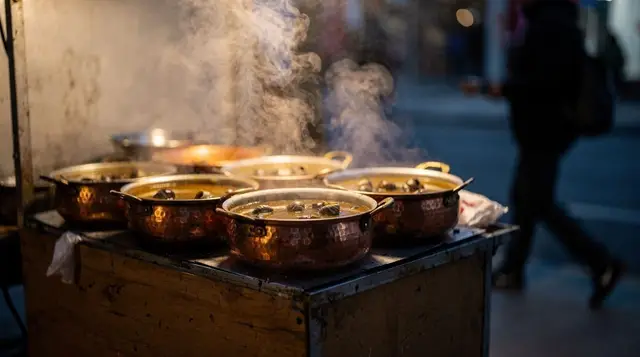
Freshly grilled or fried street food carries comparatively little risk because it’s cooked at high heat immediately before serving and rarely sits around. The stalls at Jemaa el-Fna fall into this category for their hot dishes — the meat, fish and soups are generally safe bets even for a first, cautious visit. The exception is anything served cold or raw alongside a hot dish, which is worth asking about if you want to be careful, and it’s worth noting that ice cream and dairy products left unrefrigerated in hot weather carry their own separate risk profile worth being aware of during summer visits.
Choosing stalls and reducing risk further
High turnover is the best proxy for safety at any informal stall — food that’s being cooked and served continuously to a steady stream of customers, particularly Moroccan families rather than only tourists, hasn’t had time to sit around. Watching food actually being cooked in front of you, rather than served from a pre-made tray, is a reasonable extra filter.
A guided option such as this guided street food walk and taste tour is a low-effort way to be steered toward vetted, high-turnover stalls on a first visit, and this Berber street food tour with a local guide extends the same principle to specialities beyond the standard tourist circuit.
If symptoms do develop, oral rehydration salts from any pharmacy are more effective than water alone and are sold without a prescription across the city. Most cases resolve within a day or two of rest and rehydration; anything persisting longer or accompanied by fever is worth a pharmacy consultation or a doctor rather than waiting it out.
Packing a basic kit before you arrive
A small travel health kit is worth assembling before the trip rather than searching for one under pressure once symptoms appear. Oral rehydration salts, a basic anti-diarrhoeal medication, and any regular prescriptions are the core of it; all are also available at Moroccan pharmacies, which are plentiful in the medina and generally staffed by pharmacists comfortable discussing symptoms in French or basic English. Hand sanitiser is a reasonable addition given how much street food is eaten without cutlery, directly from a shared plate or wrapped in paper, and there’s rarely a sink nearby at an informal stall.
Travel insurance that covers medical treatment is worth confirming before departure regardless of how careful you plan to be — most cases of stomach trouble resolve without needing a doctor, but it’s a sensible baseline for any trip rather than something specific to Marrakech’s food scene.
Building up tolerance gradually
Some travellers find their digestive system adjusts over the course of a trip, tolerating small amounts of local produce and water by the second week that would have caused trouble on day one. This isn’t a reason to relax basic precautions early in a trip, but it explains why longer-term residents and repeat visitors often eat more freely than a first-time visitor should attempt in their first few days. Starting cautiously and loosening up gradually, rather than testing your limits on day one, is the more sensible approach for anyone with a limited window before a long journey home.
Specific situations worth extra caution
Certain settings warrant a bit more care than the general rules above. Buffet-style spreads at hotels, where food may sit at room temperature for extended periods under warming lamps that don’t always maintain a safe temperature, carry more risk than a stall cooking to order in front of you, somewhat counterintuitively given the more polished setting.
Seafood, particularly at inland Marrakech rather than coastal Essaouira, is worth being more selective about given the distance from the source and variable cold-chain handling; a busy, well-regarded restaurant is a safer bet than an obscure stall claiming fresh catch far from the coast. Dairy-based sweets and ice cream left unrefrigerated in summer heat deserve the same caution as any perishable food sitting out, regardless of how appealing the display looks.
None of this is meant to induce excess caution — the overwhelming majority of meals in Marrakech, street food included, pass without incident, and treating every dish with suspicion undercuts one of the best reasons to visit. It’s a short list of situations to apply slightly more judgement to, not a reason to avoid entire categories of food. Most seasoned visitors settle into a simple working rule after a day or two: eat what’s hot and freshly cooked freely, be more selective with anything raw or unrefrigerated, and drink bottled water throughout.
How to read a stall before you order
A few minutes of watching tells you more than any rule. Look at what happens to the food between the cook and the customer: is it lifted straight from the grill or fryer onto your plate, or has it been sitting in a tray waiting for someone to ask? Notice how the stallholder handles money and food, whether utensils are kept clean, and whether the raw ingredients are kept apart from what is already cooked. None of this requires expertise, only attention, and the best stalls in the Jemaa el-Fna area tend to pass these small tests without any effort.
Local custom helps too. Stalls that draw Moroccan regulars at ordinary mealtimes, not only groups of visitors at peak sightseeing hours, are usually serving food that moves quickly. If you are wandering the lanes of the medina and feel unsure, walking on to the next stall costs you nothing. There is always another one, and nobody is offended when you decline politely.
Water, ice and drinks beyond the plate
Because water is the thread running through most trouble, it is worth thinking about every place it appears. Fresh juices pressed in front of you are generally fine when the fruit is peeled or squeezed on the spot, but a glass rinsed under the tap or topped up with ice of unknown origin reintroduces the problem. Ask for your juice without ice if you are unsure of the source, and favour sealed bottles with an intact cap.
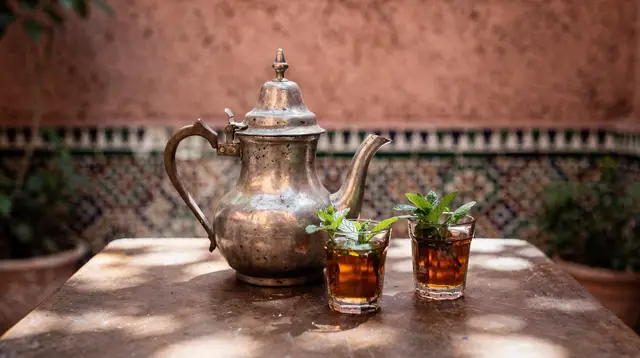
Mint tea is a special case, since the water has been boiled and it arrives steaming hot. Our guide to Moroccan mint tea explains the ritual and why refusing a glass can feel awkward, so it is reassuring that the tea itself is among the safer things you can be handed. Teeth are worth a thought as well: many travellers simply brush with bottled water for the whole trip, which removes one more way for tap water to reach you without your noticing.
Eating safely at different times of day
Lunchtime and the evening rush are when turnover is at its highest, which is why the busiest hours are often the safest for informal food. Early morning snacks, such as bread and simple items from small shops, are usually low-risk because they are baked or cooked fresh. The slower stretches in the middle of the afternoon are when food is most likely to have been sitting, so a hot meal is the better choice then, rather than anything pre-prepared and left on display.
If you are following an evening plan built around the square, our Jemaa el-Fna guide and the blog piece on a morning in Jemaa el-Fna give a sense of how the place changes through the day, and therefore how the food on offer changes with it.
Special situations: kids, solo travellers and Ramadan
Families with small children tend to be more cautious, and rightly so, because young stomachs are less forgiving. Stick to hot, cooked dishes, keep to bottled water, and bring familiar snacks for emergencies. Our guide to Marrakech with kids and the list of family-friendly riads cover the practical side of staying comfortable, including where meals can be handled with less risk.
Solo travellers have the opposite challenge: nobody to compare notes with and no one to share a larger order, which makes it tempting to eat quickly at the first place that looks acceptable. The advice in the solo female travel guide applies to eating too: choose well-lit, busy places and trust your instincts. During the fasting month, opening hours and the rhythm of the day change completely, and our Ramadan guide explains what to expect when the evening meal is the main event of the day.
When a guided food walk makes sense
Eating well and safely is partly a question of knowing where to go, and a first visit is when that knowledge is thinnest. A guide who works with the same stallholders week after week already knows which ones keep their water and salads clean. For an evening focus, an after-dark street food outing through the medina lets you see the stalls at their busiest, when turnover is highest. If you prefer a small group and a steady pace, a small group tasting route with several stops spreads the food across the evening, so you are never committing to a whole plate at an unfamiliar stall.
Whether a tour is worth it, compared with going it alone, depends on your confidence and your budget. Our comparison of a guided tour versus independent travel weighs this up more generally, and the budget guide helps you decide how much of your food spending to put into organised experiences versus casual stalls.
Connecting food safety to the rest of your trip
Health is easier to manage when the rest of the trip is well planned. If this is your first visit, the first-time guide lays out the basics, and the medina walking route shows how to structure a day so that meals fall at sensible moments instead of when you are exhausted and hungry. Our souks guide is also worth a read, because long hours of browsing are when people skip meals and then eat the first thing they find.
Timing of the trip matters as well. Heat makes perishable food riskier, so the best time to visit and the guide to Marrakech in summer are useful when deciding how careful to be with dairy, seafood and anything left on display. If a stall seems to be pushing you hard to sit down and eat, our scams guide explains the common pressure tactics, which are a separate issue from food safety but often turn up at the same tables.
Staying where meals are easy to control
Your accommodation shapes how much you have to think about this. A riad with a trusted kitchen makes breakfast and an occasional dinner effortless, and you can ask the staff directly how salads are washed and what water goes into the ice. Our guide to staying in a riad explains what to expect from the kitchen and the household, which helps you balance meals you control with the adventure of eating out.
For a deeper look at the way local dishes are put together, the blog story about learning to cook a tagine is a pleasant read, and a cooking class with a local chef lets you watch the preparation from the first chop, which is the most direct way to understand why hot, slow-cooked food is so reliable.
The wider food picture
This guide is about risk management, not where to eat — for that, see the Marrakech food guide for what to actually order and the Jemaa el-Fna food stalls guide for the square’s specific stall etiquette. A hands-on cooking class is a useful way to see exactly how food is prepared, which can be reassuring for cautious eaters wanting to understand kitchen standards firsthand.
For broader trip planning around health and safety more generally, the is Marrakech safe guide covers ground beyond food specifically.
Food and drink tours on GetYourGuide
Verified deep-linked GetYourGuide tours. Book through these links and we earn a small commission at no cost to you.
Photo: our own image of the location, not the operator’s product photo.