Marrakech in 48 Hours
We land on a Friday afternoon, drop bags at the riad, and by the time the call to prayer rolls across the medina roofs I’ve already decided this weekend isn’t going to be a list of sights ticked off — it’s going to be a shape, a rhythm, forty-eight hours that build on each other. Here’s how it actually goes.
Friday, late afternoon: the first walk
You don’t plan your first hour in the medina, you just take it. We leave the riad without a destination and let the derbs decide, past spice stalls stacking cones of paprika and turmeric into pyramids, past a boy wheeling a cart of mint through a gap barely wider than the cart itself. Nobody’s rushing yet — the real crowd builds later — so this window between four and six is the closest thing to a quiet medina you’ll get outside the very early morning.
By six we’re at Jemaa el-Fna as it starts its evening transformation: orange juice carts wheeling into position, the first drummers finding a corner, the food stalls not yet lit but clearly about to be. We don’t eat here tonight — that’s tomorrow’s plan — we just watch the square change shape for twenty minutes before heading to a rooftop nearby for the sunset over the Koutoubia minaret.
If the square itself is the part of the city you’re most curious about, the Jemaa el-Fna guide explains how it shifts through the day, and the neighbourhood page gives the wider setting. The medina overview is worth a glance too, since nearly everything on this Friday walk happens inside it. For the minaret you’ll see glowing at sunset, the Koutoubia Mosque guide tells you what you’re looking at.
Friday evening: dinner and the first real orientation
Dinner is a set Moroccan menu at a small restaurant two streets off the square — a salad course, a lamb tagine with preserved lemon, and mint tea poured from height the way it’s meant to be. We talk about tomorrow, which is the only planning this trip really needs: souks and a palace in the morning, gardens after lunch, desert at sunset. A half-day city tour with a local guide booked for the morning means we won’t waste the first hours of Saturday getting lost before we’ve even started.
Saturday morning: souks, then a palace
Saturday starts early, before the heat and the crowds arrive together. The souks are already working — leather being cut, brass being hammered, a dyer’s hands stained indigo to the wrist — and a guided souks tour with artisan stops and mint tea turns what would be aimless wandering into an actual understanding of what we’re looking at and why one rug costs three times another.
By late morning we’re at a palace — Bahia if the itinerary leans grand, El Badi if ruins interest you more — paying the entry fee at the gate (neither is free, whatever a helpful stranger outside might claim) and losing half an hour to a single courtyard’s tilework. This is the point in a 48-hour trip where slowing down for one thing beats seeing three things badly.
Two things help in the souks without any special knowledge: go in knowing that bargaining is part of the exchange, and keep your first questions friendly rather than hurried. The haggling guide and the broader souks guide cover how that conversation tends to go, and the Bahia Palace guide and El Badi Palace guide help you choose between the two palaces before you arrive.
Saturday afternoon: gardens, then rest
After lunch we head to a garden quarter — the Majorelle district’s cobalt walls and cacti are worth the entry fee and the walk, and a Majorelle Garden visit with an audio guide fills in the Yves Saint Laurent history that makes the space more than just a photogenic wall. Then we do something most 48-hour itineraries skip: we stop. Back at the riad, a couple of hours by the plunge pool with nothing scheduled, because the medina in early afternoon heat rewards nobody who pushes through it out of stubbornness.
For more on the garden itself, see the Majorelle Garden guide, and if the Saint Laurent story catches you, the YSL museum guide is the natural companion.
Saturday evening: the desert, briefly
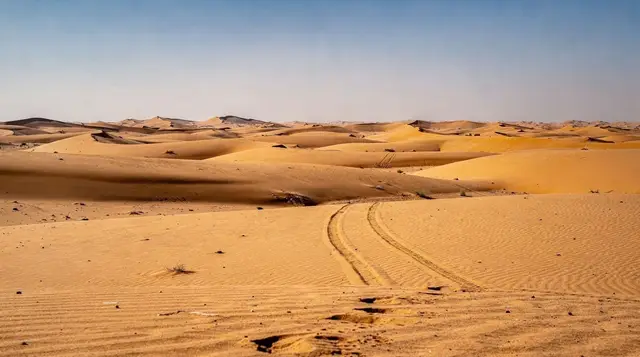
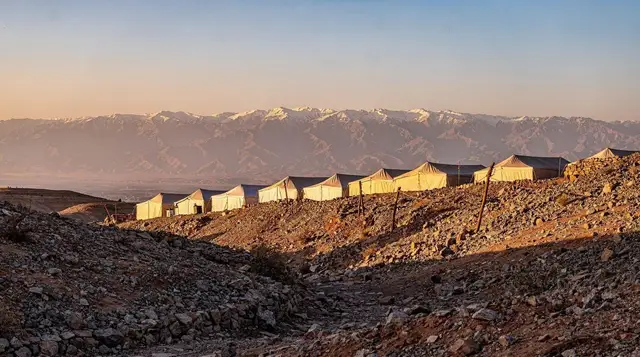
This is the one splurge of the weekend. A short drive gets you to the Agafay plateau in time for the light to turn the stone landscape gold — worth naming clearly: this is desert scenery, not sand dunes, and nobody should book it expecting Sahara-style ergs. An Agafay day pass with pool access and lunch works well earlier in the day if your schedule allows the swap; for an evening version, a sunset camel-and-dinner package delivers the same landscape with a fire and a meal instead of a pool. Either way, it’s the moment the weekend stops being purely urban.
If you want the full picture before choosing between a day pass and an evening, the Agafay Desert guide and the comparison of Agafay versus the Sahara set expectations honestly. Getting between the city and the plateau is simpler once you’ve read about getting around Marrakech.
Saturday, later still: the rooftop close
Back from Agafay by ten, we don’t head straight to bed. One more rooftop, this one quieter than Friday’s, a mint tea instead of a full dinner, and a last look at the medina’s rooftline lit up in patches below. This is the moment forty-eight hours starts to feel complete rather than rushed — not because we saw everything, but because the day had an actual shape: souks, a palace, a garden, rest, desert, and now this. A weekend built around five or six deliberate anchors, not fifteen rushed ones, is the version that people remember accurately a year later.
What booking in advance actually saves you
Nearly everything in this itinerary benefits from being booked a day or two ahead rather than arranged on the spot — the morning city tour, the Agafay evening, even a specific restaurant for the Friday dinner if it’s a smaller or particularly well-regarded one. This isn’t about rigidity; it’s about protecting the few fixed anchors of a short trip from the kind of last-minute scramble that eats into the unstructured time meant for wandering. Booking ahead for the anchors and leaving everything between them open is, in my experience, the actual formula behind a 48-hour trip that feels both full and unhurried at once.
What I’d change with a different season
This particular weekend ran in the shoulder season, mild days and cool evenings, and the sequence would shift with the calendar. In high summer, I’d flip the order — gardens and indoor sites at midday when the heat peaks, souks pushed to early morning and evening, and the Agafay evening moved earlier to make the most of any breeze before full dark. In winter, the desert evening would need a genuinely warm layer rather than the light jacket that sufficed in October, and the rooftop close would move indoors earlier once the temperature drops after sunset. The anchors stay the same; only the hours around them need adjusting for the season you’re actually travelling in.
What we didn’t do, on purpose
We skipped the Sahara entirely — eight to ten hours away, structurally impossible to fit into this window without turning the whole weekend into transit. We skipped a second palace, because one, properly explored, beats two rushed through. We skipped the hammam, reluctantly, and made a mental note to build a full day around it next time rather than squeezing it into an already full one. Deciding in advance what a 48-hour trip won’t include is as important as deciding what it will; it’s the only way to keep the pace humane instead of exhausting.
Sunday: the slow morning before the flight
If your flight allows it, Sunday morning is for the thing you skipped — a hammam, a second pass through a souk section you liked, or simply coffee on a rooftop watching the medina wake up one more time. It’s the forty-eight-hour trip’s best-kept structural secret: end on something unhurried, not a last dash to check off a final sight.
If a hammam is the thing you’d rather not skip, the hammam guide explains what to expect, and the two-day itinerary offers a more structured take on the same short stay. For the rooftop evenings, the rooftop bars guide is a good starting point.
For the version of this weekend with a night added, three days or five breaks down exactly what an extra day buys you — usually Essaouira or a proper Atlas valley. Either way, walk the self-guided medina route at some point during the weekend if you haven’t already; it’s the fastest way to turn the medina’s chaos into something that makes sense, and the first-timer’s guide covers everything else this itinerary assumes you already know.
tours.Itineraries
Verified deep-linked GetYourGuide tours. Book through these links and we earn a small commission at no cost to you.
Photo: our own image of the location, not the operator’s product photo.