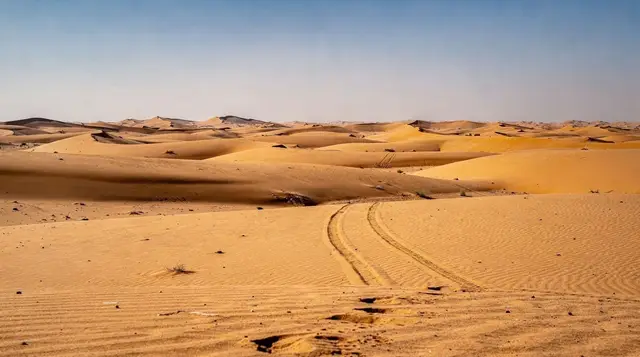
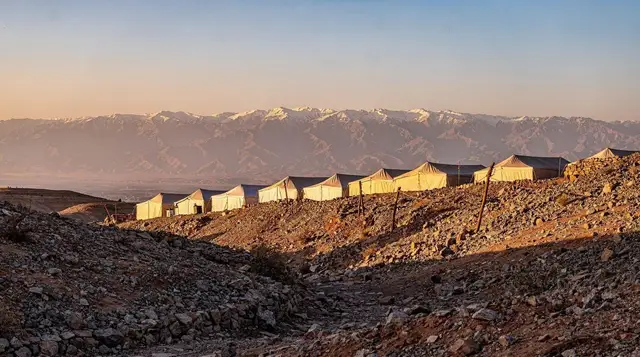
Amizmiz is a market town about 55 km south-west of Marrakech, roughly an hour’s drive, sitting where the plain gives way to the first proper foothills of the High Atlas. It sees far fewer foreign visitors than Ourika or Imlil, and that’s largely because it isn’t set up as a packaged tourist stop — it’s a real regional hub with a genuine weekly market and a role as the gateway into the quieter Anougal valley beyond.
For travellers who’ve already done the more established Atlas day trips and want something with fewer other visitors, Amizmiz is a reasonable, low-pressure choice — with the honest caveat that there isn’t a polished tourist infrastructure waiting for you here.
| Where | South-west of Marrakech, about 55 km, at the edge of the High Atlas foothills |
| Cost | Free to walk through; souk shopping and a simple meal cost little |
| Time needed | Half a day for the town and market; a full day if continuing into Anougal valley |
| Getting there | Grand taxi, self-drive, or as a stop on a broader private Atlas day tour |
| Best time | Tuesday for the souk; spring or autumn for comfortable temperatures |
Tuesday souk
Amizmiz’s weekly market takes place every Tuesday and is one of the larger regional souks in this part of the Atlas foothills, drawing sellers and buyers from surrounding villages for produce, livestock, household goods, and textiles. Unlike Marrakech’s souks, there’s no real concession to tourism here — prices, stalls, and the general rhythm of the day are set for local trade, which is precisely what makes it worth seeing if a market visit interests you at all. Arrive in the morning; by early afternoon much of the activity has wound down.
The livestock section, usually set apart from the main stalls, is where the market’s rural character is most obvious — sheep, goats and occasionally cattle changing hands between farmers from villages throughout the surrounding hills. It’s not staged for visitors in any way, which makes it genuinely interesting for anyone curious about how the regional agricultural economy actually functions, though it’s also not a place to linger if you’re squeamish about livestock trading up close.
Amizmiz itself sits around a small lake formed by a local dam, giving the town a pleasant enough setting beyond the market alone, with a scatter of simple cafés overlooking the water where you can sit for a mint tea and watch the town’s rhythm without any particular agenda.
The town’s layout reflects its role as a regional hub rather than a village — wider streets, a proper administrative presence, and a mix of older pisé buildings alongside more recent concrete construction. It’s a useful, unglamorous window into how a mid-sized Atlas foothill town actually functions day to day, distinct from both the purely rural villages further into the mountains and the tourist-oriented stops closer to Marrakech.
Local administration, schools and a modest health centre serve the surrounding villages from here, underlining Amizmiz’s role as a genuine regional hub rather than simply a stop on a tourist route. That civic weight is part of what gives the Tuesday souk its scale — it draws people who need to be in town for other reasons that week regardless of the market itself.
None of this makes for a conventional day-trip highlight, but for travellers who value understanding a place as it actually functions over a curated list of sights, Amizmiz offers something genuinely different from the rest of this list — and its ongoing recovery deserves the visit as much as its scenery does, particularly for anyone who wants their spending in Morocco to reach communities beyond the main tourist circuits rather than concentrating entirely in Marrakech and its most established day-trip valleys.
Come with modest expectations, a bit of French or Arabic if you can manage it, and cash in hand, and Amizmiz will reward the effort on its own quiet terms — not with a headline sight, but with a genuine sense of how this corner of the Atlas foothills actually lives day to day.
Shaping a day around the market
The simplest way to use Amizmiz is to treat it as a morning destination. Leave Marrakech early, spend the busiest hours wandering the stalls, then take a slow lunch at one of the simple cafés before heading back. Because the town isn’t built for visitors, nothing is timed or staged for you, and that unhurried quality is the main thing to enjoy. If you want a sense of the contrast, a morning in Jemaa el-Fna the day before makes the calm of a foothill market feel even more distinct.
Walk the market without an agenda. Look at how produce is laid out, how neighbours greet one another, and how bargaining here is a quiet, practical exchange rather than the performance you may know from the capital. If you want a refresher on how haggling works in a tourist-facing setting, our haggling guide explains the basics, but remember that prices at a working local market are not inflated for visitors, so push gently or not at all. Ask before photographing people or their animals, and accept a refusal with a smile.
Choosing between Amizmiz and the better-known valleys
Many travellers weigh Amizmiz against the established options, and the honest answer depends on what you want from the day. Ourika Valley and the Ourika guide cover a route with more infrastructure, easier food stops and clearer activities. Imlil and the Imlil guide suit anyone aiming for serious walking or the high peaks. Amizmiz sits at the opposite end of the spectrum: fewer services, fewer other visitors, and more of a sense that you are an observer in someone else’s everyday routine.
If you are still deciding how to spend a limited trip, our overview of the best day trips from Marrakech and the Atlas Mountains day trip guide lay out the alternatives side by side. For a wider look at the range itself, the High Atlas page gives useful context on how the different valleys relate to each other.
Gateway to Anougal valley
Beyond the town, a rougher road climbs into the Anougal valley, a narrower and considerably less-visited valley than Ourika or Imlil’s Rheraya, with small villages, walnut terraces, and walking routes that see very few other tourists. There’s no significant tourist infrastructure along this road — no restaurants built for day-trippers, no established viewpoint stops — so this is a route better suited to a private driver, a hired local guide, or a confident self-drive than an organised group tour, none of which currently run here in any meaningful number.
The reward for the rougher access is a genuinely quiet, working agricultural valley, largely untouched by the tourism that’s reshaped parts of Ourika and Imlil over recent years. Villages here rely almost entirely on farming and small-scale livestock, with terraced fields following the valley’s contours much as they have for generations. It won’t suit anyone wanting a polished day out with clear activities laid on, but it rewards travellers genuinely curious about rural Atlas life away from any tourist circuit.
A two-day trek linking Amizmiz and the Ijoukak valley is the clearest packaged option for anyone wanting a proper multi-day route through this quieter part of the range, rather than a casual half-day detour.
Walking and driving in the valley
Anyone considering the valley on foot should think of it as a slow, observational outing rather than a goal-driven hike. Paths between villages follow farming terraces and shared tracks, so you will pass irrigation channels, walnut trees and people working their fields. Greet everyone you meet, keep to the paths rather than crossing planted ground, and ask permission before entering any private area. A local guide is more than a navigation aid here: they explain who lives where, smooth introductions, and make sure your presence feels welcome rather than intrusive.
If you intend to drive yourself, read our guide to driving in Morocco first, and be honest about your comfort on rough, unsigned roads. Anyone who would rather not take that on can arrange a driver, and the Marrakech taxi guide explains how grand taxis and negotiated fares work. For hikers who like what they see, the broader Marrakech hiking week itinerary shows how a quiet valley like this could fit into a longer walking trip.
The 2023 earthquake and recovery
Amizmiz was one of the towns hit hardest by the Al Haouz earthquake of September 2023, with significant damage to buildings in and around the town and, tragically, loss of life across the wider area. Rebuilding has been an ongoing, visible process since — some reconstruction is complete, other work continues — and it’s honest to say the effects of that night are still part of the town’s story rather than a closed chapter. Tourism has genuinely resumed: the souk runs as normal, the roads are open, and local guides and drivers are working again. Visiting responsibly, spending locally, and not treating the town as a disaster-tourism curiosity is the right approach.
Spending that helps
Because Amizmiz does not run on tourism, how you spend matters more than how much. Buy produce, a simple meal or a handmade item directly from the person selling it, hire a local driver or guide rather than arranging everything from the city, and tip fairly; our tipping guide explains what is customary. Small, direct purchases reach households that large tours rarely touch, and they are the most useful contribution a visitor can make to a town still rebuilding.
Fitting Amizmiz into a longer trip
Amizmiz works best as a contrast to the busier parts of a stay. A short Atlas escape such as the two-day Atlas itinerary leaves room for a quieter stop, and the three-day Marrakech plan can absorb a half-day here if you swap out one of the city sights. If you are visiting with a flexible schedule, timing the trip for a Tuesday and pairing it with a visit to Asni or Lalla Takerkoust can turn a single stop into a relaxed, varied day. Seasonal comfort matters as well, so check the best time to visit Marrakech before choosing your dates.
What to expect on the ground
English is spoken far less consistently here than in Marrakech or the established trekking hubs like Imlil, so a little French or basic Arabic goes a long way, as does patience and a friendly manner. Mobile signal is generally reliable in the town itself but drops off quickly on the road into Anougal valley, so plan accordingly if you’re relying on a phone for navigation or communication. Facilities are basic — expect simple cafés rather than tourist-oriented restaurants, and don’t count on finding an ATM once you’ve left the main town.
Getting there and practicalities
There’s no standard “Amizmiz tour” sold the way Ourika or Ouzoud day trips are — most visitors arrive by grand taxi from Marrakech, self-drive, or as a customised stop on a private Atlas Mountains day trip built around your own route. Broader group itineraries occasionally pass through as one stop among several on a day trip covering Atlas Mountains villages, but check the specific itinerary before assuming Amizmiz is included. Cash is necessary throughout; card acceptance is minimal outside Marrakech itself.
Travellers who prefer a more structured option can also look at a selection of Atlas Mountains day trips from the city, which trade the quiet of Amizmiz for easier logistics. Our guide to guided tours versus going independent helps weigh that trade-off, and the Marrakech first-time guide is a good starting point if this is your first visit.
For safety context on independent travel in areas with limited tourist infrastructure, our Marrakech safety guide is worth reading, and our guide to visiting a Berber village honestly applies directly to any stop in Anougal valley.