Lalla Takerkoust is a reservoir lake about 35 km south-west of Marrakech, roughly 40 minutes’ drive, formed by a dam on the N’Fis river with the High Atlas rising behind it as a backdrop. It’s the closest genuine watersports destination to the city, and unlike the winding drives into Ourika or Imlil, the road out here is quick and flat, which makes it an easy half-day even for visitors reluctant to spend hours in a car.
The lake itself is artificial — the dam was built for irrigation and hydroelectric power, not tourism — but the setting has drawn a small cluster of restaurants, cafés and activity operators along its shores, aimed almost entirely at day-trippers from Marrakech.
| Where | On the N’Fis river, about 35 km south-west of Marrakech |
| Cost | Day tours from roughly 250–400 MAD (€23–37); jet-ski and quad activities are priced separately, often 300–600 MAD (€28–56) |
| Time needed | A half day at the lake alone; a full day if combined with Agafay |
| Getting there | Private day tour, taxi, or self-drive on flat, easy roads |
| Best time | Spring and autumn for comfortable temperatures; go for sunset if a full day isn’t in the cards |
Jet-skiing and lake activities
The lake’s calm water and open space make it well suited to jet-skiing, and it’s the main reason most visitors come specifically here rather than to any other Atlas-adjacent spot — none of the mountain valleys further south offer anything comparable for watersports. A jet-ski session on the lake typically runs 15 to 30 minutes with an instructor briefing beforehand, and no prior experience is expected. Quad biking and camel rides around the lakeshore and nearby scrubland are the other standard add-ons, often bundled together rather than sold separately.
Swimming is possible but not the lake’s main draw — the water can be murky depending on season and recent rain, and there’s little in the way of a maintained beach. Most visitors come for the activities and the view rather than to swim laps.
Camel rides along the lakeshore and adjoining scrubland are widely offered alongside the motorised activities, generally as a shorter, calmer add-on rather than a headline experience in their own right. A combined camel ride and quad bike tour is the standard way operators package these lighter activities together, aimed at visitors who want variety over a single, longer session on one vehicle.
The dam and the wider setting
The Barrage Lalla Takerkoust, completed under the French protectorate era to irrigate the Haouz plain and generate hydroelectric power, remains functional infrastructure rather than a purely scenic feature — a fact that becomes obvious once you see the dam wall itself up close, considerably more industrial than the surrounding cafés and activity centres suggest. The reservoir’s water level fluctuates with the irrigation season and rainfall upstream in the Atlas, occasionally dropping enough by late summer to noticeably shrink the usable shoreline for activities.
Despite its practical origins, the setting works in the lake’s favour: the surrounding hills and the Atlas range beyond give a proper sense of scale that a smaller, unremarkable reservoir elsewhere wouldn’t offer, which is a large part of why it’s become a day-trip fixture rather than staying purely functional infrastructure.
Fishing is permitted on parts of the reservoir and occasionally offered as an add-on activity, though it’s a niche option compared with the jet-ski and quad-biking bookings that dominate most visitors’ itineraries here. Birdlife around the lake’s quieter margins is worth a glance for anyone interested, with herons and other waterbirds occasionally visible away from the busier activity zones near the main access points.
The village of Lalla Takerkoust itself, from which the lake takes its name, sits nearby and retains a modest, unhurried character despite the tourism the lake generates a short distance away. It’s worth a brief look if you’re curious about ordinary Atlas foothill life beyond the activity centres, though it offers little in the way of dedicated attractions of its own.
Golf and a scattering of upmarket villa developments have appeared near the lake in recent years, catering to a longer-stay, more affluent visitor than the typical day-tripper this guide is mainly written for. It’s a reminder that Lalla Takerkoust serves more than one kind of traveller — some passing through for an afternoon, others treating it as a base for a longer, quieter stay outside Marrakech itself.
For most readers of this guide, though, the half-day or full-day version remains the more relevant option: an easy drive, a couple of hours on the water, lunch with a view, and back to Marrakech well before dinner if that’s how you’d rather spend the evening. Few day trips from the city offer that much variety for so little effort.
Who the lake suits best
Lalla Takerkoust rewards visitors who want a change of pace from the medina. After a few days of narrow lanes, souks and constant negotiation, a stretch of open water and wide skies can feel like a reset. If you have just spent time in the medina or around Jemaa el-Fna, the lake offers space, quiet and a very different rhythm, without demanding the commitment of a full mountain excursion.
Families with children who are restless after sightseeing often get on well here, because the activities are short, physical and easy to follow. Our guide to Marrakech with kids and the wider family activities guide give more context on what works for younger travellers, and the lake fits neatly into that picture as one of the more relaxed outings. Groups of friends tend to treat it as a playful afternoon, while couples often go mainly for the sunset and a long lakeside meal.
It suits less well anyone hoping for dramatic scenery, serious hiking or a deep cultural encounter. If that is what you are after, the High Atlas villages and valleys are the better investment of a day, and the Atlas Mountains day trip guide lays out how to approach them.
How to spend a half day here
A sensible half day follows a simple shape. Arrive with enough time to settle in rather than rushing straight onto the water: sort out your activity booking, put on sun protection and take a first look at the shoreline. The motorised activities are best done while energy is high, and lunch fits naturally afterwards, when a terrace table and a cold drink feel earned.
If you plan to do both a water session and a quad or camel outing, ask the operator how the two are sequenced so you are not waiting around between them. Operators who bundle activities usually handle this for you, which is part of the appeal of a packaged offer such as a dedicated quad bike session around the lake. For a more detailed look at what riding involves, including what to wear and how groups are run, see the quad biking guide and the broader adventure sports guide.
Leave a little slack at the end of the visit. The drive back is easy, but traffic on the approach to the city can slow things down, and nobody enjoys racing the clock after a relaxed afternoon. If sunset is the goal, plan your return around it rather than trying to squeeze in one more activity.
What to bring and how to dress
Practical preparation makes the visit noticeably more comfortable. Closed shoes are worth having for quad and scrubland activities, and a light layer helps when the wind picks up over open water. Sunglasses, a hat and sunscreen matter more than most people expect, because the shore offers little shade. Bring a change of clothes if you plan to get wet, and a bag that keeps phones and cameras dry.
For general guidance on dressing sensibly in Morocco, our what to wear in Marrakech guide covers the basics, and the desert tour packing guide is useful if you are combining the lake with Agafay and want one list that covers both. Carry some cash for small purchases and tips, and read the tipping in Morocco guide so you know what is customary for guides and activity staff.
Seasons at the lake
The lake changes character through the year. Spring tends to be the most pleasant time, when the surroundings look their best and the temperature is comfortable for being outdoors all afternoon. Autumn brings similarly easy conditions and softer light, which suits sunset visits. Summer is workable if you go early or late, but midday on an exposed shoreline can be punishing, and the Marrakech in summer guide explains how to plan around the heat. Winter days can be crisp and clear, and the mountains behind the water sometimes look striking, as described in our Atlas in winter feature, though water activities are naturally less appealing when it is cold.
Water levels also shift with the seasons, so what you see in one month may differ from another. If a particular activity matters to you, check with the operator on the day before setting out, and keep your plans flexible enough to adapt. For wider planning, the best time to visit Marrakech guide helps you place a lake day within the rest of your trip.
Restaurants on the water
A handful of restaurants sit directly on or near the shoreline, several with terraces built out over or right up to the water, not unlike the pilotis-style setups in Ourika but with lake views instead of river ones. The food is similarly aimed at day-trip groups — grilled meats, tagines, salads — priced for tourists rather than locals, but the setting, particularly around sunset with the Atlas silhouette behind the water, is a genuine highlight of the visit regardless of the food itself.
A few properties along the shore have expanded into fuller day-club setups, with sun loungers, pools, and a bar alongside the restaurant, aimed at visitors wanting to spend a whole afternoon rather than just stopping for lunch. These suit travellers looking for a relaxed poolside day with a change of scenery from a Marrakech riad more than they suit anyone chasing a purely scenic or cultural outing, and it’s worth checking which kind of venue you’re booking before you commit to a full day there.
Paired with Agafay
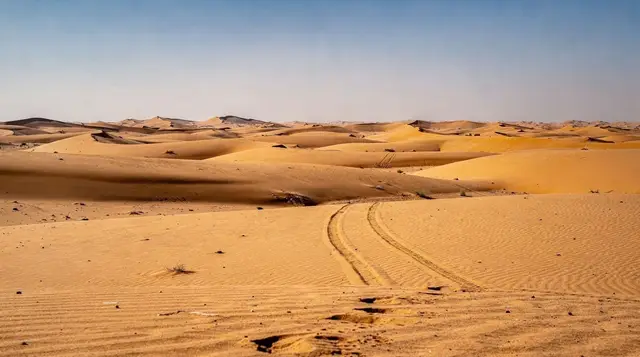
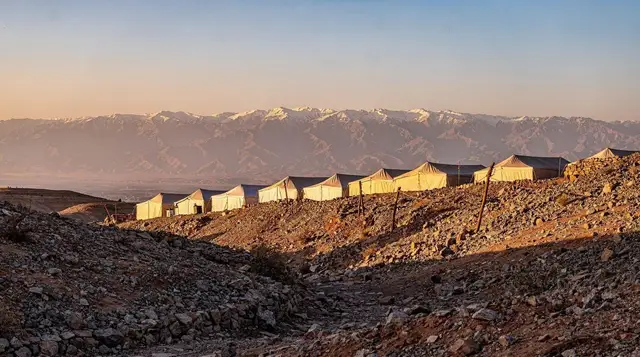
Lalla Takerkoust sits close enough to the Agafay Desert that the two are routinely combined into a single day trip — rocky desert scenery and a camel ride or dinner show in one direction, water activities and a lakeside lunch in the other. A combined Atlas and Agafay day tour with a sunset camel ride is the standard version of this pairing, and it makes practical sense: neither destination alone easily fills a full day for most visitors, but together they do, without an especially long drive between them.
Evening options lean into this pairing too — a dinner show combining Lalla Takerkoust and Agafay is a popular way to end a day that started elsewhere, with sunset over the lake or desert as the backdrop.
Getting there and practicalities
The road here is considerably easier than the mountain routes further south, sealed and largely flat, which makes self-driving straightforward for anyone comfortable with Moroccan roads generally. A dedicated quad-biking session around the lake is worth booking ahead in peak season, since equipment can run out at busy weekends. Bring a swimsuit if you might want to get in the water, and sun protection — there’s limited natural shade directly on the shore.
Fitting the lake into a longer stay
Because the lake is so close, it slots easily into most plans. Visitors with only a short stay can treat it as an optional extra, as in our two-day or three-day itineraries, where it works best as a light afternoon in place of another round of monuments. Those with more time can pair it with a night out at Agafay, as discussed in the Agafay day trip versus overnight guide, or fold it into a slower week such as the five-day itinerary.
Travellers weighing whether to go independently or with an operator will find the trade-offs laid out in the guided tour versus independent guide. For the lake, the main advantage of a tour is simplicity: transport, activity and timing are handled together. Going independently gives more freedom over when you stay, which matters if you want to linger until sunset. Either way, the getting around Marrakech guide will help you decide how to reach the starting point.
For the full comparison between this easy lake trip and a genuine desert excursion, our Agafay versus the real Sahara guide is useful context, and our dedicated Lalla Takerkoust day trip guide covers logistics in more depth than fits here.