A Week of Hiking from Marrakech
This is the itinerary for travellers who want genuine trekking, not a mountain day trip with a city break attached. It’s built around a multi-day Toubkal attempt — North Africa’s highest peak at 4,167 metres — with acclimatisation days, valley walks, and a rest day built in around it, because attempting the summit without any lead-in is both unpleasant and genuinely risky at altitude.
Be honest with yourself before booking this one: it requires a reasonable baseline of fitness, proper boots, and a guide (mandatory for the Toubkal refuge route in practice, even if not legally required everywhere). If that’s not the trip you’re after, Marrakech and the Atlas in 2 days covers the same starting point — Imlil — at a fraction of the commitment.
| Best for | Fit hikers wanting a real multi-day trek with a summit attempt |
| Getting around | Private transfer to Imlil; on foot, with mules for baggage, for the trek itself |
| Total budget guide | Around 5,000-8,000 MAD (460-740 €) per person including guide, mules and refuge fees |
| Car needed | Yes, for the transfer to and from Imlil; the trek itself is entirely on foot |
Day 1 — Marrakech to Imlil
Morning: A private transfer or shared minibus covers the roughly ninety-minute drive to Imlil, the trailhead village for the whole week. Afternoon: A short acclimatisation walk around the village and lower valley — nothing strenuous, just a chance to adjust and meet your guide if one hasn’t been arranged already. Evening: An early night at a gîte, since tomorrow starts the real trekking.
Day 2 — Imlil to the Toubkal refuge
Morning: The trek proper begins, climbing steadily through the village of Aroumd and into the valley toward the Toubkal refuge, at around 3,200 metres. A three-day Toubkal trek typically structures this as the first full trekking day, with mules carrying the heavier gear.
Afternoon: The climb continues through increasingly rocky, exposed terrain — this is where the altitude starts to be noticeable for most people, and pacing matters more than speed.
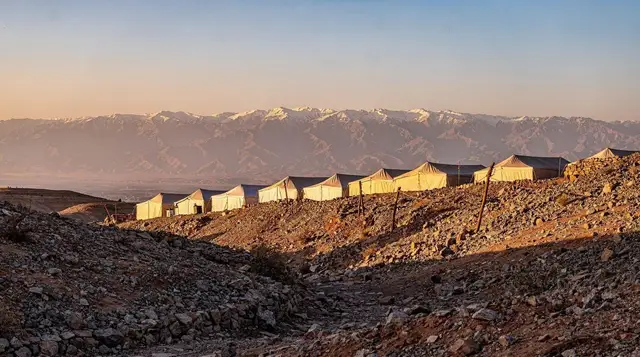
Evening: Arrival at the refuge, a basic mountain hut with dormitory-style beds and hot meals. Nights here are cold regardless of season — pack accordingly. If you’re tired, cut this: if the pace has been harder than expected, an extra rest day at the refuge before the summit push is a reasonable adjustment; tell your guide rather than pushing through.
Day 3 — Toubkal summit attempt
Morning: A pre-dawn start, often around 4-5am, for the summit push — a further roughly 1,000 metres of ascent over loose scree and, depending on season, snow. This is the physically hardest day of the week by a wide margin. A Toubkal ascent trek reflects the standard structure most guided groups follow for this push.
Afternoon: Descent back to the refuge, then continue down to Imlil the same day if energy allows, or split it over an extra night if not.
Evening: A well-earned rest at a gîte in Imlil or back down in the lower valley, depending on how the day went. If you’re tired, cut this: the summit is genuinely optional — guides are used to turning back with clients who aren’t managing the altitude, and there’s no shame in a strong attempt that doesn’t reach the top.
Day 4 — Rest day in the Imlil valley
Morning and afternoon: A deliberately gentle day after the summit push — an easier Imlil Valley walk to the waterfalls is a good option if your legs still want some movement, but a full rest day is equally valid.
Evening: A relaxed dinner, recovering ahead of the week’s second trekking stretch.
Day 5 — Imlil to Setti Fatma via the valleys
Morning: A transfer or a lower-altitude trekking day connects Imlil toward the Ourika Valley and Setti Fatma, a genuinely different landscape from the Toubkal massif — greener, more villages, less exposed terrain. A multi-day Atlas trek from Imlil to Setti Fatma covers a version of this connecting route for those who want to walk rather than transfer.
Afternoon: Arrival in Setti Fatma, known for its waterfalls reached by a moderate hike from the village.
Evening: An overnight in the valley, at a noticeably lower and warmer altitude than the Toubkal refuge.
Day 6 — The Ourika Valley and waterfalls
Morning: The walk to the Setti Fatma waterfalls, climbing through several tiers along a rocky path — moderate rather than technical, but a proper walk after the previous days.
Afternoon: A wider Atlas Mountains three valleys day trip is a good structure for exploring more of the wider Ourika area if energy allows, taking in additional villages along the valley road.
Evening: Transfer back toward Marrakech or an overnight in the valley, depending on timing.
Day 7 — Return to Marrakech
Morning: A final transfer back to the city, arriving with the afternoon free.
Afternoon: Keep this deliberately unstructured — after a week of trekking, a slow lunch and a hammam session are a better use of the last hours than more sightseeing.
How the week fits together
The shape of the week is deliberate. The first two days are about getting your body used to the mountains, the third is the single big effort, the fourth is recovery, and the last three trade altitude for greener, gentler valleys. Treat that order as the plan’s backbone: if you swap the days around, the acclimatisation logic falls apart, and the summit day becomes much harder than it needs to be.
If you want a better sense of the village you’ll be based in at the start, the Imlil guide and the Imlil destination page explain how the trailhead works, where guides gather and what the surrounding valley looks like. For the wider mountain range, the High Atlas page gives useful context on why this landscape feels so different from the city you left behind.
Pacing, food and water on the trail
Walk slower than feels necessary, especially on day two. The most common mistake on this route is arriving at the refuge tired because the first hours were taken at city pace. A steady rhythm, regular short stops and plenty of fluids make the afternoon climb far more comfortable, and they leave you with energy for the pre-dawn start. Ask your guide how they plan the breaks, and follow their lead on when to eat and drink rather than waiting until you feel hungry or thirsty.
Meals in the mountains are simple and filling, and the hot food at the refuge is a welcome reward after a long day. If you have dietary needs, mention them when you book rather than at the table. Bring snacks you actually enjoy eating, because appetite can drop at altitude and familiar food is easier to get down. Headaches, nausea and unusual tiredness are signals worth sharing with your guide early; they are much easier to manage when caught soon.
Before and after the trek
Because this week is all trekking, it helps to plan your city time separately. Arriving a day early lets you sort out luggage, leave the bags you don’t need in your accommodation and start the mountains rested. The first-time Marrakech guide covers the practical basics of arrival, and the airport transfer guide explains how to get from the airport into town without fuss.
When you return, the hammam guide is worth a read: a proper steam and scrub is the best thing for tired legs, and knowing what to expect makes it more enjoyable. If you have extra days in the city, the medina walking route is an easy, flat way to see the old town without asking anything more of your knees.
Other mountain options if this feels too much
Not every traveller wants a summit. The Ourika Valley guide and the Setti Fatma waterfalls guide describe lower-effort days in the same range, and the Ourika Valley destination page shows how the valley fits together. For a short outing with little commitment, the Atlas Mountains day trip guide is the simplest way to taste the scenery. If you’d like to compare this trek with a longer-distance trip from the city, the Toubkal trek guide goes deeper on the route itself.
Fitness, guides and gear
A guide is the standard, sensible choice for the Toubkal route — the refuge system and mule logistics are set up around guided groups, and route-finding above the refuge in poor weather is genuinely hazardous without local knowledge. Proper hiking boots, layers for temperatures that swing from warm daytime sun to well below freezing at the refuge, and trekking poles for the scree sections all matter more here than on any other itinerary on this site.
Best months for this trip
Toubkal is climbable across most of the year, but the two windows that suit this itinerary best are roughly May to October, when the standard trekking route is largely snow-free, and the shoulder months either side, when conditions are cooler but still manageable for a well-prepared group.
Winter ascents (December to March) are genuinely possible but require crampons, ice axe experience, and a guide comfortable with winter mountaineering rather than standard summer trekking — a meaningfully different trip from what’s described here, and not one to attempt without that specific preparation. If you’re planning around a fixed week regardless of season, tell your guide or operator in advance so they can adjust gear requirements and, if needed, the exact route.
What this week doesn’t include
This itinerary is built specifically around trekking, and it deliberately leaves out most of what a standard Marrakech trip would cover — the medina’s palaces, Majorelle Garden, a hammam beyond the final afternoon, and any of the coastal or desert excursions covered elsewhere on this site. That’s a deliberate trade: fitting a genuine Toubkal attempt alongside a full sightseeing itinerary in a single week isn’t realistic, physically or logistically, so this plan treats the trekking as the whole point rather than one activity among many. If you want both, the honest approach is two separate trips, or extending this one by two or three days on either end for city time before or after the trek itself.
For the full detail on the summit route itself, read trekking Mount Toubkal. For a far shorter, non-summit version of this same starting point, see Marrakech and the Atlas in 2 days. And for background on the villages you’ll pass through, visiting a Berber village honestly is worth reading before you go.
tours.waterfalls-hiking
Verified deep-linked GetYourGuide tours. Book through these links and we earn a small commission at no cost to you.
Photo: our own image of the location, not the operator’s product photo.