Trekking Mount Toubkal
How hard is it to trek Mount Toubkal and do I need a guide?
Toubkal is 4,167 metres, the highest peak in North Africa, and since 2023 an accredited guide has been legally required for the ascent. The classic route is two days from Imlil with a night at the Toubkal Refuge (3,207m) and a pre-dawn summit push on day two. No technical climbing skills are needed from June to October; crampons and an ice axe are necessary from December to April.
Mount Toubkal is 4,167 metres and the highest point in North Africa, and it’s reachable enough from Marrakech that a two-day return trip from the city is realistic for a reasonably fit traveller with no technical climbing background. That accessibility can undersell what the trek actually involves: a genuine mountain ascent, real altitude, and since 2023 a legal requirement to climb with an accredited guide rather than heading up independently.
This guide covers the classic route, the guide requirement, altitude risk, and the difference between the straightforward summer climb and the technical winter one.
| Where | High Atlas, starting from Imlil (1,740m), summit at 4,167m |
| Cost | Guided 2-day treks typically run 1,500-3,000 MAD (140-280 €) per person all-in, including guide, refuge accommodation and meals — packages vary, so check exactly what’s included |
| Time needed | 2 days is the classic format; 3 days allows more acclimatisation and a safety buffer |
| Getting there | Imlil, about 1h30 from Marrakech, is the standard starting point and where guides are arranged |
| Best time | June-October for a non-technical ascent; December-April requires crampons, an ice axe and winter mountaineering experience |
The mandatory guide rule
Since 2023, climbing Toubkal without an accredited guide has not been permitted. This followed a period of safety concerns around unregulated solo and informally-guided attempts, and it’s now enforced in practice — checkpoints and refuge staff along the route expect to see that climbers are part of a guided group. In practical terms this means independent, DIY ascents are no longer an option; every legitimate route up the mountain now goes through a licensed guide, arranged either directly in Imlil or, more commonly, through a pre-booked tour from Marrakech. A 2-day Mount Toubkal climb from Marrakech includes the accredited guide as standard.
The classic 2-day route
The standard itinerary starts in Imlil, where trekkers meet their guide and, often, a mule to carry the bulk of the luggage. Day one is a steady climb through the Ait Mizane valley to the Toubkal Refuge at 3,207 metres, taking around 5-6 hours at a comfortable pace with a lunch stop en route. The refuge is basic but functional — dormitory-style beds, hot dinner, and an early night, since day two starts before dawn.
Day two begins around 4-5am with a pre-dawn departure from the refuge, climbing roughly 1,000 metres over loose scree and rock to reach the summit for sunrise or shortly after, then descending all the way back to Imlil the same day — a long, tiring second day that covers far more distance and altitude change than the first. A 2-day, 1-night Toubkal ascent hike follows this exact structure. For anyone wanting a gentler pace with more acclimatisation time, a 3-day Toubkal trek with a dedicated acclimatisation stage spreads the same route over an extra day.
Altitude: the part people underestimate
Altitude sickness is a real risk above roughly 3,500 metres, and Toubkal’s summit day takes trekkers well past that threshold quickly, without much time to acclimatise beyond the single overnight stop at the refuge. Headaches, nausea, dizziness and shortness of breath are common even among fit trekkers, and they’re not a sign of failure — they’re a normal physiological response that guides are trained to watch for and manage. A guide’s decision to turn a client back before the summit should be treated as final and non-negotiable; pushing through severe symptoms at altitude is how serious incidents happen.
Drinking enough water, eating properly the evening before, and pacing the ascent slowly rather than rushing all measurably reduce the risk, though they don’t eliminate it entirely. Anyone with a history of altitude problems on previous treks should mention it to their guide before setting off, not partway up the mountain.
Gear: summer versus winter
From roughly June to October, Toubkal doesn’t require any technical mountaineering equipment — sturdy hiking boots, layered clothing for a wide temperature swing between the valley and the summit, a warm layer for the pre-dawn start, and basic trekking gear cover it. A guided 2-day Toubkal trek with meals included typically handles the logistics of food and refuge accommodation, leaving personal clothing and footwear as the main things to arrange yourself.
From December to April, snow and ice cover the upper mountain and the ascent becomes a genuine winter mountaineering undertaking, requiring crampons, an ice axe, and the skills to use both safely on steep, icy ground. This is a materially different trip from the summer version, and trekkers without winter mountaineering experience should either hire additional technical guiding support or plan their visit for the non-technical season instead.
Life at the Toubkal Refuge
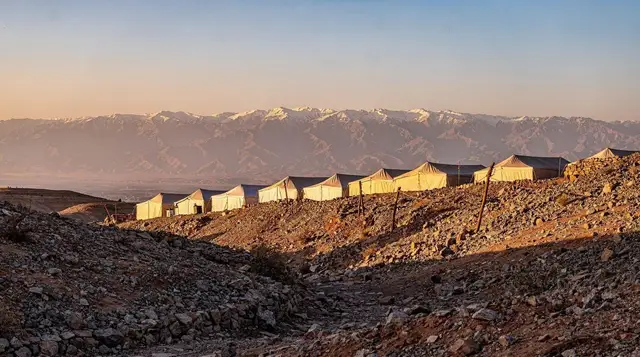
The refuge at 3,207 metres is basic but purpose-built for exactly this trek — dormitory-style rooms with shared bathroom facilities, a communal dining area serving a hot dinner and breakfast, and enough capacity to handle the steady flow of trekkers heading up and down throughout the season.
It gets genuinely busy in peak months, particularly during school holiday periods and the more comfortable spring and autumn weeks, so pre-booking as part of a guided package is the reliable way to guarantee a bed rather than arriving and hoping for space. Nights are cold regardless of season given the altitude, and a proper sleeping bag rated for near-freezing temperatures, even in summer, makes a real difference to how well you sleep before the early start.
Choosing the right season for your trek
The season decides almost everything about this trip: the gear you carry, the difficulty of the summit day and how much margin you have if the weather turns. Summer and early autumn suit most travellers because the upper mountain is free of snow, which is why the non-technical window is the one most people book. If you are still deciding when to visit Morocco as a whole, the best time to visit Marrakech and the Marrakech weather guide put the mountain season in the context of the city below.
Remember that conditions in the city and on the mountain can be very different. A hot afternoon in the medina says little about the wind and cold at the refuge or on the summit ridge. If you are travelling in the hottest months, the Marrakech in summer guide explains why many visitors escape to the Atlas, and the Marrakech in winter guide is worth reading if you are tempted by the snowy version of the climb and want to understand what that season feels like at ground level.
Building the trek into your Marrakech trip
Toubkal rarely stands alone in a Morocco itinerary. Most travellers fit it between city days, and the order matters more than it seems. Climbing at the start of a trip, while your legs are fresh and before long drives and late restaurant nights accumulate, tends to go better than squeezing it in at the end when you are tired. Equally, finishing with a slow day in a riad, a hammam and a long mint tea is a very good way to let your muscles recover.
Two ready-made frameworks help here. The 2-day Atlas itinerary is the shortest way to pair the mountains with the city, and the hiking week itinerary suits anyone who wants walking to be the main purpose of the trip rather than an excursion. If you only have a few days in total, the 3 versus 5 days comparison helps you decide whether a Toubkal weekend is realistic or whether a gentler valley walk is the wiser choice.
For the aftermath, a soak in a traditional bathhouse is the classic reward. The Marrakech hammam guide explains what to expect, and tired legs usually appreciate it far more on day three than on day one.
Booking a guided trek versus arranging it locally
Because the guide is compulsory, the real question is not whether to hire one but how. Booking a packaged trek from Marrakech means transport, guide, refuge bed and meals are settled before you leave home, and the price you see is the price you pay. Arranging things in Imlil can feel more personal and sometimes more flexible, but it asks you to compare operators on the spot, and it is harder to be sure what is included. The general trade-offs are laid out in the guided tour versus independent travel guide, and they apply to the mountains just as they do to the desert.
Whichever route you choose, ask a few plain questions before paying. Is the guide accredited? Are meals and refuge accommodation included? Who carries the main luggage? What happens if you need to turn back early? A reputable operator answers these without hesitation. If budgeting is a concern, the Marrakech budget guide helps you see where a trek fits in your overall spending, and the tipping in Morocco guide covers how guides and muleteers are usually thanked at the end of a trek.
Travelling to the trailhead
Most packages include a pick-up from Marrakech, which removes the need to negotiate transport on the day. If you are arranging things yourself, the getting around Marrakech guide and the Marrakech taxi guide explain how to agree a fair fare before setting off. If you land the same day as your trek, the airport transfer guide shows how to reach the city smoothly, though arriving the day before and sleeping properly is a much better start to a high-altitude climb.
The road passes through the foothills of the range, and the village of Asni is a familiar landmark for many travellers heading up the valley. The wider region is covered on the High Atlas page, and Imlil has its own page for anyone who wants to know more about the village before arriving.
Staying safe and trekking responsibly
The mountain rewards preparation. Tell your guide honestly about your fitness, any medication you take and any past reactions to altitude. Eat and drink steadily rather than waiting until you feel hungry or thirsty, and keep a warm layer within easy reach, not buried at the bottom of a bag carried by a mule. Walk at the pace your guide sets, even when it feels frustratingly slow in the early hours, because that discipline is what keeps energy in reserve for the final scree.
Beyond the climb itself, general travel awareness still applies in Marrakech before and after the trek. The Marrakech safety guide covers everyday precautions, and travellers visiting during the holy month should read Ramadan in Marrakech, since fasting can affect the availability of food and the rhythm of a trek, and it is worth checking with your operator how meals are handled.
Finally, treat the mountain and the villages along the route with respect. Carry your rubbish out, stay on the established path, greet people you pass and ask before taking photographs of residents. Small courtesies like these keep the valley welcoming for the trekkers who follow you.
Extending to 3 or 4 days
Trekkers with more time available, or anyone wanting a real safety margin against altitude symptoms, can extend the classic itinerary to three or four days rather than the compressed two-day version. This typically adds either a rest day at or near the refuge before the summit push, or an additional day’s approach that breaks up the ascent into gentler stages, both of which reduce the physical intensity of any single day and give the body more time to adjust to altitude. It costs more in guide and accommodation fees but meaningfully lowers the risk of altitude sickness derailing the summit attempt, and it’s a reasonable choice for anyone unsure of their own altitude tolerance rather than finding out the hard way on a compressed schedule.
Getting to and from Imlil
Every route up Toubkal starts in Imlil, about 1 hour 30 minutes from Marrakech by car. Most trekkers arrange transport as part of a package tour rather than travelling to Imlil independently and finding a guide on arrival, since pre-booking guarantees the accredited guide requirement is met and avoids any last-minute scramble to arrange logistics. The Imlil guide covers the village itself in more detail, including options for an extra night there before or after the trek to help with acclimatisation.
What to pack
Beyond mountain-specific gear, Toubkal treks benefit from the same layering logic as any Sahara or high-altitude trip in Morocco — big temperature swings between day and night, and between the valley floor and the summit. The Sahara tour packing guide covers general desert and mountain trip packing that overlaps substantially with what’s needed here, alongside mountain-specific items like proper hiking boots (not trainers) and a warm hat and gloves even for a summer ascent.
For a wider look at what else the High Atlas offers beyond the summit push, see Atlas Mountains day trips, and for the village-visit etiquette that applies to Imlil and Aroumd along the way, visiting a Berber village honestly is worth reading before you go.
tours.waterfalls-hiking
Verified deep-linked GetYourGuide tours. Book through these links and we earn a small commission at no cost to you.
Photo: our own image of the location, not the operator’s product photo.