How to Book a Sahara Tour Without Getting Burned
What's the biggest red flag when booking a Sahara tour?
Vague wording about the destination — listings that say 'Sahara' or 'desert experience' without naming Merzouga, Zagora or Erg Chigaga specifically often mean Agafay, which has no sand dunes. Always confirm the exact destination before paying.
A Sahara tour is one of the biggest single bookings most Marrakech trips involve, both in cost and in the time it commits — two or three days you can’t easily redo if something goes wrong. Most tours run fine, but knowing what to check before you pay avoids the handful of problems that do come up regularly.
| Where | Applies to any Merzouga, Zagora or Erg Chigaga booking |
| Cost | A fair 3-day Merzouga tour: 1,500-2,500 MAD (140-230 €) per person |
| Time needed | A few minutes of checking before you pay a deposit |
| Getting there | Book ahead rather than same-day through a street tout |
| Best time | Book at least a few days ahead in peak season (October-April) |
Confirm the destination, not just “the Sahara”
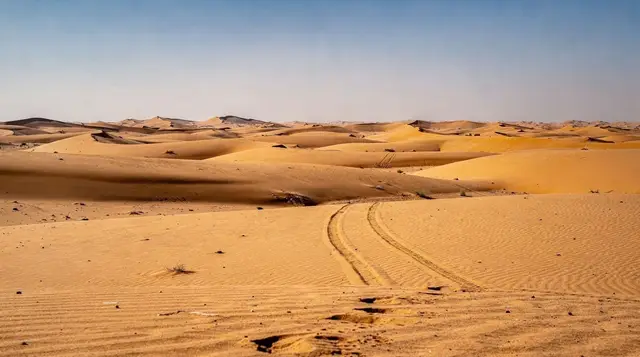
The single most common source of disappointment isn’t a scam exactly — it’s ambiguous wording. Listings advertising a “Marrakech desert experience” or “Sahara sunset” without naming Merzouga, Zagora or Erg Chigaga specifically often mean Agafay, which is genuinely worth doing but has no sand dunes at all. Before paying anything, ask directly which destination the tour visits, and be suspicious of any operator who hedges the answer.
This matters doubly for 2-day tours: if a listing promises “the Sahara” in 2 days, it’s Zagora, not Merzouga — the drive to Merzouga alone takes 8-10 hours each way, which makes a 2-day Merzouga trip a physical impossibility, not just an aggressive itinerary.
What a fair price looks like
A 3-day Marrakech to Merzouga desert tour in a shared group typically runs 1,500-2,500 MAD (140-230 €) per person, including transport, a mid-range camp, meals, and a camel trek. Prices noticeably below this range are worth a closer look — check what camp tier is actually included, whether meals are covered for all three days, and whether the “camel trek” is a genuine excursion or a brief token ride.
Prices significantly above this range aren’t necessarily a problem, but they should come with a clear reason: a private vehicle, a luxury camp tier, or a smaller group size. A 3-day luxury private Merzouga desert tour justifies its higher cost with exactly these upgrades, spelled out clearly rather than left vague.
Group tour or private tour
Shared group tours are cheaper and perfectly reliable for most travellers, but they mean a fixed schedule and a shared vehicle with other tourists for two or three days — worth knowing before you book if you value flexibility. A private 3-day desert trip to Merzouga costs more but lets you adjust stops, timing, and sometimes the camp tier independently, which matters more the longer the trip runs.
For the shorter Zagora route, the same logic applies at a lower overall cost: a standard 2-day desert tour from Marrakech to Zagora in a shared group is the budget-friendly way to do the trip, with a private upgrade available for anyone who wants more control over the schedule.
If you are still deciding how much desert you actually want, the Agafay versus Sahara comparison is worth reading first, because the right booking depends on whether you want real dunes or simply a quick escape from the city. The Agafay desert guide explains what that stony landscape offers, and the Erg Chigaga guide covers the remoter alternative for travellers who want fewer crowds and are happy to accept a more demanding journey.
Reading reviews properly
Star ratings alone tell you little; the useful information is in the text of recent reviews, ideally from the last few months rather than the last few years, since operators and camp quality can change. Look specifically for mentions of whether the camp matched its photos, whether the itinerary ran as advertised, and how the operator handled any problems that came up — a company that responds well to a bad review is often a safer bet than one with no negative reviews at all, which can be a sign of filtered or purchased ratings.
Be wary of listings with only a handful of reviews, all glowing and posted in a short window — a common pattern for newer accounts trying to build credibility quickly. An established operator with hundreds of reviews spread over a longer period, even if a few are mixed, is generally more trustworthy than one with a suspiciously perfect but thin review history.
What counts as a genuine problem versus a bad-luck trip
Not every disappointing tour is a scam. Weather delays, a cancelled camel trek due to sandstorms, or a camp that’s fully booked and substitutes a comparable alternative are normal travel friction, not fraud — and a good operator communicates about these changes rather than hiding them. Genuine red flags look different: a destination that turns out to be Agafay when Merzouga was promised, a camp tier that’s clearly downgraded from what was described with no explanation, or an operator who becomes unreachable once payment has been made.
Knowing this distinction matters when you’re deciding how to react if something doesn’t go exactly to plan — a minor schedule change handled transparently isn’t worth a bad review or a dispute, while a fundamentally different destination or product is.
Deposits and payment
Most reputable operators ask for a partial deposit to confirm a booking, with the balance paid on arrival or at the end of the tour — full upfront payment for a multi-day tour booked through an unfamiliar operator is worth a second thought. Card payment through a recognised platform offers more recourse than a bank transfer to a personal account, which is harder to dispute if something goes wrong. None of this means every direct booking is risky, but it’s worth weighing the payment method alongside the destination and price when deciding who to book with.
Cancellation and deposit policies
Read the cancellation terms before paying, particularly for tours booked more than a few weeks out — weather, group minimums, and occasional road closures over the Tizi n’Tichka pass in winter can all affect a scheduled departure. A reasonable operator will offer a rebooking option or refund if they cancel a tour; be wary of any that only offer credit with no clear expiry, or that make cancellation terms hard to find before booking.
Remote destinations carry slightly more risk here: a private 3-day Sahara trip to Erg Chigaga depends on 4x4 vehicle availability and road conditions past M’Hamid, so confirming the operator’s contingency plan matters more than it would for a standard Merzouga booking.
Group minimums and solo travellers
Shared group tours sometimes carry a minimum group size to run at the advertised price, and it’s worth checking this before booking, particularly if you’re travelling solo or in the off-season when group numbers can run low. A tour that doesn’t meet its minimum sometimes gets postponed, combined with another date, or occasionally cancelled outright with a refund offered — knowing this in advance, rather than discovering it a day before departure, makes it much easier to plan around.
Solo travellers should also check whether the quoted price assumes double occupancy in the desert camp, since single travellers are sometimes charged a supplement for a room or tent to themselves. This is standard practice across the industry rather than a red flag on its own, but it’s worth confirming upfront so the final price doesn’t come as a surprise.
Questions to put to an operator before you commit
A short exchange of messages before booking tells you a great deal about how the operator will behave once you are on the road. Ask for the itinerary in writing, day by day, and check that it names the stops, the camp and the final destination rather than relying on vague promises. Ask what the camp looks like and whether the tent or room is private, and ask what happens at dinner and breakfast, so you know which meals are covered. Ask who the driver will be, whether he speaks a language you share, and how you can reach the operator if something changes along the way.
Pay attention to how the answers arrive. A prompt, specific and patient reply is a good sign; evasive, rushed or contradictory answers, or pressure to pay immediately because “only one place is left”, are reasons to walk away. The same instinct that protects you from pushy sellers in the souks and from the tricks catalogued in the Marrakech scams guide applies here: a good offer survives a night’s thought, and an operator worth booking with will not mind you taking it.
Planning the rest of the trip around the desert
A desert booking does not sit alone. It takes a large block out of your Marrakech stay, so think about where it fits before you pay. The Marrakech 3 versus 5 days comparison helps you judge how much time the city deserves, and the three-day Sahara itinerary shows how the trip unfolds day by day so you can compare it with what an operator is offering. If you want to see more of the south on the same journey, the southern circuit itinerary stretches the idea over a longer loop.
Along the way, a good itinerary passes through places worth knowing about in their own right, such as Aït Ben Haddou, the Draa Valley and Merzouga itself. Check that the stops in a listing match these real places and that you will have time to enjoy them rather than seeing them through a bus window. Packing well also makes the trip far more comfortable, and the desert tour packing guide covers what to bring for the cold nights and the long hours on the road.
Trusting your own judgement on the day
Even with careful research beforehand, it’s worth paying attention on the day itself — if a driver seems unfamiliar with the route, if the vehicle appears poorly maintained, or if the itinerary suddenly changes without explanation, it’s reasonable to raise the issue directly with the operator rather than assuming it will sort itself out. Most tours run exactly as booked, but trusting your own read of a situation, and knowing you can push back or ask questions, is worth as much as any amount of pre-booking research.
Where to book
Booking through an established platform with visible operator reviews gives you a layer of protection that same-day street arrangements near Jemaa el-Fna generally don’t — a clear itinerary in writing, a fixed price agreed before you travel, and somewhere to raise an issue if the tour doesn’t match what was described. It doesn’t mean every street-booked tour is a problem, but the accountability gap is real and worth avoiding for a booking of this size. See guided tour or going it alone for how this trade-off applies more broadly across Marrakech-area trips.
For a first-hand, less transactional view of what the desert is like once you arrive, what nobody tells you about the Sahara and desert dawns are good companions to this checklist, and the camel ride guide explains what to expect from the trek itself so you can tell a genuine excursion from a token ride.
Once you’ve settled on a destination, Merzouga or Zagora and the Marrakech to Merzouga overland guide cover route and timing in detail, and Sahara desert camps explained helps you judge whether a listed camp tier matches its price.
Sahara tours on GetYourGuide
Verified deep-linked GetYourGuide tours. Book through these links and we earn a small commission at no cost to you.
Photo: our own image of the location, not the operator’s product photo.