The Southern Circuit in 7 Days
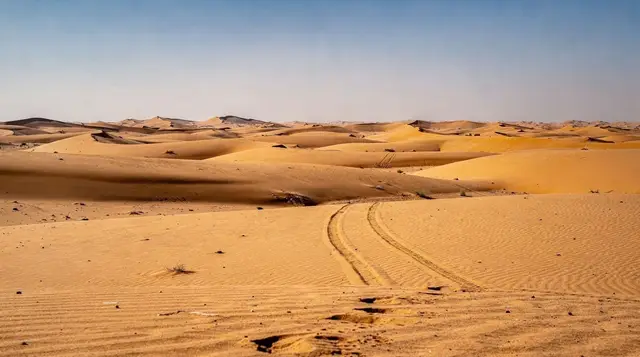
This is the demanding version of a desert trip: a full loop south and back that reaches Merzouga’s real Erg Chebbi dunes rather than settling for Zagora’s smaller ones, with the Dades and Todra gorges added along the way. It’s rated challenging for a reason — several of these days involve five or more hours of driving, and the appeal is squarely about the destinations, not a relaxing pace between them.
The route below follows the standard loop most operators use: south over the Tizi n’Tichka pass to Ait Ben Haddou and Ouarzazate, east through Skoura and the Dades Valley to Todra Gorge, on to Merzouga for a desert night, then back to Marrakech via Zagora and the Draa Valley rather than retracing the same road. This is real distance — treat it as the main event of the trip, not something to combine with a full separate city itinerary on top.
| Best for | Travellers who want real Sahara dunes plus gorge country, and don’t mind long driving days |
| Getting around | Private or shared tour vehicle for the entire loop |
| Total budget guide | Around 4,500-8,000 MAD (415-740 €) per person for the full week, camp and hotel level dependent |
| Car needed | Yes — this only works by vehicle, whether self-driven or as part of an organised tour |
Before you set off
If you are still deciding between this loop and a shorter desert trip, Merzouga versus Zagora lays out what each destination offers, and the Marrakech to Merzouga guide covers the main route in more detail. Travellers who would rather not drive themselves can weigh the trade-offs in guided tour versus independent travel, and anyone planning to take the wheel should read driving in Morocco first. Because the week is built around long days on the road, it also helps to spend a night or two in the city beforehand: the Marrakech first-time guide is a good place to start.
Day 1 — Marrakech to Ouarzazate via Ait Ben Haddou
Morning: An early departure over the Tizi n’Tichka pass, the High Atlas road that climbs above 2,200 metres, reaching Ait Ben Haddou after roughly four hours. A day combining Ait Ben Haddou and the Atlas Studios is the standard way this stop is built into longer tours.
Afternoon: A short continuation to Ouarzazate for the film studios and an overnight stay — a genuinely restful stop after the pass, and the last town of any size before the route heads deeper into gorge country.
For background on the fortified village before you arrive, the Ait Ben Haddou guide and the Ait Ben Haddou destination page explain what you are looking at and how to make the most of the stop. The Ouarzazate day trip guide is useful for the afternoon, and the Ouarzazate destination page covers the town itself. Starting early matters here: the pass is the slowest part of the whole week, and a late departure pushes everything else back.
Evening: An early night in Ouarzazate. If you’re tired, cut this: the film studios are optional; the kasbah itself is the stronger stop if you’re short on energy.
Day 2 — Ouarzazate to the Dades Valley via Skoura
Morning: A relatively short drive east to Skoura, an oasis town built around the fortified Kasbah Amridil — worth an hour’s stop before continuing.
Afternoon: Onward through increasingly dramatic scenery to the Dades Valley, known for its rose-growing villages and the striking rock formations locally called the Monkey Fingers. A guided trek through the Dades Gorge’s Monkey Fingers formations covers this landscape well if you want to get out of the vehicle for a proper walk.
The Skoura destination page and the Dades Valley page give more on what to look for in each. This is a good day to slow down and look around rather than rush: the scenery is the point, and the driving is short enough to leave room for it.
Evening: Overnight in the Dades Valley, often at a guesthouse built into the gorge walls themselves. If you’re tired, cut this: a shorter roadside stop at the formations, rather than the full guided trek, still delivers the view.
Day 3 — Dades to Todra Gorge
Morning: A relatively short drive to Todra Gorge, where the canyon walls narrow to a dramatic 10-metre-wide passage rising 300 metres on either side — one of the most striking single sights on this whole route.
Afternoon: A guided hike through the Todra Valley and gorges is worth the time here; the gorge floor walk is flat and accessible, while side routes climb higher for those who want more.
Before you go, the Todra Gorge page and the Tinghir page describe the setting. Walking early in the day, while the gorge is quieter, makes for a more pleasant visit, and the palm-filled valley floor below the narrowest point rewards unhurried wandering.
Evening: Overnight near Tinghir or in the gorge itself. This is a lighter driving day, deliberately placed between two longer ones.
Day 4 — Todra to Merzouga
Morning: The longest driving stretch of the loop, crossing open plateau country toward Erg Chebbi. Expect several hours on the road with a stop or two along the way.
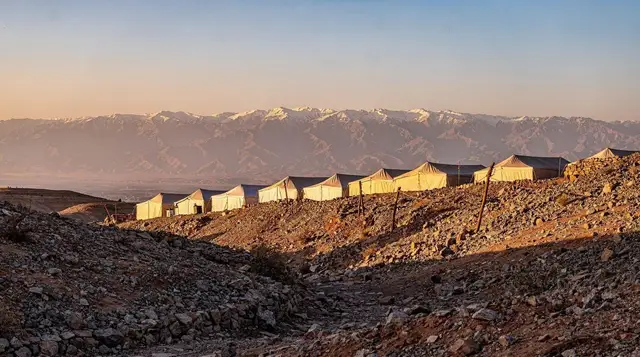
Afternoon: Arrival in Merzouga, with time to transfer by camel or 4x4 out to a desert camp before sunset.
The Merzouga destination page and the Sahara desert camp guide help you choose a camp that suits you, and the Sahara tour booking guide explains what to check before paying. If you want a camel ride, the camel ride guide covers what to expect. Pack a small bag for the camp night and leave the rest of your luggage in the vehicle.
Evening: A night under Erg Chebbi’s genuinely large dunes — the payoff for the week’s driving. A Merzouga luxury desert camp stay with a camel ride is worth the modest upgrade over a basic camp for this specific night. If you’re tired, cut this: skip the optional quad biking some camps offer on arrival and save the energy for sunrise instead.
Day 5 — Sunrise at Erg Chebbi, then toward Zagora
Morning: Sunrise over the dunes, ideally watched from a high point reached by a short pre-dawn walk or camel ride — genuinely one of the best moments of the trip.
Afternoon: A long drive back west, this time via the southern route through the Draa Valley toward Zagora rather than retracing the Todra-Dades road, which keeps the loop from repeating itself.
The Zagora destination page and the Draa Valley page describe the palm-lined stretch you will be driving through. The change of landscape after the dunes is part of the appeal of returning by a different road, so keep the window seat if you can.
Evening: Overnight near Zagora or in the Draa Valley. If you’re tired, cut this: some operators offer a shorter, more direct return that skips Zagora in favour of a faster road back — worth asking about if the week is wearing on you by this point.
Day 6 — Zagora to Ouarzazate
Morning and afternoon: A continuation back through the Draa Valley’s palm groves and kasbahs, rejoining the route near Ouarzazate — the kind of multi-stop loop through Ouarzazate, Merzouga and Dades that this day retraces in reverse.
Evening: A final overnight in or near Ouarzazate before the last leg back to Marrakech.
Day 7 — Back to Marrakech
Morning: A final crossing of the Tizi n’Tichka pass, retracing Day 1’s route.
Afternoon: Arrival back in Marrakech, typically by mid-to-late afternoon, closing a genuinely demanding but rewarding week.
After a week of dust and long roads, a hammam is a very good way to spend the evening, and the airport transfer guide helps if you fly out soon after. Plan the last night with some slack rather than packing in another sight.
Money and pacing notes
Multi-day tours covering this full loop typically run 3,500-6,000 MAD (320-555 €) per person for a shared group including accommodation, more for a private vehicle or upgraded camps. Add food and any optional activities like quad biking or sandboarding at Merzouga, and 4,500-8,000 MAD (415-740 €) per person is a realistic full-week range.
Food and fuel stops along the loop
This route passes through several small towns rather than remote wilderness for most of its length, so food and fuel are rarely a genuine concern — Ouarzazate, Boumalne Dades, Tinghir and Erfoud (near Merzouga) all have reasonable restaurant options, typically simple tagine and grill places serving tour groups and locals alike. That said, portions and choice narrow considerably between towns, so it’s worth eating properly at each overnight stop rather than assuming you’ll find something better further along. Bottled water is sold everywhere along the route but worth stocking up on before longer driving stretches, particularly the Todra-to-Merzouga leg, which crosses more open, sparsely populated terrain than the rest of the loop.
Splitting this trip if seven days feels too tight
Some travellers prefer to break this circuit into two separate visits rather than attempt it all in one demanding week — a first trip covering Ait Ben Haddou through Todra Gorge, and a second, later trip dedicated purely to Merzouga and the desert. This avoids the most tiring stretch of consecutive long driving days and lets each half get proper attention rather than feeling rushed toward the next stop. If that appeals more than the full loop, Marrakech to the Sahara in 3 days covers a shorter southern taste that could serve as the first of those two trips.
For a shorter taste of the same direction, Marrakech to the Sahara in 3 days covers Ait Ben Haddou and Zagora without the full week. For the city-and-coast alternative that keeps this same week balanced differently, see Marrakech in 7 days. And for what to actually pack for a trip like this, read what to pack for a Sahara tour.
tours.7 days
Verified deep-linked GetYourGuide tours. Book through these links and we earn a small commission at no cost to you.
Photo: our own image of the location, not the operator’s product photo.