How Expensive Is Marrakech, Really
Every Marrakech budget guide gives you a daily total and moves on. What actually matters is the gap between the price you’re quoted and the price a local pays, because in this city that gap can be enormous, and it’s almost entirely under your control. Here’s what things cost, honestly, with the difference between sticker and reality spelled out.
The taxi gap is the biggest one
A petit taxi ride across central Marrakech should cost 15–30 MAD (1.40–2.80 €) on the meter. Ask a driver near a tourist zone for that same ride and you’ll often be quoted 50–100 MAD, sometimes more, because the meter is conveniently “broken.” The fix is simple and works almost every time: insist on the meter before getting in, or agree the fare out loud beforehand. If a driver refuses both, find another taxi — there’s always another one thirty seconds away.
Once you know the rhythm, it stops feeling like a confrontation. Say the destination, ask for the meter, and stay relaxed if the answer is no. The getting around guide explains how petit taxis, walking and other options compare, and the scams guide covers the other tricks that tend to cluster around the same tourist zones. If you’d rather avoid the conversation altogether, the medina walking route shows how much of the old city is easier on foot than in any car.
Airport transfers: convenience has a real price, and it’s fine to pay it
The airport is only 6km from the centre, and a metered taxi covers it for roughly 70–100 MAD (6.50–9 €). A pre-booked private airport transfer costs more, typically 15–25 €, but removes the late-night haggling entirely after a long flight — a fair trade for many travellers, and not a scam in itself the way an inflated taxi quote is.
Food: the range is enormous, and mostly by choice
A full meal at a street stall on Jemaa el-Fna runs 30–60 MAD (2.80–5.60 €) — a tagine, bread, and often a soft drink. The same tagine on a rooftop restaurant with a view costs 120–250 MAD (11–23 €), and a tasting menu at a higher-end riad restaurant can hit 400–700 MAD (37–65 €) per person. None of these is a rip-off; they’re different products. A guided souks tour with mint tea tastings is a useful way to sample both ends in a single afternoon and calibrate your own preference before committing your evenings.
For the cheap end, the Jemaa el-Fna food stalls guide explains how to order and what to look for, and the street food safety guide answers the worry many first-timers have before they sit down. For the full picture of what to eat and where, the Marrakech food guide is the better companion, and the rooftop restaurants guide is useful if you want the view without being surprised by the bill. A morning wandering the square is also described in a morning in Jemaa el-Fna.
The hammam price gap, explained properly
A hammam beldi, the plain neighbourhood bathhouse locals actually use, costs 10–20 MAD (under 2 €) for entry, sometimes with a scrub for a little more. A hotel or spa hammam experience, with oils, music and a private room, runs 40–100 € per person. Neither is dishonest pricing — you’re buying a different experience — but plenty of visitors assume the spa price is the only option because it’s the one marketed to them. A traditional hammam and massage with hotel transfer sits toward the accessible end of the spa version if you’d rather not navigate a public bathhouse solo on your first visit.
Attraction entry fees, added up honestly
Individually, entry fees to the Bahia Palace, El Badi, the Saadian Tombs, Ben Youssef Madrasa and Majorelle Garden each look modest, typically somewhere between 2 and 10 € per site. Add up five or six of them across a few days, though, and the total is a meaningful line in a budget that a lot of first-timers don’t plan for in advance, having assumed most of the medina’s highlights would be free the way the square and souks are. Budgeting a fixed daily amount for entry fees, separate from food and transport, avoids the small but repeated surprise of discovering yet another payable gate on a day already assumed to be low-cost.
If you want to pick and choose, the individual guides help you decide which sites are worth the ticket: Bahia Palace, El Badi Palace, the Saadian Tombs, the Ben Youssef Madrasa and the Majorelle Garden. The museums guide is a good place to start if you’d rather spend on a few places and enjoy them properly.
Souvenirs and the negotiation tax
Almost nothing in the souks has a fixed price, which means the first number you hear is rarely the number you should pay. A vendor’s opening offer on a leather bag or a small lamp is routinely double or triple what a patient negotiation lands on. This isn’t unique to tourists specifically — Moroccans negotiate too — but visitors get asked the higher opening number more often. Walking away, literally, remains the single most effective price-reduction tool in the medina.
It helps to know what you want before you enter a stall. The souks guide and the shopping guide lay out what is sold where, while the guides to rugs, pottery and argan oil go deeper on the categories where visitors most often overpay. For a more narrative take, read shopping without getting ripped off.
Day trips: where the real spending happens
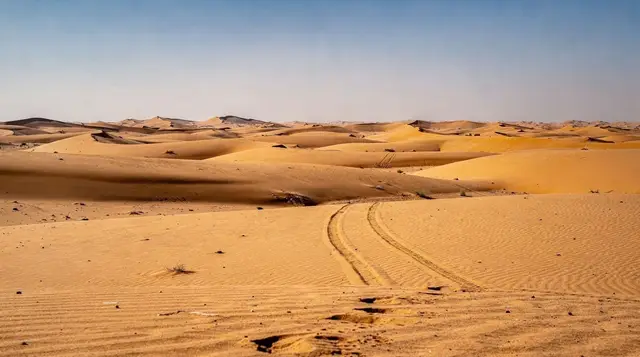
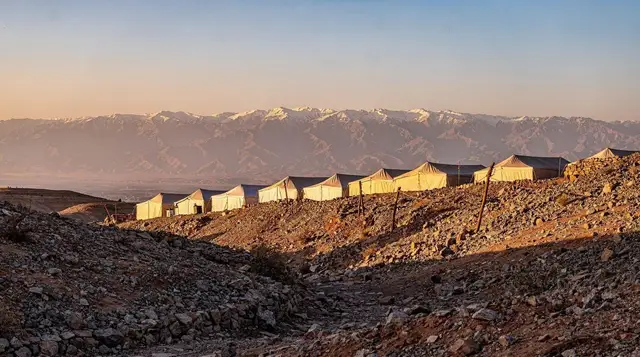
A shared half-day trip to Ourika Valley costs 300–500 MAD (28–46 €) including transport and a guide; a private version costs more but removes the group-schedule compromise. A multi-day Sahara excursion is a bigger commitment — a 3-day desert tour to Merzouga typically runs from roughly 1,200 MAD (110 €) for a shared budget version up to several times that for a private luxury camp. These are the line items that actually move a trip’s total cost, far more than any souvenir haggle ever will.
Before booking, it’s worth comparing the options in the best day trips guide and reading the Ourika Valley guide if the mountains appeal. For the desert, the Sahara tour booking guide explains what separates a cheap tour from a good one, and guided tour vs independent helps you decide whether paying for organisation is worth it for you.
Accommodation: the widest range of all
A shared or budget riad room can run 25–45 € a night, a comfortable mid-range riad with a courtyard and pool 60–120 €, and a genuinely luxury property well beyond that, easily 200 €-plus in high season. Location inside the medina versus a short taxi ride out in Palmeraie or Hivernage shifts the price too — proximity to Jemaa el-Fna carries a premium the way it would in any old-town centre worldwide. Booking a few months ahead for peak spring and autumn dates protects against the seasonal price spikes that catch last-minute travellers out.
The choice between a riad and a conventional hotel is the biggest lever here, and the riad vs hotel guide compares them honestly. If you haven’t chosen a base yet, medina vs Gueliz explains how the two areas differ in feel and price, and best time to visit shows how the season changes what you pay and what you get.
What a full week actually adds up to, two ways
A frugal week — street food, shared day trips, a hammam beldi, careful taxis — lands somewhere around 250–400 € per person outside flights, excluding one splurge day like a desert excursion. A comfortable mid-range week, with sit-down dinners, a couple of guided tours, a spa hammam and a private driver day, runs closer to 700–1,100 €. Neither figure is the “real” Marrakech price; they’re two entirely legitimate ways to spend a week here, and most visitors land somewhere between the two rather than strictly at either end.
If you’re still deciding how long to stay, the 3 vs 5 days guide and the ready-made budget 5-day itinerary show how to shape a trip around what you want to spend. Travellers who want to stay longer can look at the 7-day itinerary, and anyone weighing the whole idea can start with is Marrakech worth it.
Tipping: small, expected, easy to get wrong by omission
Tipping isn’t optional in the way it sometimes is elsewhere — a few dirhams for a porter, 10–15% at a sit-down restaurant if service isn’t already included, and a small note for a driver or guide at the end of a day trip are all standard. It rarely amounts to much across a trip, but skipping it entirely reads differently here than it might at home; the full breakdown by scenario lives in the tipping guide.
The currency exchange trap at the airport
Exchange rates at the arrivals hall bureau de change are consistently worse than rates in town, sometimes by a meaningful margin, because it’s a captive-audience location and priced accordingly. Change a small amount on arrival to cover a taxi and your first evening, then do the bulk of your currency exchange at a bank or licensed exchange office in Gueliz or near the medina once you’ve had a chance to compare a couple of posted rates. It’s a five-minute habit that keeps a real, if modest, chunk of your budget from disappearing in the first hour of the trip.
What I’d actually budget
For a comfortable but not extravagant trip, I’d plan 400–700 MAD (37–65 €) a day per person outside big excursion days, and add the real cost of any Sahara or Atlas overnight on top of that as a separate line. The full breakdown by travel style — from backpacker to luxury — sits in the Marrakech budget guide, and the haggling guide is worth ten minutes before your first souk visit; it’s the single skill that determines which version of this city’s prices you actually experience. Pair both with the taxi guide and you’ll rarely pay the tourist price for anything you didn’t choose to.
tours.Money
Verified deep-linked GetYourGuide tours. Book through these links and we earn a small commission at no cost to you.
Photo: our own image of the location, not the operator’s product photo.