Marrakech or Fes
Should I visit Marrakech or Fes on my first trip to Morocco?
Marrakech, for most first-time visitors. It has more hotel and riad options, the best-connected airport, and an easier medina to navigate, plus a wider range of day trips into the Atlas, the desert and the coast.
Marrakech and Fes get compared constantly, and the honest answer is that they’re not really competing for the same trip. Fes carries Morocco’s deepest historical weight — the Qaraouiyine, the tanneries, a medina layout that hasn’t fundamentally changed in centuries — while Marrakech carries the country’s tourism infrastructure: better flight connections, a bigger hotel and riad market, and a wider spread of day trips within easy reach. Neither is objectively “better.” One is easier, and one is deeper. Here’s how they actually differ.
| Best for | Marrakech: first trips, day trips, comfort. Fes: history, crafts, a harder medina |
| Airport | Marrakech-Menara has far more direct international routes |
| Medina size | Fes el Bali is larger and denser than Marrakech’s medina |
| Difficulty | Fes is harder to navigate without a guide |
| Cost | Fes runs somewhat cheaper on average for a comparable riad |
Marrakech vs Fes at a glance
| Marrakech | Fes | |
|---|---|---|
| Medina character | Busy, tourist-adapted, easier to navigate | Denser, more traditional, easy to get lost in |
| Flight connections | Best-served airport in Morocco | Fewer direct international routes |
| Hotels and riads | Largest selection in the country | Smaller but growing selection, often cheaper |
| Day trips | Atlas Mountains, Sahara, Agafay, Essaouira, all within a few hours | Chefchaouen and the Middle Atlas, generally further |
| Crafts and tanneries | Present, but Fes leads on tradition and scale | The country’s traditional centre for leatherwork and ceramics |
| First-time difficulty | Easier for a first Morocco trip | Better suited to a second or third visit |
Why Marrakech works better for most first-time visitors
The practical case for Marrakech starts with the airport. Marrakech-Menara has significantly more direct international routes than Fes, which matters if you’re flying from Europe or further afield and don’t want a connection through Casablanca. From there, Marrakech’s medina — while genuinely easy to get turned around in on your first walk — is smaller and more used to guiding tourists back toward a landmark than Fes’s, and the sheer density of riads, restaurants and hotels means there’s rarely a shortage of options at any budget.
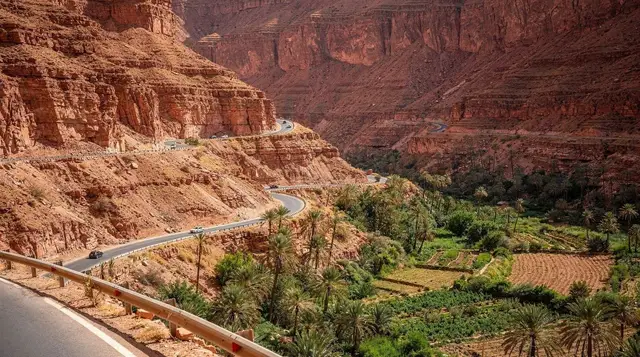
Marrakech’s location also opens up the widest range of day trips in the country: the Atlas Mountains and Ourika Valley within an hour, the Agafay Desert in 40 minutes, the Sahara reachable in a multi-day loop, and the Atlantic coast at Essaouira in under three hours. A full-day guided Marrakech medina history and culture tour is a solid way to get oriented on day one before branching out to any of these.
Why Fes rewards a harder trip
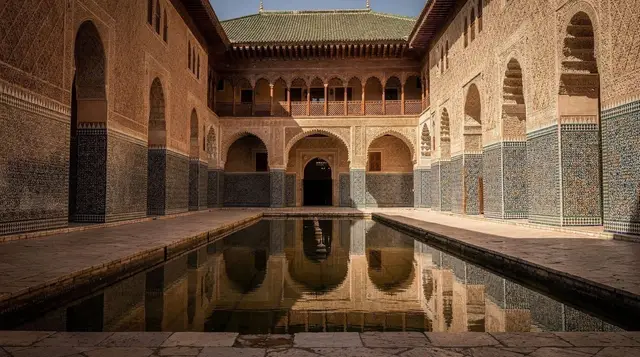
Fes el Bali is generally considered the largest car-free urban area in the world, and its medina layout — a genuine medieval maze rather than a tourist-adapted version of one — is both its biggest draw and its biggest obstacle. This is where Moroccan artisan tradition runs deepest: the Chouara tannery, centuries-old madrasas, and a concentration of leatherwork, weaving and metalwork that Marrakech doesn’t match at the same scale. A Fes tour covering the Bou Inania Madrasa, museum, tannery and souk is a practical way to see the highlights without getting genuinely lost, which happens easily here even to experienced travellers.
What a Fes-only trip actually asks of you
Fes takes more patience than Marrakech, and that’s not a knock against it — it’s the trade-off for the density and authenticity that make it worth visiting. A guide isn’t strictly necessary, but the medina’s layout means most first-time visitors genuinely benefit from one on day one, if only to establish a mental map before exploring independently. A Fes medina guided tour covers this well, and it’s a fair comparison point for the Marrakech souks guide, which lays out the equivalent orientation approach for Marrakech’s medina.
Fes also sees noticeably fewer tourists than Marrakech overall, which cuts both ways: a quieter, less commercialised feel in parts of the medina, but also fewer English-speaking staff and a slightly steeper logistics curve for visitors without any Arabic or French.
Accommodation in Fes leans more heavily toward traditional riads than Marrakech, which has a far larger stock of modern hotels alongside its riads. This makes Fes a strong choice if immersive, traditional-style accommodation is a priority for your whole trip rather than just one stop, though it also means fewer options for travellers who specifically want a modern hotel with a pool and an elevator.
How the two medinas feel on the ground
The difference between the two medinas is easier to feel than to describe. In Marrakech, the old city organises itself around a few big reference points, so even when you take a wrong turn you tend to resurface somewhere recognisable. Jemaa el-Fna acts as the anchor, and the souks fan out from it in a way that most visitors work out within a day or two. If you want a structured way in, the medina walking route gives you a loop that links the main sights without much backtracking.
Fes works differently. The lanes narrow, bend and branch without much warning, and landmarks are less visible from the street. That is the reason the city feels so authentic, and also the reason a first morning with a guide pays off. Expect to slow down, accept that you will get a little lost, and treat the wandering as part of the visit rather than a problem to solve.
Both medinas are working neighbourhoods, not museum pieces. Craftspeople, delivery carts and families going about their day share the same narrow lanes with visitors, so patience and good manners go a long way in either city. In Marrakech, the haggling guide and the scams guide will help you stay relaxed in the busiest streets.
Sights and atmosphere in each city
Marrakech is the city of big, photogenic set pieces. Bahia Palace, the Saadian Tombs, the Koutoubia Mosque and the Majorelle Garden can be strung together at a comfortable pace, and the evening show on the main square gives the city its own rhythm. It is a place where you can plan a day around a handful of clear highlights and still have time to sit on a terrace.
Fes is more about accumulation than highlights. Its appeal is the sense of a living medieval city where madrasas, workshops, fountains and tanneries sit side by side. The Bou Inania Madrasa and the tanneries mentioned above are good anchors, but much of the pleasure comes from what you stumble across between them. If you like to read about a place and then see its layers up close, Fes will reward that curiosity more than Marrakech does. For a taste of the equivalent in Marrakech, the Ben Youssef Madrasa guide is the closest match.
Food and evenings
Both cities have a serious food culture, and neither should be reduced to a single dish. Marrakech makes eating out easy, with plenty of choice from casual stalls to polished riad dining rooms. The Marrakech food guide and the Jemaa el-Fna food stalls guide show how to eat well without guessing. If you like to learn what you eat, a cooking class is a good way to spend a slower morning.
Fes tends to be quieter in the evening, and the dining feels more rooted in home cooking and old-city kitchens. That suits travellers who prefer a calmer end to the day over a lively square, and it is one more reason the two cities fit different moods rather than competing directly.
Which one suits your travel style
A few simple questions usually settle the choice. Do you want a trip that runs smoothly from the moment you land, with plenty of hotels and easy excursions? That points to Marrakech. Do you already know Morocco a little and want to go deeper into crafts, history and a more traditional city? That points to Fes.
If you are still weighing up your first-time plan, the Marrakech first-time guide explains what to expect and how to pace your days, and the guide to getting around Marrakech covers the practical side of moving between neighbourhoods. If you are building a longer route that includes the south and the desert, the southern circuit itinerary shows how a longer journey can be shaped around Marrakech as a base.
Travel style also matters for who you are with. Families and anyone who prefers a predictable rhythm usually settle in more easily in Marrakech, where the infrastructure is built around visitors. Travellers who enjoy slow exploration and do not mind a steeper learning curve tend to love Fes. Neither choice is wrong; the better trip is the one that matches your patience, your time and what you hope to bring home.
Using Marrakech as a base for day trips
If you choose Marrakech, you get an unusually flexible base. A single hotel or riad can serve for mountain, desert and coast outings without repacking. The best day trips from Marrakech lays out the options, and the Atlas Mountains day trip guide and the Essaouira day trip guide go deeper on the two most popular. For a guided mountain outing, a day among the Atlas valleys is a straightforward way to leave the city for a day without handling logistics yourself.
This range of excursions is the real counterweight to Fes’s depth. In Marrakech you can alternate a busy city day with a quiet day in the hills or by the sea, which keeps the pace of a longer stay comfortable. In Fes, the city itself is the main event, and most visitors plan their time around the medina rather than around outings.
A practical way to decide
If you are still undecided, picture your first morning in each place. In Marrakech, you wake in a riad, take breakfast on a terrace, and head out with a loose plan and plenty of landmarks to steer by. In Fes, you set out with a guide, learn how the lanes connect, and spend the day absorbing craft workshops and old buildings at a slower, more concentrated pace. Whichever picture appeals more is probably the right first choice.
If it is Marrakech, the riad or hotel comparison will help you choose where to stay, and the Marrakech itinerary for three days gives you a ready-made shape for a first visit. If it is Fes, treat Marrakech as a possible later chapter rather than a rival, and come back when you have the time to enjoy both properly.
Shopping: what’s worth buying where
Both cities sell the full range of Moroccan crafts, but each has a genuine speciality worth prioritising. Fes is the country’s traditional centre for leatherwork and pottery — the blue-glazed Fes ceramics and goods straight from the tanneries carry real provenance here, and prices for genuinely high-quality pieces are often better than the equivalent item resold in Marrakech.
Marrakech, in turn, has the stronger reputation for rugs, lamps and Majorelle-blue homeware, along with a far larger volume of shops overall, which makes comparison shopping and negotiating easier simply because there’s more competition. If you’re doing both cities, it’s worth holding off on big-ticket purchases like a rug or a leather piece until you’ve seen what each has to offer, rather than buying the first appealing option in whichever city you visit first.
Weather and timing for each city
Fes sits slightly inland and at a modestly higher elevation than Marrakech, which gives it marginally cooler summers and colder winters, though the difference is smaller than most visitors expect — both cities follow the same broad seasonal pattern of hot dry summers and mild, occasionally rainy winters. The best time to visit Marrakech applies almost as well to Fes, with spring and autumn the strongest windows for both, though Fes’s slightly higher elevation makes it a touch more bearable than Marrakech during the height of summer.
Combining both on one trip
For travellers with 10 days or more, connecting Marrakech and Fes is one of the strongest itineraries in the country — either directly by train (roughly 7 hours) or via a multi-day desert loop through Merzouga that links the two cities with a Sahara stop in between. On a shorter trip, though, splitting your time between them usually means neither city gets a fair shot; three days or five in Marrakech is worth reading if you’re deciding how much a single city alone deserves before adding a second.
The desert-loop route deserves a specific mention, since it’s often the more rewarding of the two connections even though it takes longer than the direct train. Travelling from Marrakech to Fes via Merzouga turns a simple city-to-city transfer into a multi-day journey through the Atlas, the Sahara, and the Ziz Valley, arriving in Fes having already covered a meaningful slice of the country rather than just two cities in isolation. It suits travellers with the time to spare far more than anyone trying to see both cities on a tight schedule.
If Marrakech is where you’re landing regardless of what else you add, the medina destination guide and medina or Gueliz: where to base yourself are the natural next reads for getting oriented before you arrive.
Popular Marrakech experiences on GetYourGuide
Verified deep-linked GetYourGuide tours. Book through these links and we earn a small commission at no cost to you.
Photo: our own image of the location, not the operator’s product photo.