Morocco with Toddlers and Babies
Is Marrakech a realistic destination with a baby or toddler?
Yes, with adjusted expectations. Build the trip around naps and a pool-equipped riad rather than a sightseeing list, use a carrier instead of a stroller in the medina, and plan for slower, shorter outings than you would with older children.
A trip to Marrakech with a baby or toddler is a genuinely different trip from one with school-age children, not just a smaller version of it. Naps dictate the schedule, a stroller becomes a liability rather than a convenience once you’re inside the medina walls, and the heat that’s merely uncomfortable for an adult can be a real problem for a child too young to say they’re overheating. None of this makes Marrakech a bad choice — it just means the plan has to be built around the child’s rhythm rather than a typical two-day sightseeing pace.
| Where | Medina and Gueliz, with day trips kept short and close |
| Cost | Similar to a standard trip; the main added cost is a pool-equipped riad or hotel |
| Time needed | Plan fewer outings per day than with older children — one main activity is often enough |
| Getting there | RAK airport, 15-20 minutes; request an infant car seat from your transfer in advance if needed |
| Best time | Shoulder seasons (March-May, September-November); summer heat is a real risk for infants |
The medina, stroller-free
The medina’s cobbled, uneven surfaces and narrow, crowded derbs make a standard stroller more hindrance than help almost everywhere within the walls. A soft-structured baby carrier is the practical solution for infants and younger toddlers — it keeps your hands free, clears narrow gaps between stalls easily, and lets you move at souk pace rather than fighting wheels over broken paving. Save a stroller for Gueliz, where the streets are wider and flatter, or for the Palmeraie’s open paths.
Scooters are the other medina-specific hazard worth naming plainly: they move through the derbs at speed and don’t always slow for pedestrians, so keep a toddler’s hand held or use a wrist-link strap in the busier souk sections rather than letting them walk freely. It sounds more alarming written down than it feels in practice, but it’s the kind of detail that catches first-time visitors off guard.
Naps, heat and realistic pacing
Build the day around the nap, not around it. Mornings, roughly 9am to noon, tend to work best for any planned outing, since the worst heat hasn’t arrived yet and a toddler is generally at their most cooperative. Treat early afternoon as protected nap and pool time regardless of what’s on the itinerary — pushing through a tired, overheated toddler rarely ends well for anyone, and a missed sightseeing stop costs less than a full-blown meltdown in a crowded souk.
A riad or hotel with a genuine pool, not a decorative plunge pool, makes this pattern workable day after day. It gives you somewhere to retreat mid-afternoon without packing up and travelling anywhere, which matters enormously with a child on a nap schedule. Our guide to family-friendly riads explains what to check for before booking, since not every riad’s advertised pool is deep enough to actually swim in.
Food, water and health basics
Formula and nappies are easy to find: Carrefour in Gueliz carries recognisable international brands, and smaller pharmacies stock the basics across the city, including in the medina near Jemaa el-Fna. Use bottled water for formula and drinking, the same standard advice given to adult visitors — it’s cheap and sold everywhere, and most riads leave bottles in-room automatically. If your child has a specific dietary need, mention it to your riad when booking; most kitchens are used to accommodating requests that aren’t on the printed menu.
Private paediatric care in Marrakech is good and inexpensive by international standards, and most riads and hotels can arrange a doctor’s visit within an hour or two if needed — ask reception rather than trying to find one independently. It’s a reassuring fact worth knowing before you arrive, even if you never need it.
Which activities to skip until they’re older
Long guided walking tours, full-day desert circuits, and anything requiring several consecutive hours in a car are all worth postponing until children are past the toddler stage. What does work well at this age is short and low-effort: a gentle camel ride, for instance, suits toddlers better than almost anything else on offer, since it requires no walking and lasts under an hour. A one-hour camel ride in the Palmeraie with mint tea is paced accordingly, with most operators seating a young child in front of an accompanying adult rather than alone.
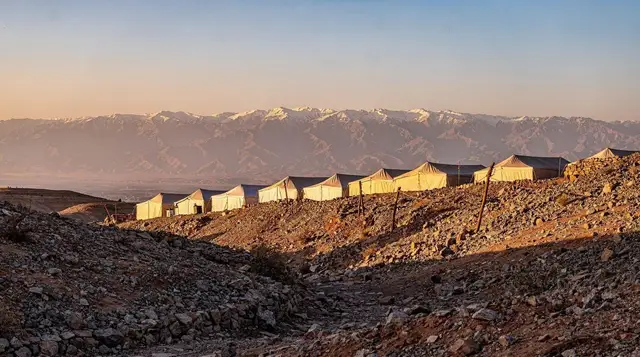
If you want a guide to handle medina logistics on your behalf during the trickier early days, a family-guided medina city tour with hotel pickup keeps the walking distance and pacing sensible, and a good guide will read a tired toddler faster than a self-guided wander would. For hot afternoons, a pool-based half-day works better than sightseeing: a family pool experience with lunch at a desert camp gets you out of the city without demanding much of anyone under three, though check the transfer length against your child’s nap window before booking.
Choosing where to base yourselves
With a small child, the neighbourhood you sleep in matters almost as much as the riad itself. The medina is atmospheric, but every trip back to your room means a walk through narrow lanes, and a sleeping toddler in a carrier does not always survive the noise. Gueliz trades some of that character for wider pavements, easier taxi access and more familiar shops, which many parents of babies find a relief. If you are torn between the two, medina versus Gueliz lays out the trade-offs, and staying in a riad covers practical questions such as stairs, courtyards and noise that matter more once a child is mobile.
Ask the riad directly about open stairwells, unfenced plunge pools and rooftop terraces before you book. Many riads were built for adults, with steep staircases and low parapets around the courtyard, and a crawling or newly walking child turns those features into real concerns. A reply that dodges the question is itself useful information. If the weighing of a riad against a hotel is still open, a hotel with flat corridors and a lift can be the less stressful base for the youngest travellers, even if it has less charm.
Getting around with a small child
Short hops are the rule. Taxis are the simplest way to cover any distance with a tired child, and the getting around Marrakech guide explains the options in more detail. Since car seats are rarely on offer, read the taxi guide before your first ride so that you know how to agree on a fare calmly while holding a baby, rather than negotiating while a toddler wriggles on your lap. Agree the price before you set off, keep the journey short, and avoid taxi rides at the hottest point of the afternoon.
For anything longer than a cross-town ride, a private driver is easier than public transport. Train and bus travel across the country is manageable for adults, but with a toddler the luggage, the waiting and the lack of space make it tiring, so check the trains and buses guide only if you are set on a longer move. If you are considering driving yourselves, the driving in Morocco guide is worth reading first, particularly with a child who needs a proper seat and frequent stops.
Gentle outings that suit small children
The best outings at this age are the ones you can abandon without regret. Green space works better than monuments: the shade and open paths of the Menara gardens give a toddler room to wander without the pressure of souk crowds, and the Majorelle Garden is calm enough for a short, stroller-friendly visit if you go early. Neither needs more than a morning, and both leave the afternoon free for the nap.
Palaces and museums can work too, but only if you keep the visit brief and let your toddler set the pace. The Bahia Palace has courtyards and open spaces that suit a restless child better than a closed museum would, though you should see the guide before going to judge how much walking is involved. A hurried visit of one or two courtyards is a better memory than an exhausting full tour.
If the family wants a taste of the food scene, keep it simple. A relaxed lunch back at the riad is often easier than a restaurant meal, and the street food safety guide is worth a read before you let a small child try anything from a stall. Introduce unfamiliar foods slowly, and stay with what your child already eats for most meals.
When the heat or the crowds become too much
Sometimes a day simply stops working. A child who is hot, hungry or overstimulated will let you know, and the right response is to leave, not to push on. Know your escape routes before you set out: the nearest square with shade, the café where you can sit for ten minutes, the main road where a taxi is easiest to find. The Jemaa el-Fna guide is useful for planning a visit to the square at a calmer hour, since the evening crowds and noise can overwhelm a small child quickly.
Keep a small bag with water, a spare layer, wipes and a favourite snack close at hand, and put a hat on your child before you leave the riad, not after the sun is already high. If the weather is the main worry, the Marrakech weather guide and the best time to visit help you pick dates that suit a young child rather than an adult sightseer.
Flying and arrival logistics
If you’re flying in, request bassinet seating in advance if your airline offers it for infants, and expect Marrakech-Ménara airport’s arrivals process to move slowly at peak times — build in buffer before any onward transfer. A private airport transfer removes one layer of stress on arrival day compared with queuing for a taxi with luggage and a tired child; see the airport transfer guide for how to book one and what a fair price looks like.
Sleep and jet lag on arrival
A few days of disrupted sleep on arrival is normal for most young children crossing even one or two time zones, and Marrakech’s afternoon heat can make the adjustment slower than it would be somewhere cooler, since a fussy, overtired toddler doesn’t nap as readily in a hot room. Block out blackout curtains if your riad or hotel room doesn’t already have them — many courtyard-facing rooms let in more light than a typical hotel room — and don’t over-plan the first two days; treat them as settling-in time rather than sightseeing days. A riad with a pool earns its cost here too: a splash in cool water does more to reset an overtired toddler’s mood than almost anything else available to you mid-afternoon.
A sample slow-paced day
A workable toddler day might run: a late breakfast in the riad courtyard once everyone’s properly awake, a short outing — a treasure hunt through the Palmeraie or a gentle stroll to a nearby square — finishing before midday, then lunch and a protected nap window back at the riad through the hottest hours. Early evening, once the heat breaks around 5 or 6pm, is a good window for a second short outing or simply a slow walk to Jemaa el-Fna to watch the square come alive, timed to end well before an overtired meltdown sets in. This kind of day covers real ground and real memories without ever pushing a toddler past their limit, and it’s a far more sustainable rhythm across a week than trying to match an adult sightseeing pace.
It’s worth building at least one entirely unplanned day into a week-long trip too, particularly if the first couple of days revealed your toddler needs more downtime than expected. Nobody remembers the sightseeing stop that got dropped from day four; everyone remembers the meltdown that happened because it didn’t.
Looking ahead to the next trip
A trip at this age is also a useful trial run. You will learn quickly how your child copes with heat, noise and unfamiliar food, and that knowledge shapes the next visit. Many families return when their children are a little older and find that the desert, the mountains and longer guided days suddenly become realistic. For now, an easy rhythm and a few good memories are the aim. If you want a ready-made structure for a longer stay, the five-day family itinerary shows how a family-paced week can be arranged, and you can scale it back for a younger child by dropping stops rather than squeezing them in. The writer’s honest take on the city’s pace is also worth reading in is Marrakech worth it, especially if one parent is still unsure about the destination.
None of the adjustments above are complicated, but skipping them is what turns an otherwise manageable trip into a hard one. Plan around naps and heat, choose a pool-equipped base, and keep outings short, and Marrakech is a genuinely workable destination even with the youngest travellers. For the broader family picture once your children are past this stage, Marrakech with kids and family activities in and around Marrakech cover what opens up as they get older.
Family-friendly tours on GetYourGuide
Verified deep-linked GetYourGuide tours. Book through these links and we earn a small commission at no cost to you.
Photo: our own image of the location, not the operator’s product photo.