A Marrakech Honeymoon in 5 Days
A honeymoon itinerary should look different from a first-time sightseeing trip, and the honest version of that means fewer stops, more time in each place, and two overnight changes of scenery — the coast and the desert — rather than a packed medina-only week. This plan keeps the pace deliberately slow: no day here tries to cover more than one real activity plus rest.
Five days is enough for exactly this — a private riad in Marrakech, one night on the coast in Essaouira, and one night at a proper Agafay desert camp. It’s not enough to add the Sahara as well; that would mean cutting the coastal night, and the trade isn’t worth it for most couples on this kind of trip.
| Best for | Couples wanting privacy, pace, and two distinct overnight changes of scenery |
| Getting around | Private transfers throughout; no shared group tours |
| Total budget guide | From around 9,000 MAD (830 €) per person for five days, excluding a luxury riad or camp premium |
| Car needed | No — private drivers handle every leg of this trip |
Day 1 — Arrival and a private riad
Morning and afternoon: Settle into a private riad, ideally one with its own plunge pool and a rooftop — this is the base for the whole first half of the trip, so it’s worth choosing carefully. Keep the first day unstructured; arrival fatigue is real and there’s no need to rush into sightseeing.
Evening: A private rooftop dinner, arranged through the riad if possible, with the medina’s evening sounds below rather than a walk through the crowds. If you’re tired, cut this: an in-riad dinner works just as well as anything more elaborate on night one.
Day 2 — Majorelle and a spa afternoon
Morning: Majorelle Garden and the Yves Saint Laurent Museum with private transfer, timed for opening to have the garden at its quietest — genuinely one of the more photogenic mornings in the city for exactly this kind of trip.
Afternoon: A couples’ spa treatment rather than a solo hammam session — a spa escape with a romantic candlelight dinner pairs the treatment with an evening that doesn’t require going back out afterwards.
Evening: The candlelight dinner above closes the day; otherwise, a quiet riad evening.
Day 3 — To the coast: Essaouira
Morning: A private transfer to Essaouira, roughly two and a half hours, with a stop along the way if you’d like one. A private Essaouira transfer with lunch and the ramparts turns the travel time itself into part of the day.
Afternoon: Check into a riad inside Essaouira’s medina walls, then walk the ramparts as the light softens — this town’s blue-and-white streets and sea air are a genuine change of pace from Marrakech, and worth lingering in rather than rushing through.
Evening: A sunset horseback ride on the beach, with an optional dinner, is one of the more memorable couples’ activities on the whole coast, timed for exactly the kind of light this town is known for. If you’re tired, cut this: a slow seafood dinner at the port, watching the boats come in, is a strong alternative on its own.
Day 4 — Essaouira, then back toward the desert
Morning: A slow morning in Essaouira — breakfast on a riad terrace, a last walk through the calmer medina souks.
Afternoon: The transfer back toward Marrakech, continuing on to the Agafay plateau rather than returning fully into the city — around thirty to forty minutes further from Marrakech itself, timed to arrive at the desert camp before sunset.
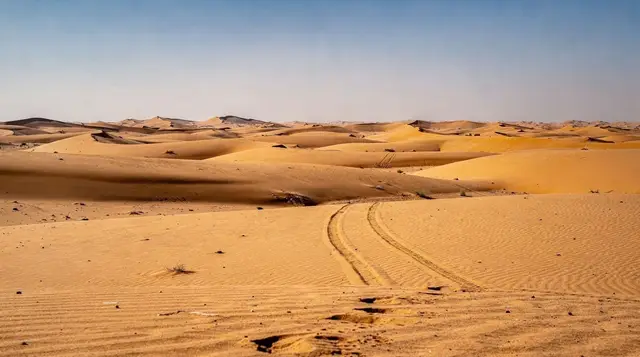
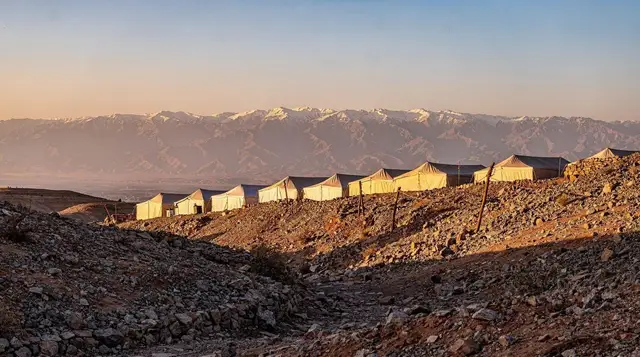
Evening: A one-night Agafay desert camp stay with a camel ride closes the trip’s second overnight change of scenery — stone desert rather than Sahara sand, but a genuinely romantic setting: private dinner, a fire pit, and a sky with no city light to compete with it.
Day 5 — A slow desert morning and departure
Morning: A late breakfast at the camp, with time to simply sit outside before the transfer back to Marrakech.
Afternoon: Arrival back in the city with time for a final slow lunch or a last stretch of riad time before departure, depending on flight timing.
Where to wander without a plan
The unstructured hours on days 1 and 5 are best spent close to the riad. The medina rewards slow, aimless walking, and the Mouassine district is a gentler corner of it than the busiest souk lanes. If you would like a loose route rather than none at all, the medina walking route gives a sensible order. Treat it as a suggestion, not a checklist, and stop wherever a courtyard café or a quiet bench looks inviting.
Majorelle, with a little context
The garden is the headline of day 2, and the Majorelle Garden guide explains what you are looking at, while the Yves Saint Laurent Museum guide covers the museum next door. Reading either beforehand makes the morning feel less like a queue and more like a shared discovery, and it leaves you free to simply enjoy the colours once you are inside.
Making the Essaouira night work
Essaouira is the softest part of this trip, and it suits a couple who want to be outdoors without effort. The Essaouira destination page introduces the town, and the Essaouira day trip guide explains how the walk along the ramparts and the port fits together. For the road itself, Marrakech to Essaouira transport compares the options, though a private driver is what this plan assumes. If the blue-and-white town appeals to you, the blog essay Essaouira, the antidote captures why many visitors fall for it.
Thinking about the desert night
Because Agafay is an evening of stillness rather than adventure, it helps to know what the stay involves before you arrive. The Agafay dinner shows guide explains what to expect from the dinner, and Agafay desert gives the setting. Pack for the cold after dark and bring something warm to sit outside in; the desert tour packing guide lists what couples tend to forget. If you are still weighing the stony desert against the dunes, Agafay versus the Sahara lays out the difference honestly.
Choosing where to stay
The riad matters more on a honeymoon than almost anywhere else in this itinerary — look specifically for one with a private plunge pool or a quiet rooftop, and confirm whether breakfast and evening turndown are included. See staying in a riad for what actually varies between properties at this level, and riad or hotel if a modern hotel with more consistent service appeals more than a traditional riad’s character.
Arranging the private touches in advance
Most of what makes this itinerary feel like a honeymoon rather than a standard trip comes down to advance planning rather than spontaneous discovery. Rooftop dinners, candlelight setups and private transfers generally need to be requested through your riad or a local concierge at least a few days ahead, particularly in peak season (October-April) when the better riads and camps are already close to full. If a specific moment matters to you — a particular sunset spot, a specific dish, a surprise element — mention it to your riad host directly rather than assuming it will be offered by default; Moroccan hospitality is genuinely accommodating once asked, but it isn’t always volunteered upfront.
Best time of year for a honeymoon trip
March to May and September to November offer the most reliably pleasant conditions across every stop on this itinerary — warm but not extreme days in Marrakech, comfortable sea temperatures and breezes in Essaouira, and mild, clear desert nights at Agafay that don’t require heavy layers to enjoy the stargazing. Winter (December-February) still works well for the city and coast, though Agafay nights get genuinely cold and the desert evening benefits from packing properly. Summer’s intense heat in Marrakech itself, often above 40°C in July and August, makes the Essaouira night feel like a particularly welcome relief, but it also means the medina days either side are best kept short and shaded.
A note on modesty and public affection
Morocco is a Muslim country with more conservative norms around public affection than many honeymoon destinations, and it’s worth adjusting expectations accordingly rather than being caught off guard. Hand-holding is generally fine and common; more overt displays are better kept for private spaces — your riad, the desert camp, or a private dinner setting rather than the medina streets or Jemaa el-Fna. This isn’t a restriction on the trip so much as a shift in where the romantic moments happen, and if anything it makes the private, arranged touches described above — the rooftop dinner, the desert camp evening — feel more deliberately special by contrast with the more public, everyday parts of the trip.
Extending toward a longer honeymoon
Couples with more time available often extend this structure to seven or eight days rather than compress a longer trip into five. The natural additions are a second Essaouira night, giving the coast a full two days instead of one, or a proper multi-day Sahara extension toward Zagora — see Marrakech to the Sahara in 3 days for what that adds, bearing in mind it would replace the single Agafay night with two full days on the road each way. Either extension keeps the same unhurried spirit as the core five-day plan; the mistake to avoid is adding days by packing in more sightseeing rather than more of the same slow pace.
For the equivalent trip without the coastal night, Marrakech in 4 days, the luxury version covers similar ground in less time. For more on the spa side of this itinerary, see the Marrakech spa guide. And for the Agafay night itself, the Agafay Desert guide covers what to expect in more detail.
tours.photo-romance
Verified deep-linked GetYourGuide tours. Book through these links and we earn a small commission at no cost to you.
Photo: our own image of the location, not the operator’s product photo.