Chez Ali and the fantasia dinner shows
What is Chez Ali and is it worth doing?
Chez Ali is a dinner-and-fantasia show about 15 km from Marrakech: tented dining, acrobats, folk dancing and a fantasia — cavaliers charging in formation firing muskets — plus extras like a flying carpet act at some venues. It's heavily touristic and unapologetically kitsch, priced around 40-60 € per person including transfer. Families and groups tend to enjoy it; travellers hoping for an authentic cultural evening usually leave disappointed.
Chez Ali is Marrakech’s best-known dinner show, a purpose-built tented village about 15 km outside the city where several hundred visitors a night sit down to a set-menu Moroccan dinner before the main event: a fantasia, cavaliers in traditional dress charging across the arena in formation and firing muskets in unison. It’s been running in some form for decades, long enough to have become a fixture on the Marrakech evening-excursion circuit rather than a novelty.
It is also, by design, thoroughly touristic. This isn’t a hidden local tradition you’re being let in on — it’s a large-scale, professionally run spectacle built specifically for visitors, and it doesn’t pretend otherwise. Understanding that going in is the difference between an evening you enjoy for what it is and one that disappoints because you were expecting something else.
| Where | About 15 km from central Marrakech, transfer included in most packages |
| Cost | Roughly 40-60 € per person including transfer, dinner and the show |
| Time needed | A full evening, typically 4-5 hours door to door with transfer |
| Getting there | Hotel pickup and drop-off, bundled into almost every package |
| Best time | Year-round; runs most evenings, book ahead in peak season |
What actually happens at the show
The evening follows a fairly fixed structure across most operators. Buses collect guests from hotels across the city, arriving at the tented village where large communal dining tents seat groups at long tables. Dinner is buffet or set-menu, typically tagine, couscous, salads and pastries, served in a setting that leans hard into decorative Moroccan style — lanterns, carpets, low seating, the whole tented-camp aesthetic turned up several notches.
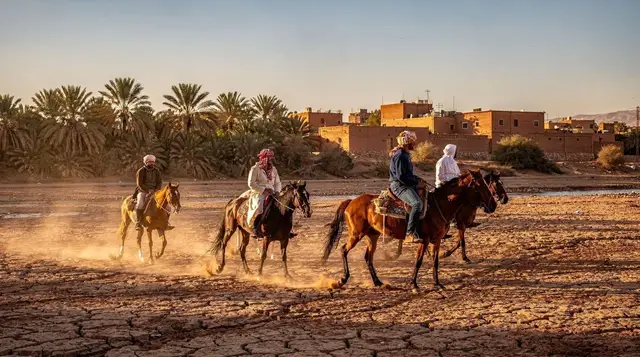
Between courses and afterward, a rotating programme of folk dancing, acrobats and drumming keeps the room occupied, building toward the fantasia itself: horsemen in traditional dress riding at speed in tight formation and firing antique muskets into the air on cue, a display with genuine roots in North African tribal tradition even if the setting here is thoroughly modern and commercial. Some venues add extras — a flying-carpet illusion act is a recurring feature at Chez Ali specifically, alongside fire performers and occasional acrobatic sets.
The Chez Ali dinner and horsemen show from Marrakech is the standard package most operators sell, with hotel transfer, dinner and the full show included. This dinner show and fantasia package at Chez Ali runs a broadly similar format if you’re comparing operators on price or inclusions.
Who actually enjoys it
Families with children and larger groups tend to be Chez Ali’s happiest audience. The show is loud, visual and paced for short attention spans, the buffet dinner accommodates fussy eaters better than a plated restaurant menu would, and the sheer scale of the production — hundreds of guests, a full arena, real horses — reads as an event rather than a meal. It also solves a genuine problem for families: an evening activity that doesn’t require finding a babysitter or navigating a late-night bar scene that isn’t built for kids.
Travellers hoping for an intimate, culturally grounded evening are the group most likely to come away underwhelmed. The scale and commercial polish that make Chez Ali work for a coach party of forty are the same qualities that undercut any sense of authenticity — this is spectacle built for a large paying audience, not a window into how Marrakchi families actually spend an evening. If that’s what you’re after, a smaller-scale evening in the medina itself, or a genuine Gnaoua music performance, will serve you better than a fantasia show.
Alternatives if the scale puts you off
Chez Ali isn’t the only dinner-show option, and it’s worth knowing the alternatives exist if the size or commercial feel doesn’t appeal. The Fantasia 1001 Nights dinner show runs a similar dinner-and-fantasia format at what tends to be a somewhat smaller scale, and the Nouba Marrakech dinner show offers a comparable evening without necessarily committing to the full fantasia horsemen display, useful if the dinner-and-folklore element is the draw more than the muskets.
None of these fully solve the authenticity question — they’re all commercial dinner-show products aimed at visitors — but the scale and specific programme vary enough between them that comparing a couple before booking is worth the ten minutes it takes.
Booking and practical notes
Most packages include round-trip hotel transfer, which matters given the venue’s distance from central Marrakech and the lack of practical alternative transport after dark. Drinks policy varies by operator: some packages include wine or beer, others serve only tea, soft drinks and water, with alcohol available to purchase separately. Confirm this in advance if it matters to your evening, since assuming an open bar and finding a dry buffet is a common source of disappointment.
Booking ahead is sensible in peak season — October through April, plus school-holiday weeks — when tour buses fill up and walk-up availability isn’t guaranteed. Dress is casual; there’s no dress code beyond ordinary evening wear, and the venue itself is fully seated with no walking required beyond getting to and from the coach.
The history behind the fantasia
The fantasia itself — known locally as tbourida — has genuine roots that predate the tourist-show version by centuries. It developed as a military exercise among North African tribal cavalry, a way of demonstrating horsemanship and coordinated musket handling that eventually evolved into a competitive and ceremonial display performed at weddings, religious festivals and regional gatherings across Morocco. Teams of riders, still called sorba, train for years to charge in a perfectly straight line and fire their muskets on the same beat, a genuinely difficult skill that the tourist-show version doesn’t invent so much as compress and stage for a nightly audience.
Knowing this background doesn’t make the Chez Ali version any less commercial, but it does explain why the display itself is more impressive than the surrounding kitsch might suggest — the riders are trained specialists, not performers hired for the season, and the coordination on show is a genuine skill rather than a purely theatrical effect. Independent tbourida competitions do take place around Morocco outside the tourist circuit, though they’re far harder for a short-stay visitor to access than a nightly dinner show built specifically around the spectacle.
How Chez Ali compares to a genuine tbourida event
A traditional tbourida display, seen at a moussem (regional festival) or a wedding, runs shorter and less polished than the Chez Ali version — fewer lighting effects, no flying-carpet act, no set dinner service — but carries real community significance rather than being staged nightly for a paying, largely foreign audience. Attending one of these events independently is difficult to arrange without local connections or fortunate timing, which is exactly why the commercial dinner-show format exists: it packages a version of the spectacle into something bookable on any given night of the year, at the cost of the community context that gives the real thing its meaning.
Fitting the evening into your trip
A dinner show eats a whole evening, so it helps to decide where it sits in the week. It works well on a day that has already been busy and loud, because you will not need to plan anything after the coach drops you back at your hotel. Many travellers place it after a long day of sightseeing in the medina, when feet are tired and nobody wants to make decisions about where to eat. If you are building a short stay, the Marrakech 3 vs 5 days guide and the three-day itinerary show where an evening excursion fits without crowding out the sights you came for.
It is less sensible on the night before an early start. The evening runs late once transfers are counted, so avoid pairing it with a dawn departure for the mountains or the desert. A better pairing is the night after a slow morning, or the evening following a day trip to the Atlas Mountains when you are already out of the city and comfortable with a long day. Travellers heading south afterwards can read Marrakech to Merzouga to plan the order of their nights.
What to bring and how to dress
The venue is a tented village, so think comfortable rather than formal. Closed shoes are more practical than sandals if the ground in the arena area is dusty or uneven, and a light layer is sensible because evenings can turn cooler than the daytime heat suggests, particularly in winter. The what to wear in Marrakech guide covers modest, comfortable clothing that works in the city and at evening venues alike.
Keep valuables to a minimum. A phone for photos, a little cash for anything not included and a small bag are enough. The fantasia is fast and noisy, and you will want your hands free for filming, so charge your phone before you leave the hotel. If you are travelling with children, a few small comforts for the ride and a plan for noise are worth more than any extra gear; the Marrakech with kids guide and the broader family activities guide have more ideas for keeping younger travellers happy.
Getting the most from the fantasia itself
The charge is over quickly, so position matters more than you might expect. Pay attention to where the staff seat your group and, where you have a choice, favour a view of the arena rather than one tucked behind a tent pole. Have your camera ready before the riders line up, because the moment of the volley is brief and easy to miss while you are fumbling with a screen.
Watch the riders as much as the muskets. The straight line, the matching pace and the shared timing are the real skill on show, and noticing them turns a noisy spectacle into something you can actually appreciate. If you enjoy horses, the horse riding in Marrakech guide describes riding experiences where you take the reins yourself, which is a very different thing from watching trained cavaliers perform.
Food, tea and etiquette at the table
Dinner is communal, so expect to share a table with other groups from different hotels. The menu leans on the dishes visitors expect, and the format suits people who like to taste a bit of everything. If you want to understand what you are eating before you sit down, the Marrakech food guide explains the staples, and the Moroccan mint tea guide is useful for the tea that usually closes the meal.
Tell your operator about dietary needs when you book rather than at the table, since a large buffet cannot always adapt on the spot. Travellers who prefer to eat in a more local, less staged way can look at the Jemaa el-Fna food stalls guide for an evening of street dining instead. It is a very different mood from a tented dinner show, and many visitors do both on separate nights.
Safety, transport and the ride home
Because transfers are bundled, you do not need to negotiate with taxis after dark, which removes one of the common stress points of a night out. Keep the name of your hotel and your operator’s contact details handy in case the pickup point is unclear, and be ready at the agreed time. For general awareness on getting around, see the Marrakech safety guide and the Marrakech scams guide, which cover the habits that keep an evening trouble-free.
If you are staying in a riad deep in the medina, the coach may not be able to reach your door, so ask your host where the pickup point is and how to get there on foot. The staying in a riad guide explains how riad hosts typically help with this kind of logistics.
Choosing between the dinner-show options
The four main bookable options described above differ mostly in scale, location and how much of the programme centres on the horsemen. If the fantasia is the point, choose a package that names the horsemen show clearly. If you simply want a lively dinner with folk music, a smaller venue can feel more relaxed. For a desert-flavoured version of the same idea, the Agafay desert guide and the Agafay dinner shows guide describe a quieter, more scenic setting, while the Agafay vs Sahara comparison helps if you are weighing a real overnight in the dunes.
Ask yourself what you want from the evening before you book. Spectacle and ease point to Chez Ali. Intimacy and local texture point elsewhere. Neither answer is wrong, and being honest about which one you are will save you from an evening that feels like a mismatch.
For a genuinely different, less commercial evening in the medina itself, see the Marrakech nightlife guide and the Marrakech rooftop bars guide. Families weighing this against other evening options should also check Marrakech with kids, and anyone curious about the desert-camp version of a dinner show should read the desert dinner shows guide, which covers a similar format set in the Agafay desert rather than a fixed tented village.
Nightlife and shows on GetYourGuide
Verified deep-linked GetYourGuide tours. Book through these links and we earn a small commission at no cost to you.
Photo: our own image of the location, not the operator’s product photo.